New Balance Explorations at Carl Schurz Haus
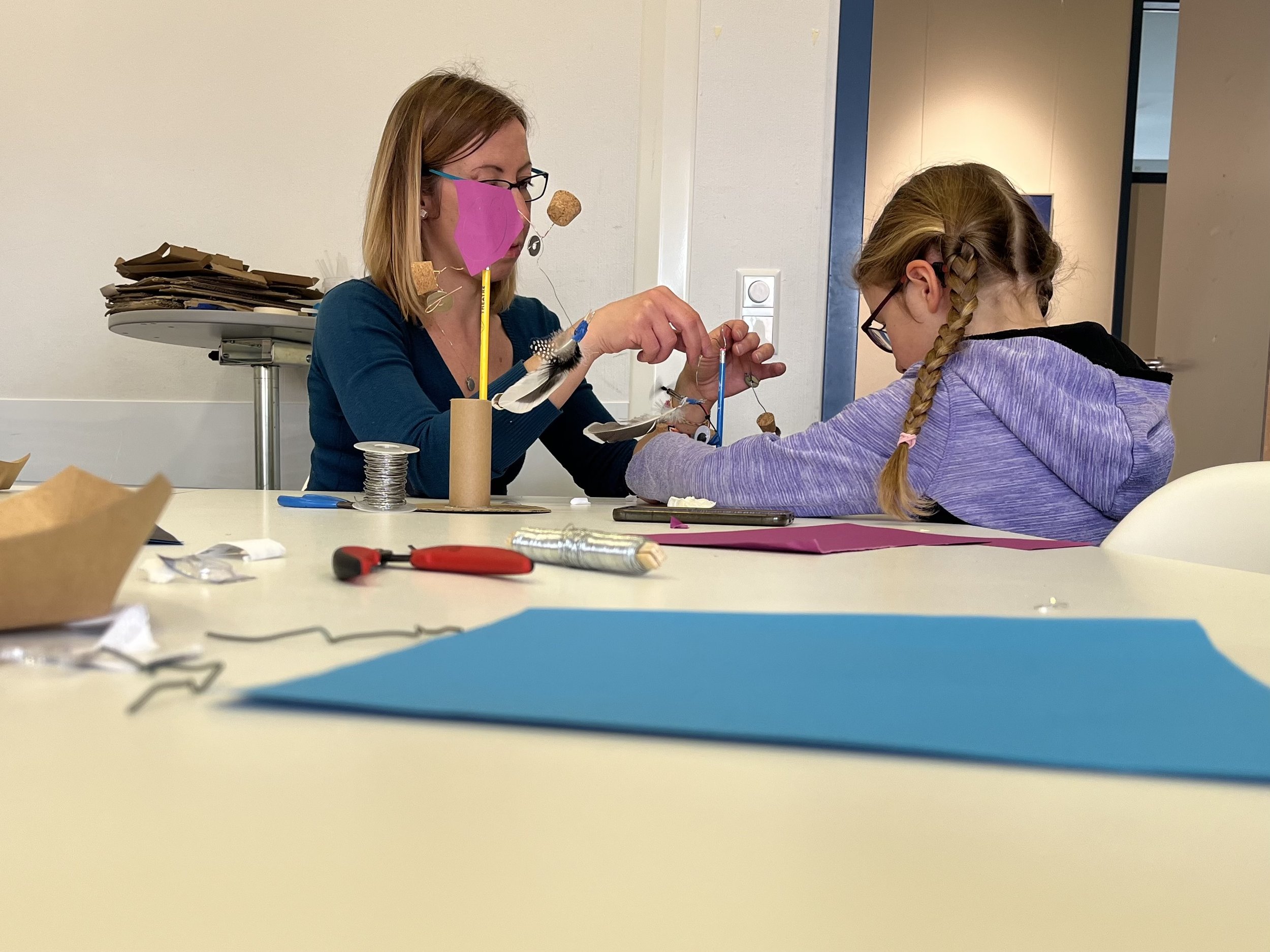
Last weekend I hosted the fourth tinkering workshop for local kids and families at the Carl Schurz Haus, the American and German cultural center in Freiburg. As usual, it was a great chance to share a favorite activity and experiment with new ideas and extensions. For this session we explored balancing objects or weighted wobblers which also takes inspiration from my book, The Tinkering Workshop.
I wanted to think of some ways to extend the experience to fit with the two hour session that we had scheduled for the workshop. To start, I wanted to create a low-threshold starting point experience that got participants playing with ideas related to balance before diving into making their own constructions. The week before I was messing around with some plastic animals at the workshop of my frequent collaborator Claus Schneidereit and found that it was pretty engaging to try to get them to balance on a hoof or nose using just wire and washers.
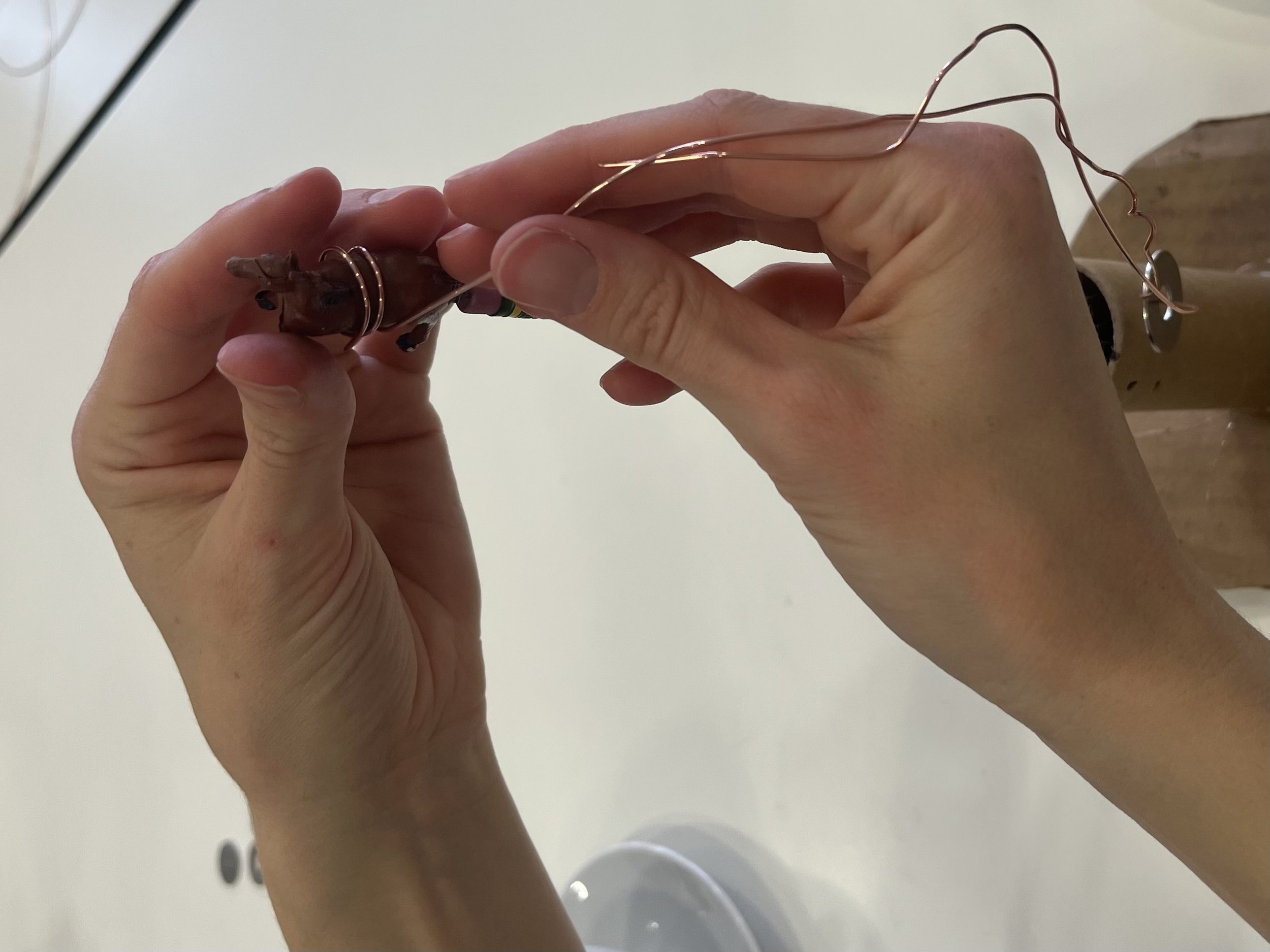
At the workshop we spent the first fifteen minutes or so playing with this idea of trying to balance the little creatures precariously on a pencil tip. It was a fun way to start to get a feel for the idea of having the weight lower than the balancing point to make surprising wobblers.
Then we opened up the materials set to include corks, features, colored paper, cardboard, googly eyes, recycled materials, old magazines and CSH flyers that participants could use to make their own kinetic balancing sculptures. It was really cool to see the mix of abstract shapes, compelling characters and even mini stories like a cat chasing a bird.
As a way to make the explorations a bit more complex, after a little bit of building I introduced two new ways to experiment with the balancers. First off I used some mini USB fans to test out how the creations could move on the wind. This opened up different avenues to explore how arrangements could catch the wind to spin or be more stable to resist the blowing air.
Another idea that I’ve been thinking about is adding tiny pager motors outfitted with propellors to make spinning sculptures. One challenge has been how to make the connections with an on/off switch that are also relatively light to balance with the other materials. This time we experimented with attaching JST connectors to the motors and battery packs (held together with superglue and even UV activated compound). There’s a lot of interest and excitement that builds when learners can get these complicated creations spinning.
One of the coolest things about the workshop was that many of the participants had already been to one (or more) of the tinkering workshops at the Carl Schurz Haus. For me the most important thing about the activity is the process and it’s great to see how kids and caregivers start to work through frustration, push deeper on their ideas and try things even if they are not sure that they will work. Hopefully over the next months we’ll build on this emerging tinkering community and develop even deeper ways to explore these art and science projects.