Two Material Explorations for Early Childhood Tinkering
This week I had the chance to travel to Bern for a tinkering workshop and brainstorming session about early childhood (ages 2-6 or so) tinkering projects and programs with Science et Cité. They are starting a tinkering initiative with young children, families, caregivers and local educators next year and it was great to get the chance to share ideas, questions and learning values together.


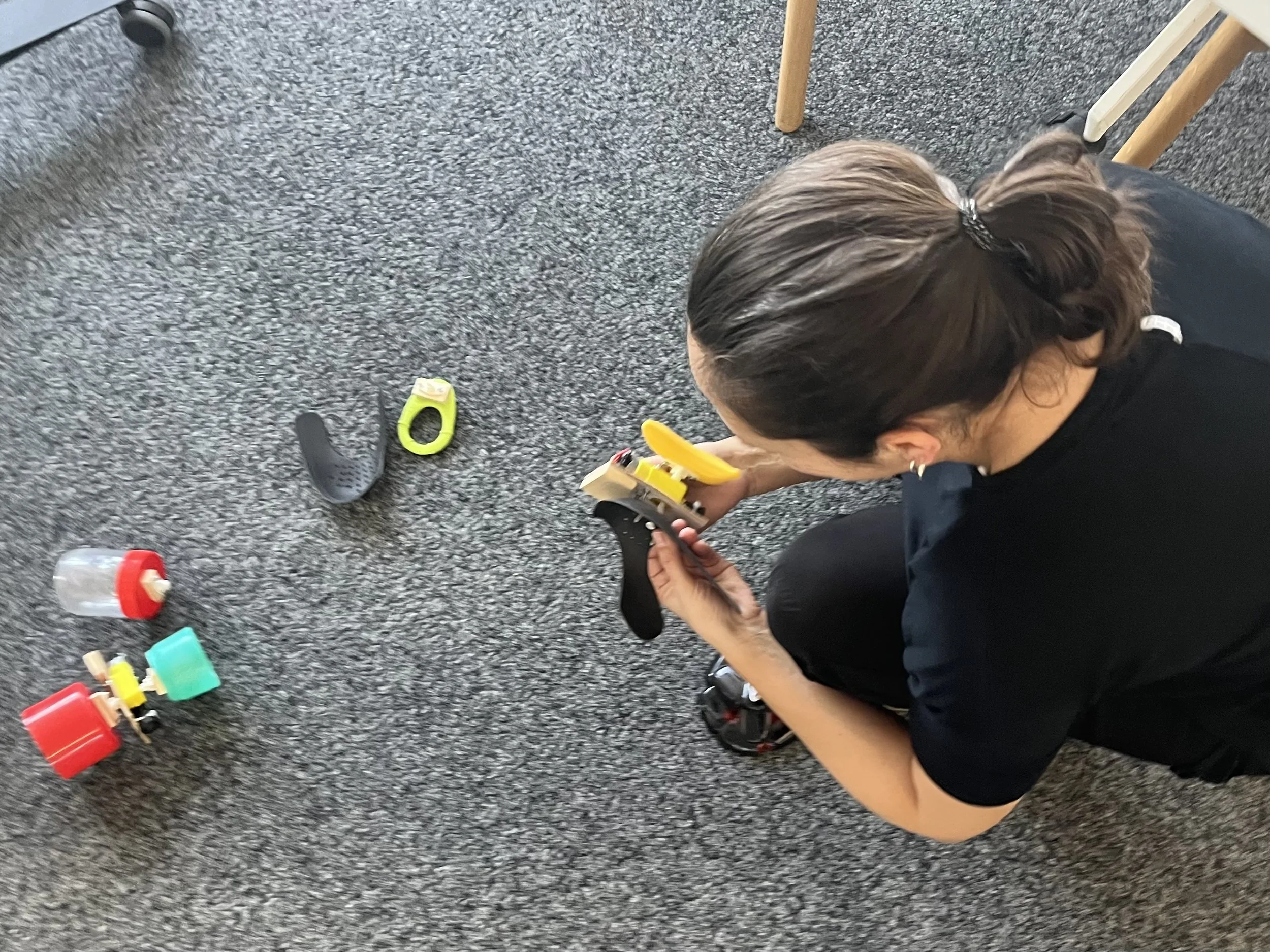
As part of the workshop, I shared four prototype activities that could be good jumping off points for tinkering with early childhood learners. One of them was the roly poly rollers that I’ve done a few more experiments and workshops with over the last months. The other three all were a flavor of “two material construction sets” in the vein of the build it kit featured in The Tinkering Workshop. I wanted to share these experiments to hopefully spark further ideas and explorations.
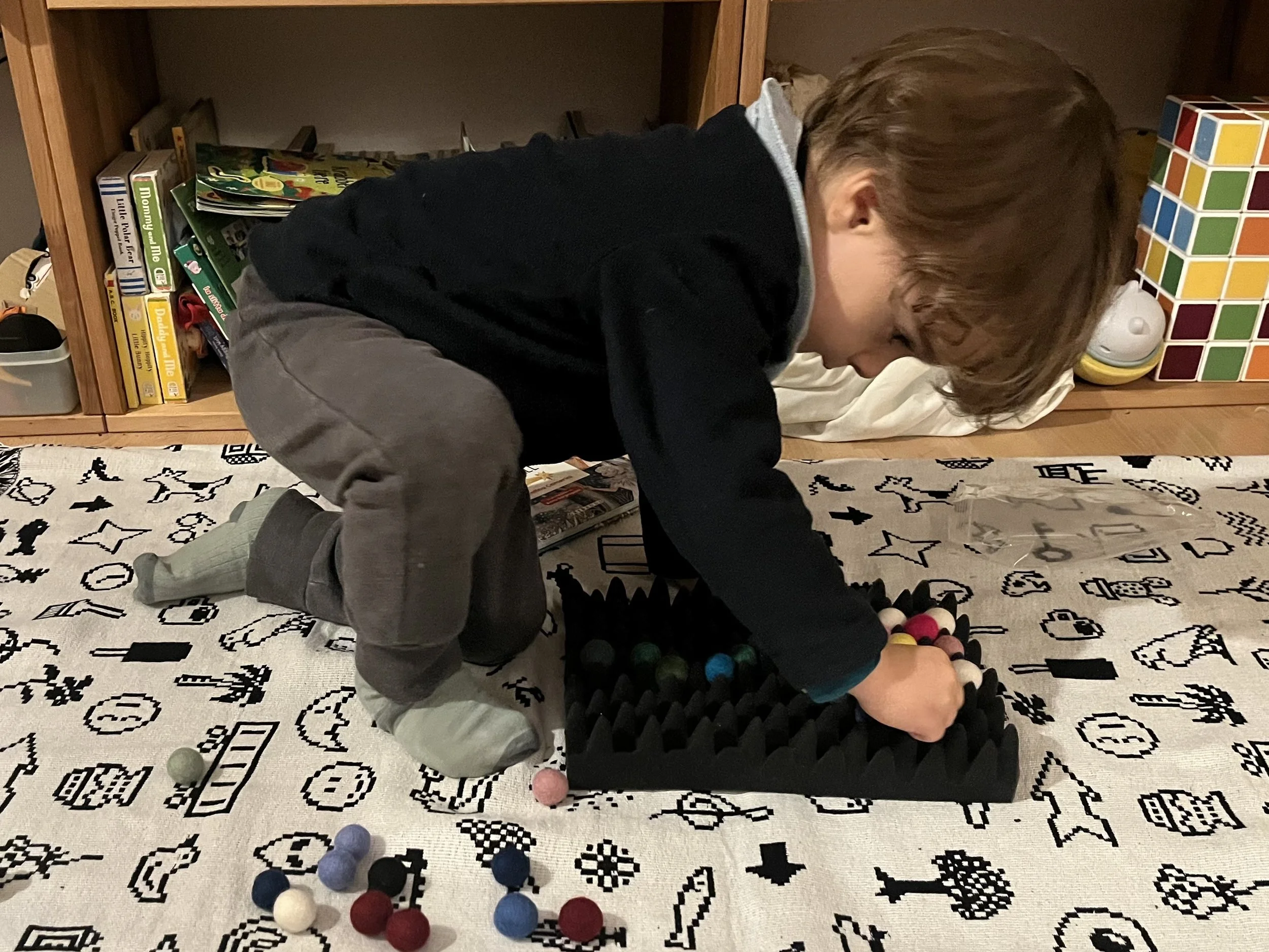
The first activity combined acoustic foam and small colorful felted balls. I love the simplicity of this set and how it can be used almost as analog LITE BRITE. It would be really interesting to experiment with different sized pieces of foam and alternative arrangements (on the wall or under a table). This activity really speaks to the tinkering quality of using familiar materials in unfamiliar ways.
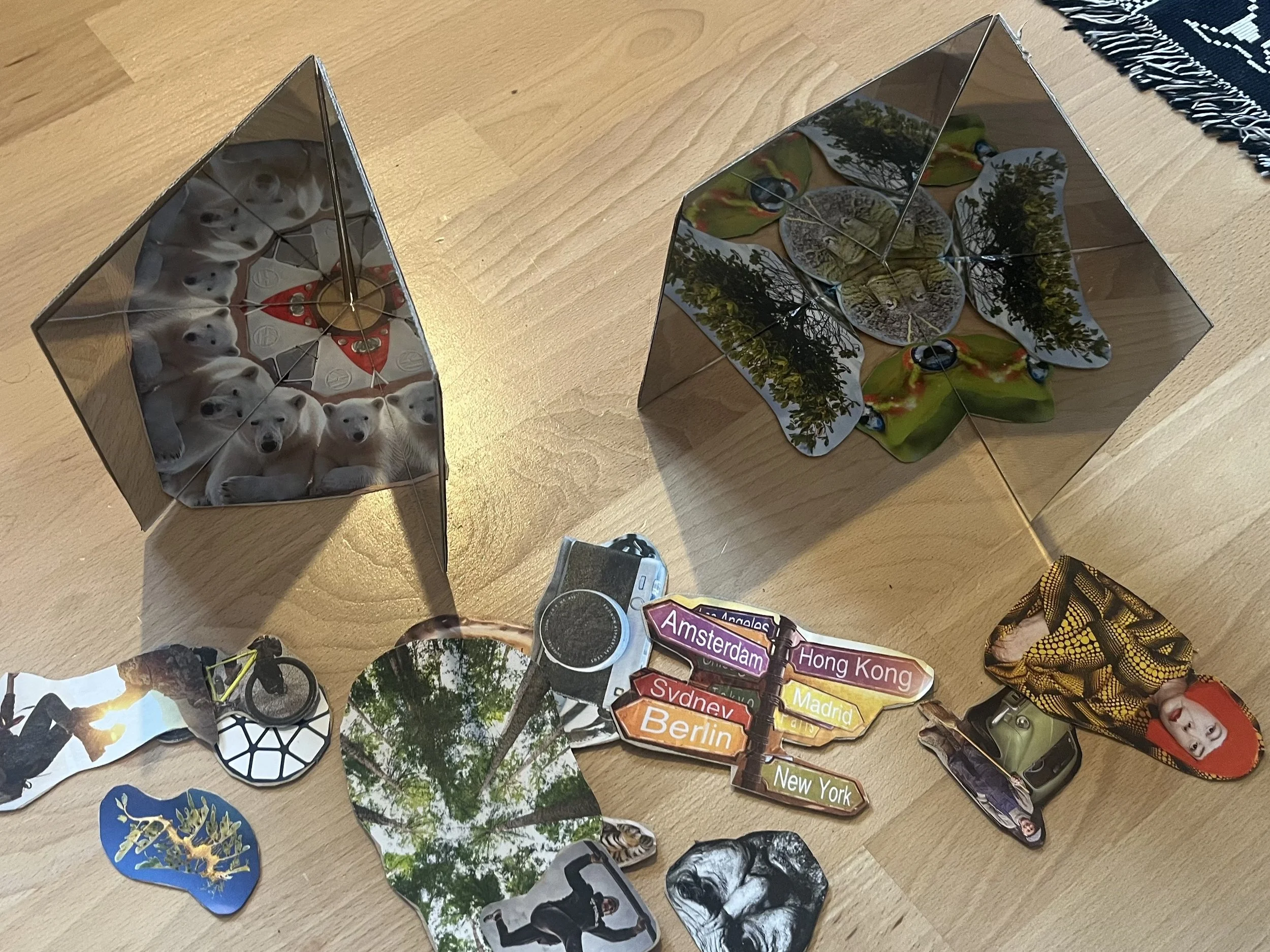
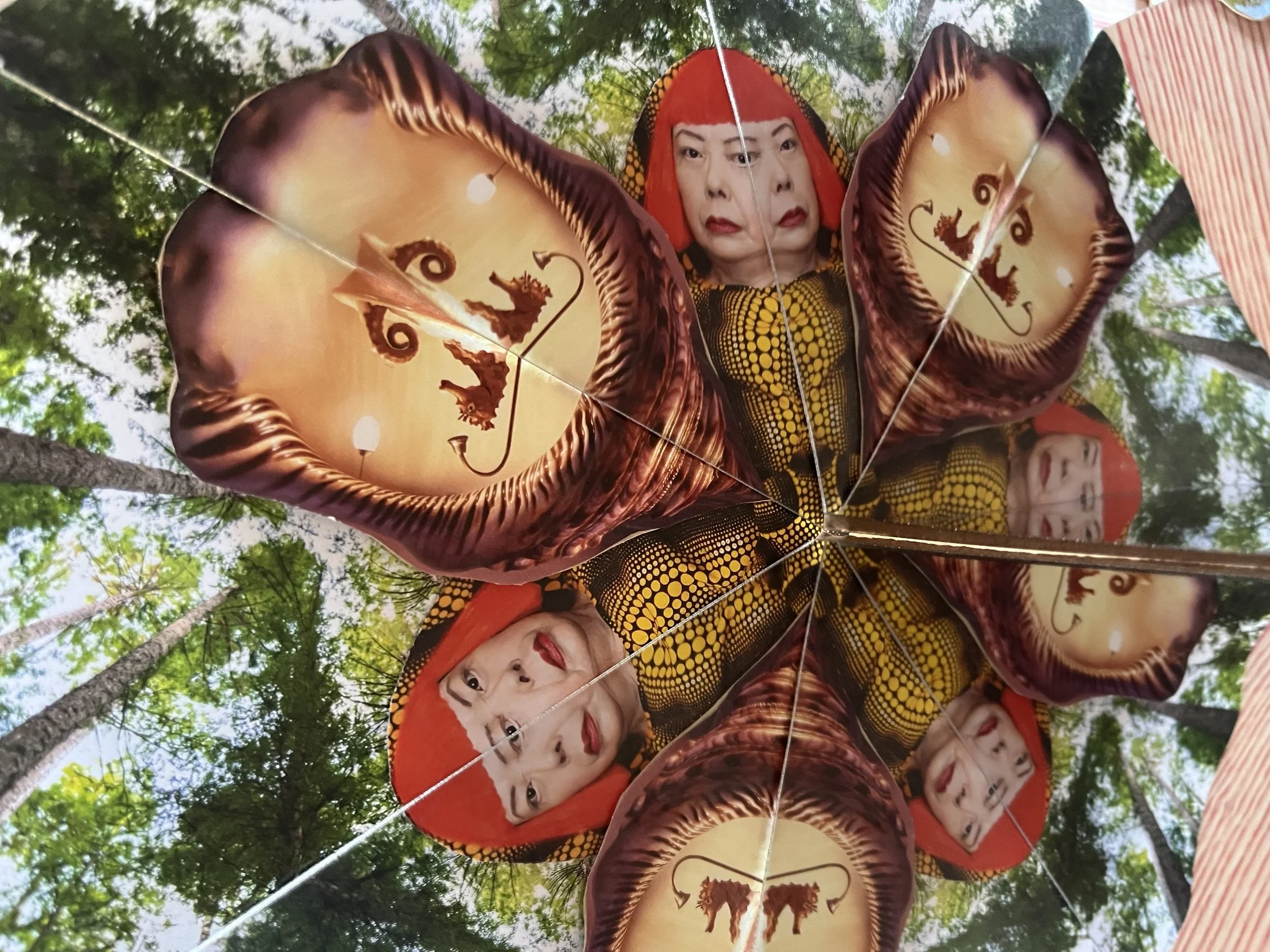
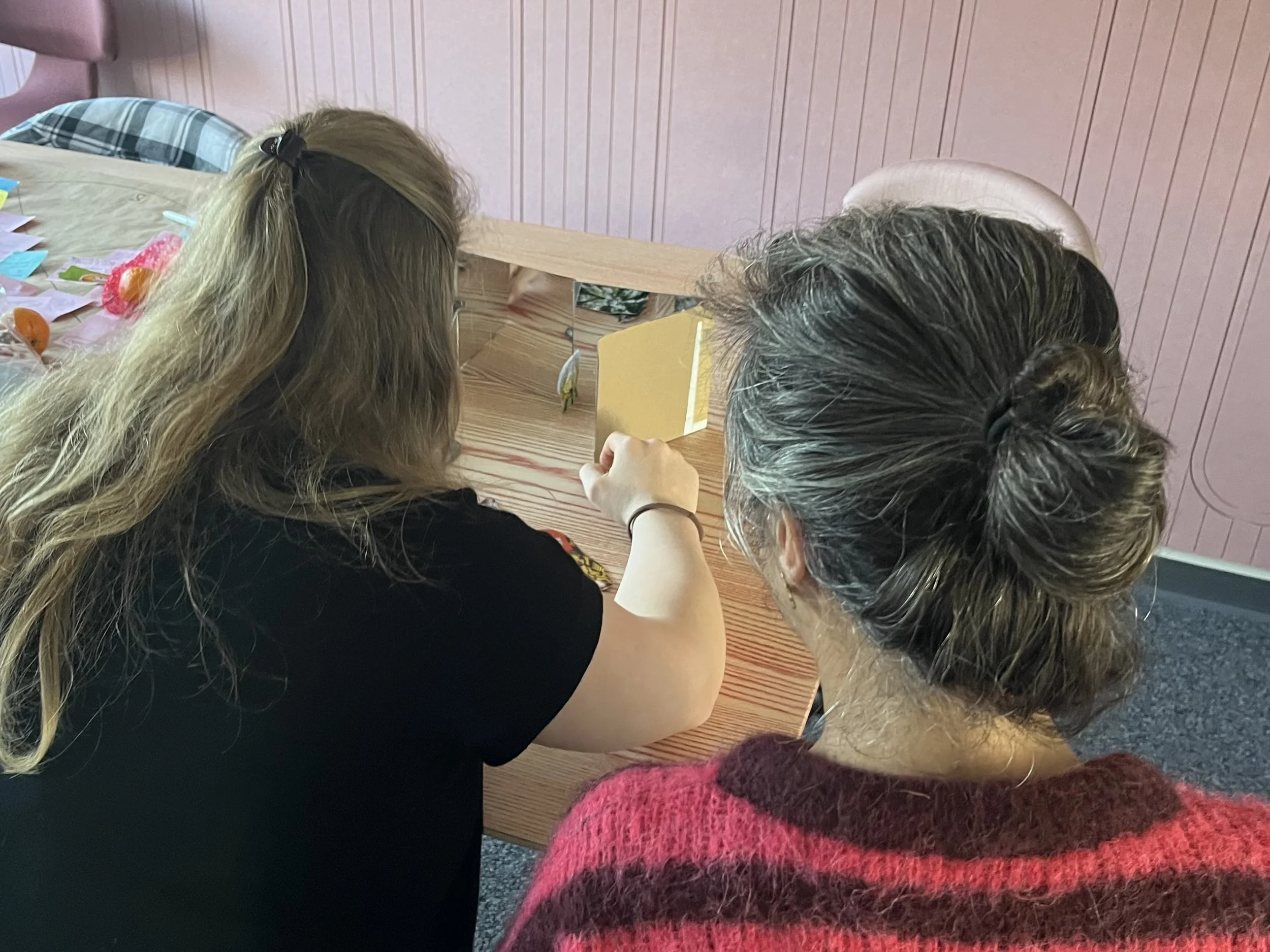
The next prototype that I shared combined cardboard collage (evocative magazine images mounted on thin cardboard) with angled mirrors. We’ve done many experiments with these simple hinged mirror setups and I think it’s a great way to start exploring light and reflection. I imagine that with the right collage materials we could explore storytelling character and narrative with young tinkerers.
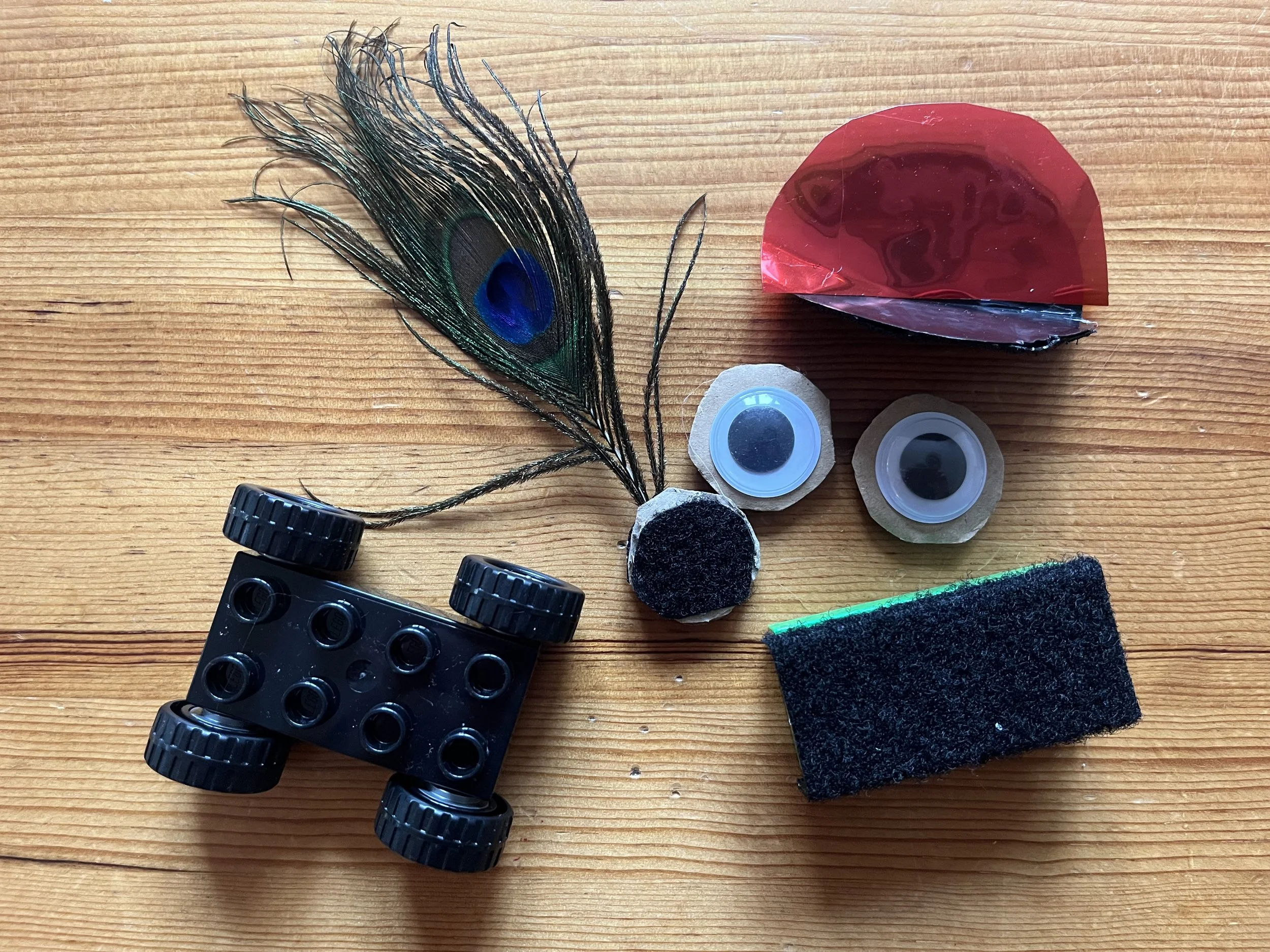
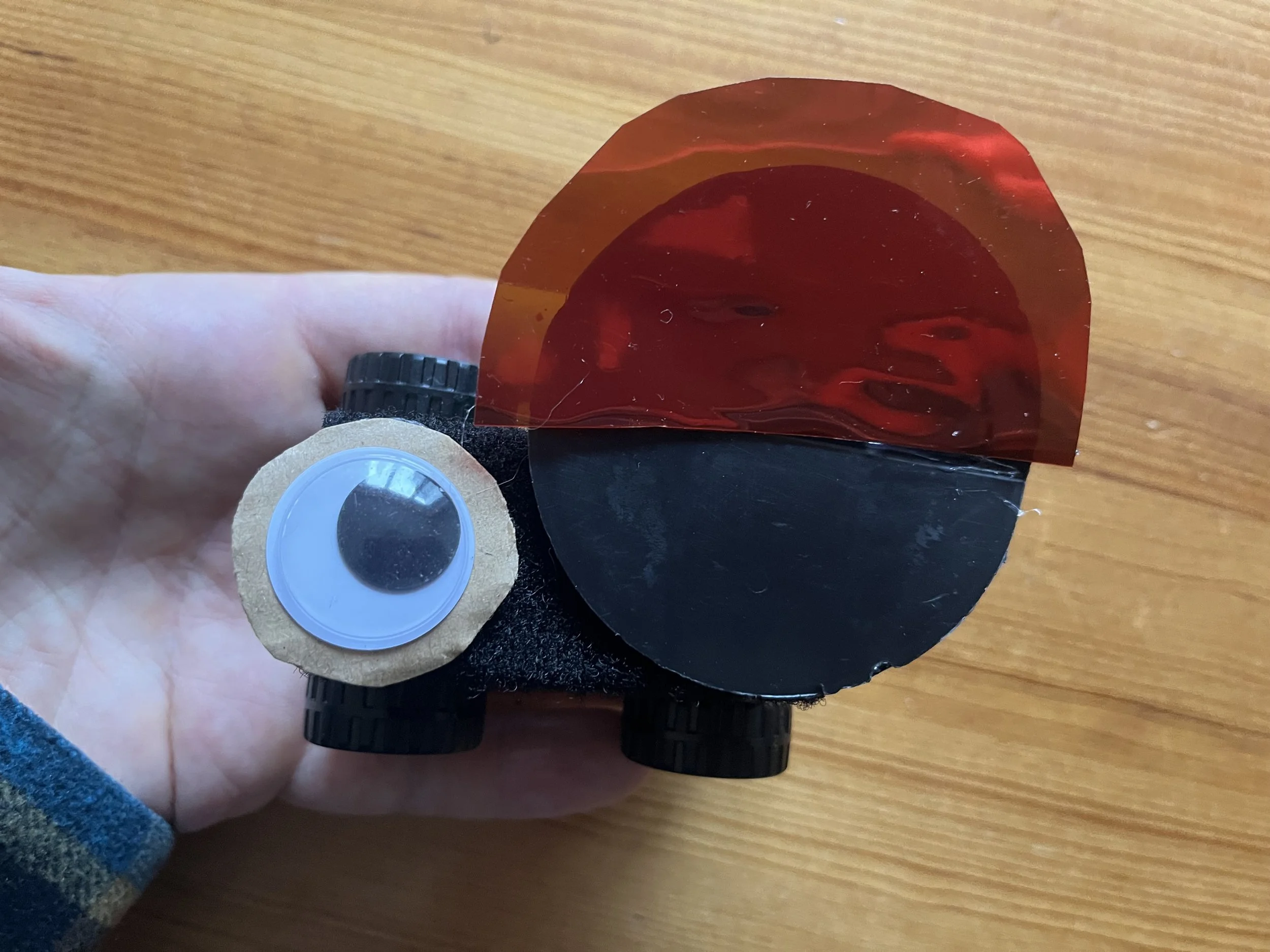
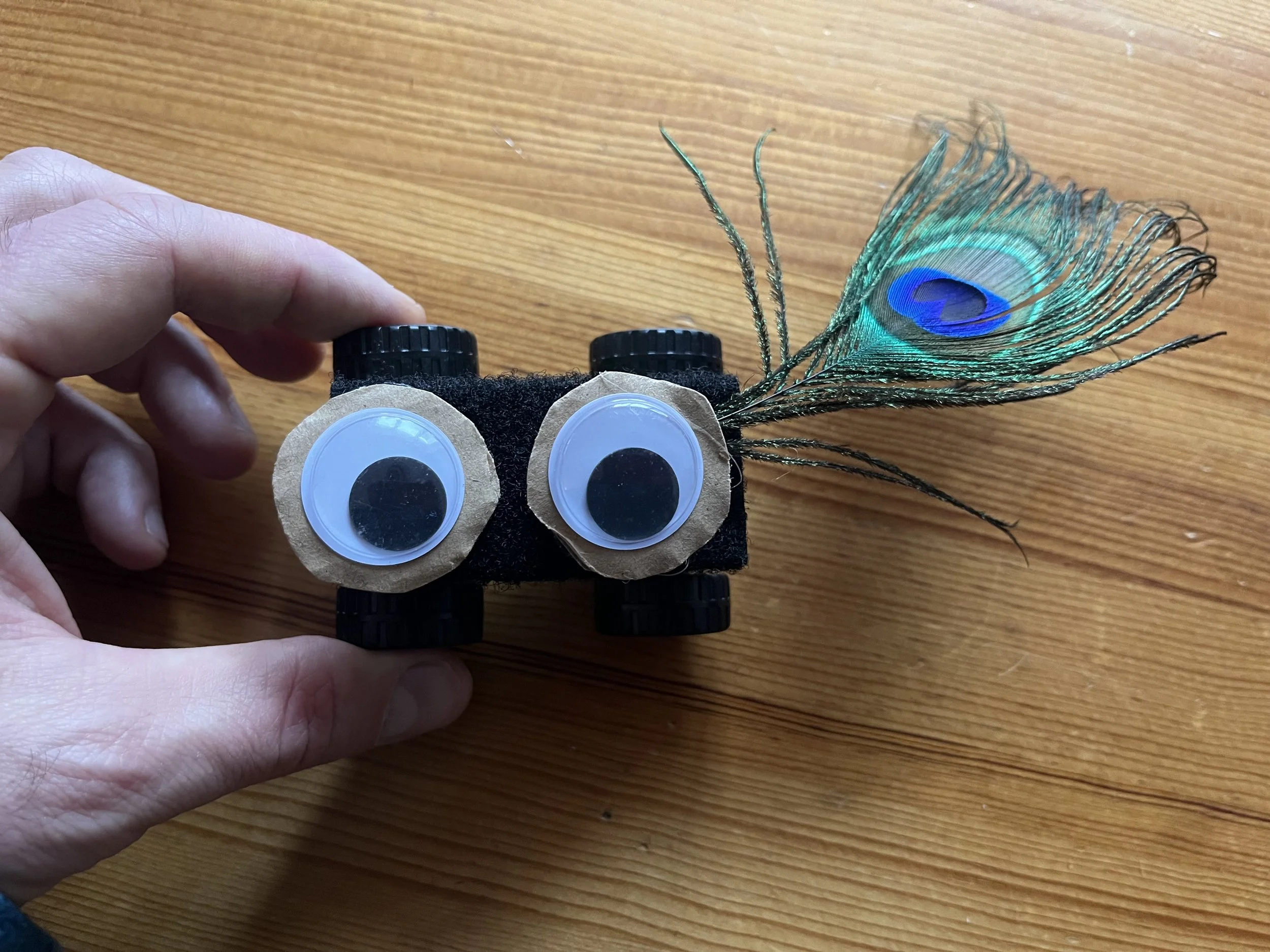
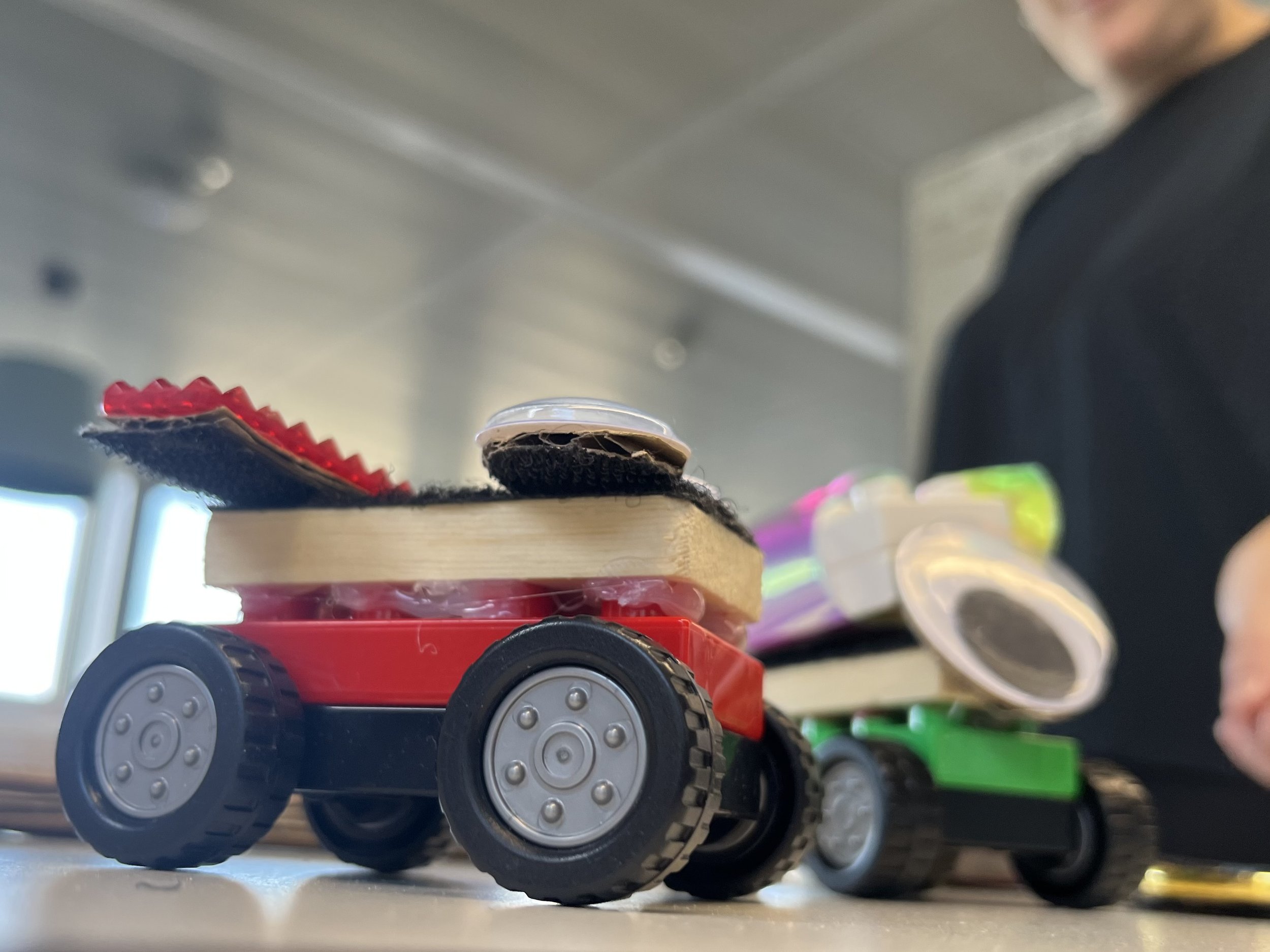
And finally I shared a project that has been really popular with my three year old, combining duplo cars with velcro pieces so we can add everyday materials to the construction set. I like this mash-up because the collection of objects can be used both as decoration but also as ways to experiment with weight and shape to iterate on the functionality of the cars. We used a piece of thick honeycomb cardboard as the ramp but it’s also fun to play with curved tracks or jumps.
Each of these projects provided a starting point that could hopefully be expanded and changed based on the questions and ideas of the learners. It’s really fun to share these ideas that I’ve been trying with my son with artists like Nicole Catrett and educators like the team at Science et Cité to continue developing new possibilities for early childhood tinkering.