Testing Tinkerable Exhibits at OliOli
Over the past several weeks I’ve been working with a children’s museum in Dubai called OliOli to develop new tinkerable exhibits and environments. I visited OliOli for the first time in 2019 for a three week residency to build a musical bench and explore other exhibit and activity ideas.
This time around, we’re working on revamping a cars and ramps gallery, installing a musical stairs exhibit co-developed with Tom Fox of Vulpenstruments, creating a version of AI Shapeshifter by artist Radames Ajna and exploring a suite of other related ideas.
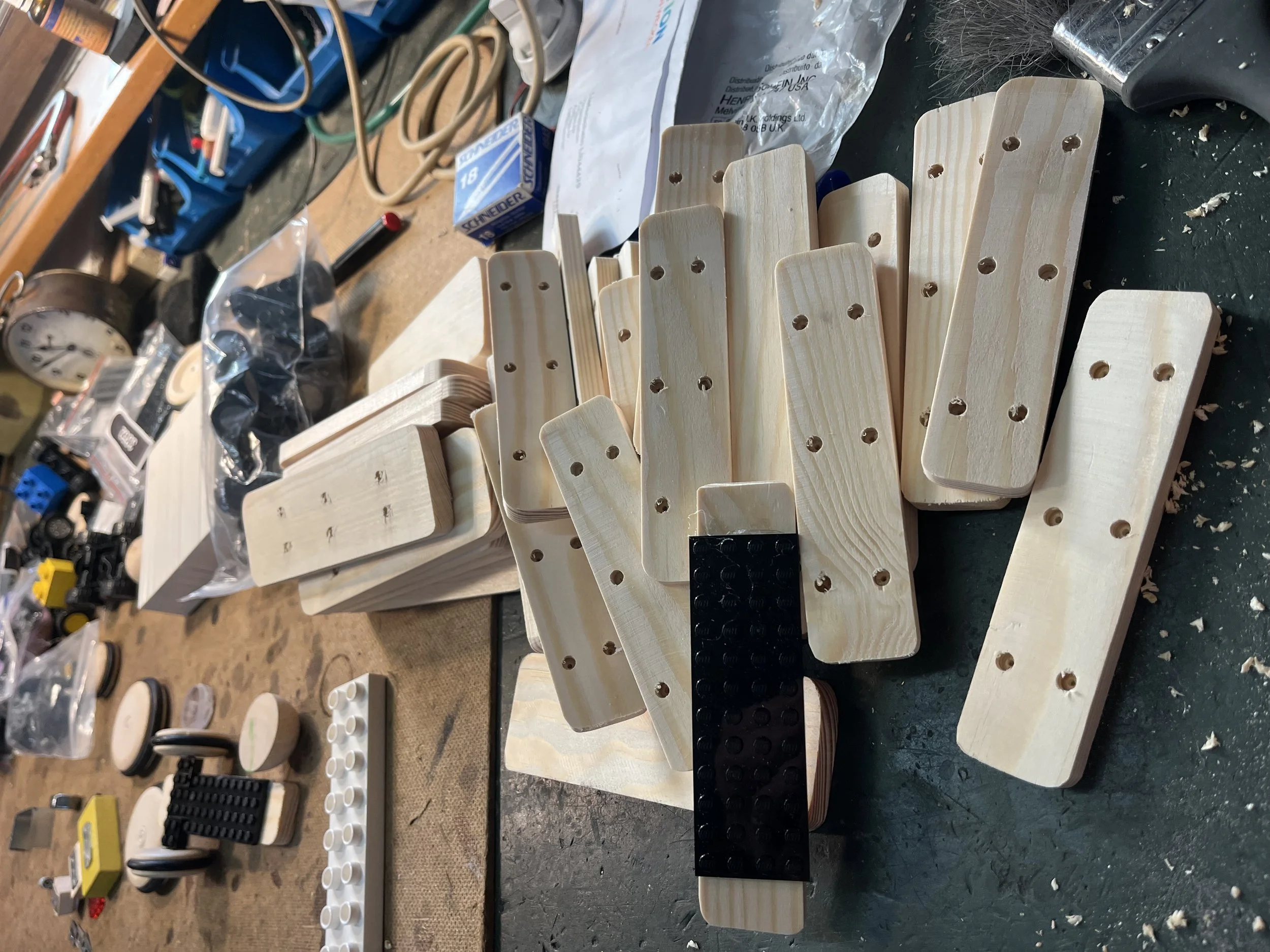
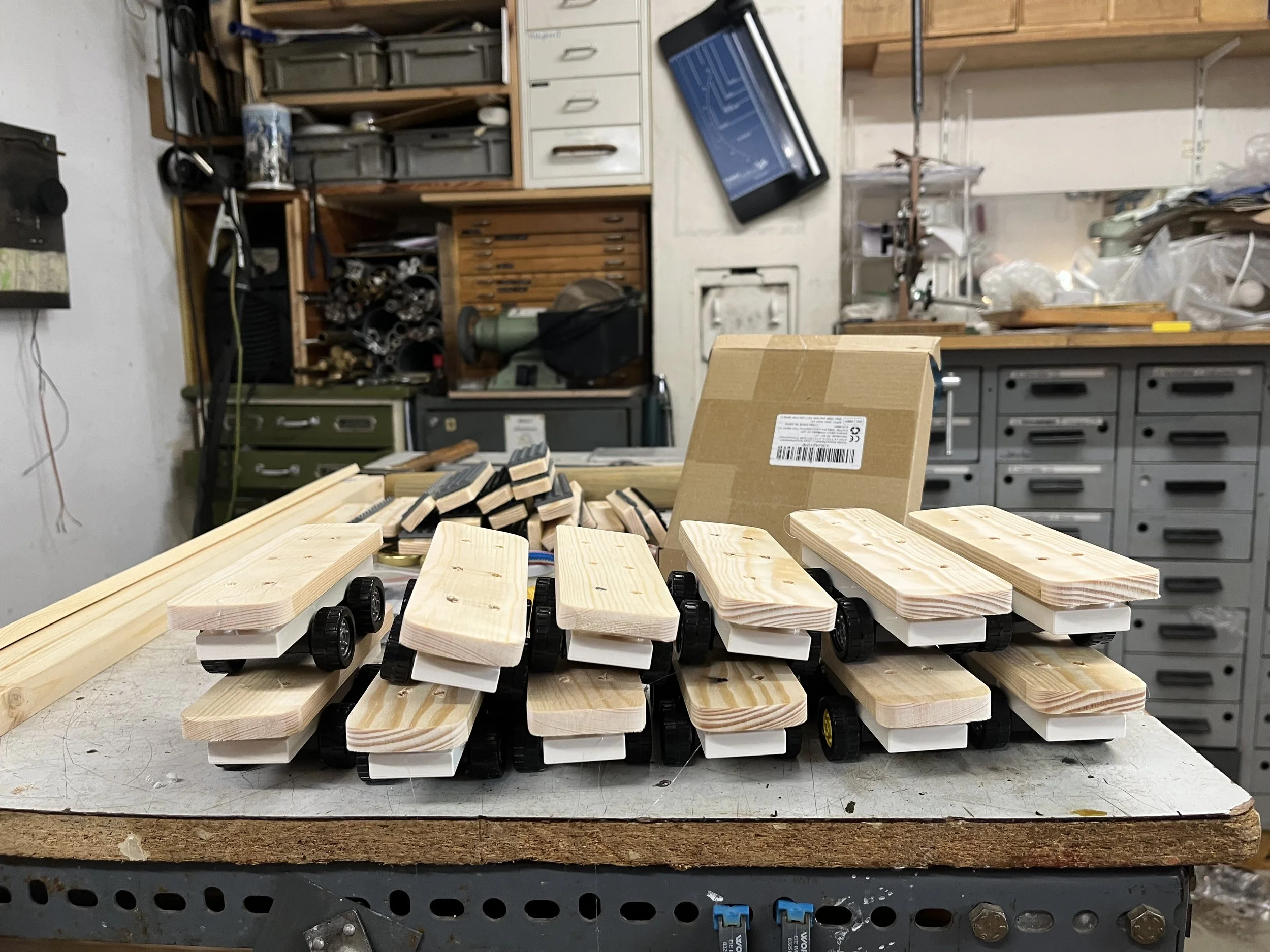
Before the in-person visit to OliOli, I spent some time at the local FREILAB makerspace and workshop of kinetic sculptor Claus Schneidereit making prototypes. The goal for these preparations was to create testable prototypes that weren’t completely finished but felt sturdy enough to be ‘plussed’ with feedback from the staff and visitors. I packed up another stellar tinkering suitcase and headed out for a few days on the road in Dubai.
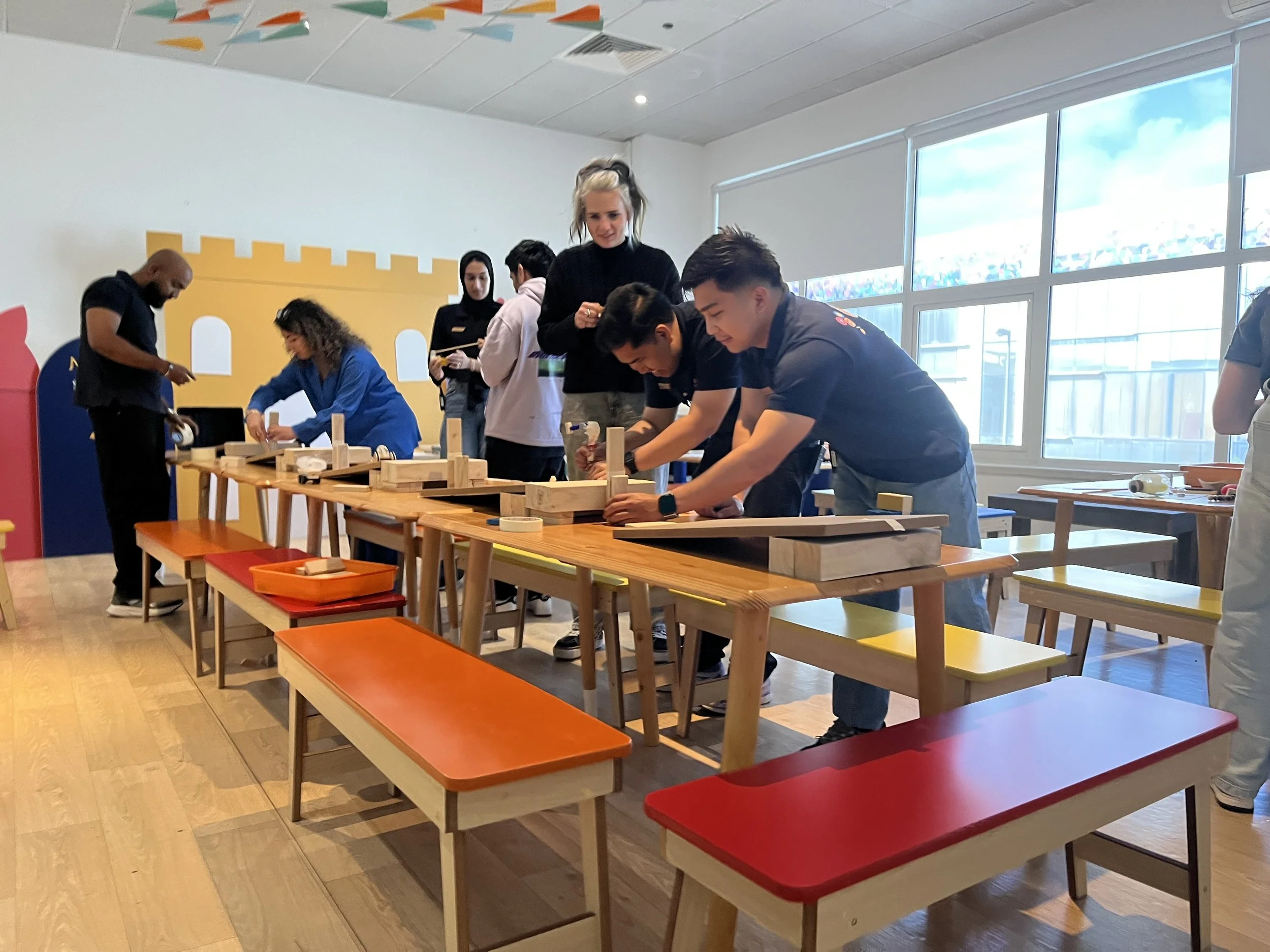
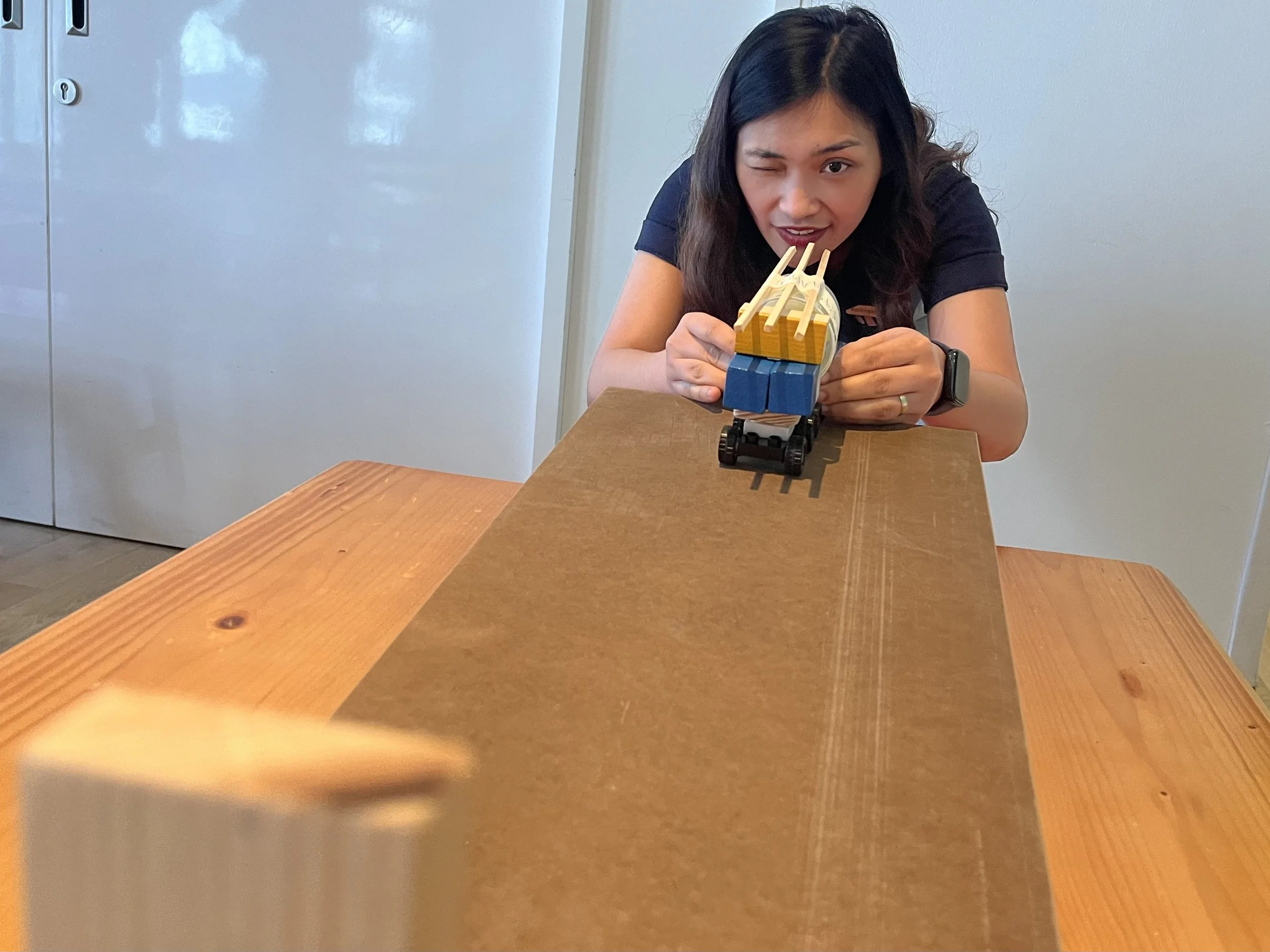
To start off the five-day site visit, we decided to introduce the floor staff (called imaginators) to the cars/ramps materials set that we planned to explore fothe rest of the residency. The staff workshops took place in a classroom setting so we had to adapt the prompt to work without the large scale ramps that dominate the gallery. We came up with a quick adapted chain reaction project where each car triggered the next one with a series of ramps and wooden blocks.
While this it’s not the exact version that we tried on the floor of the museum, it gave the imaginators a sense of the possibilities with the materials. It introduced other variables to car construction as there needed to be some height on the cars to trigger the next domino block.
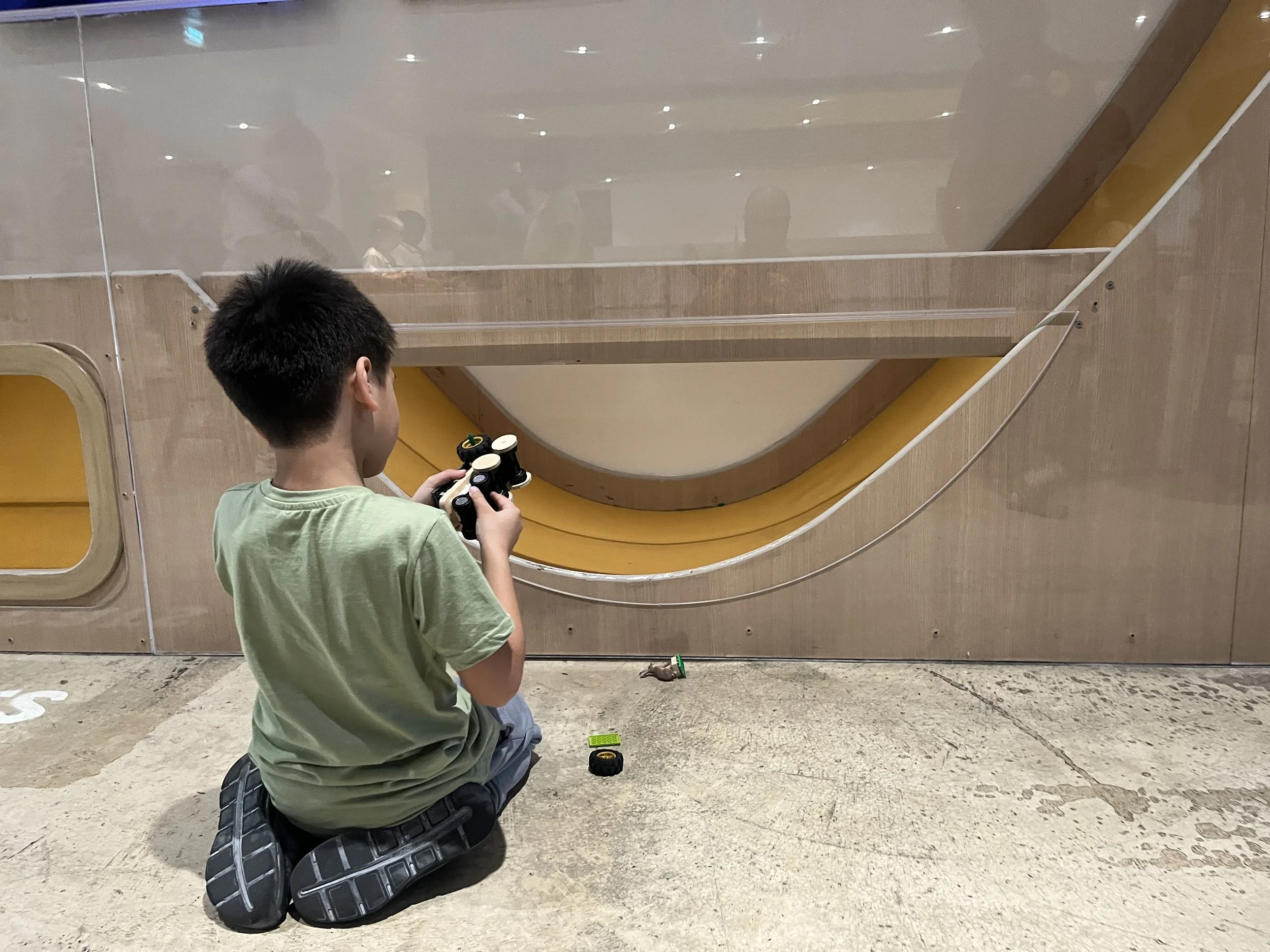
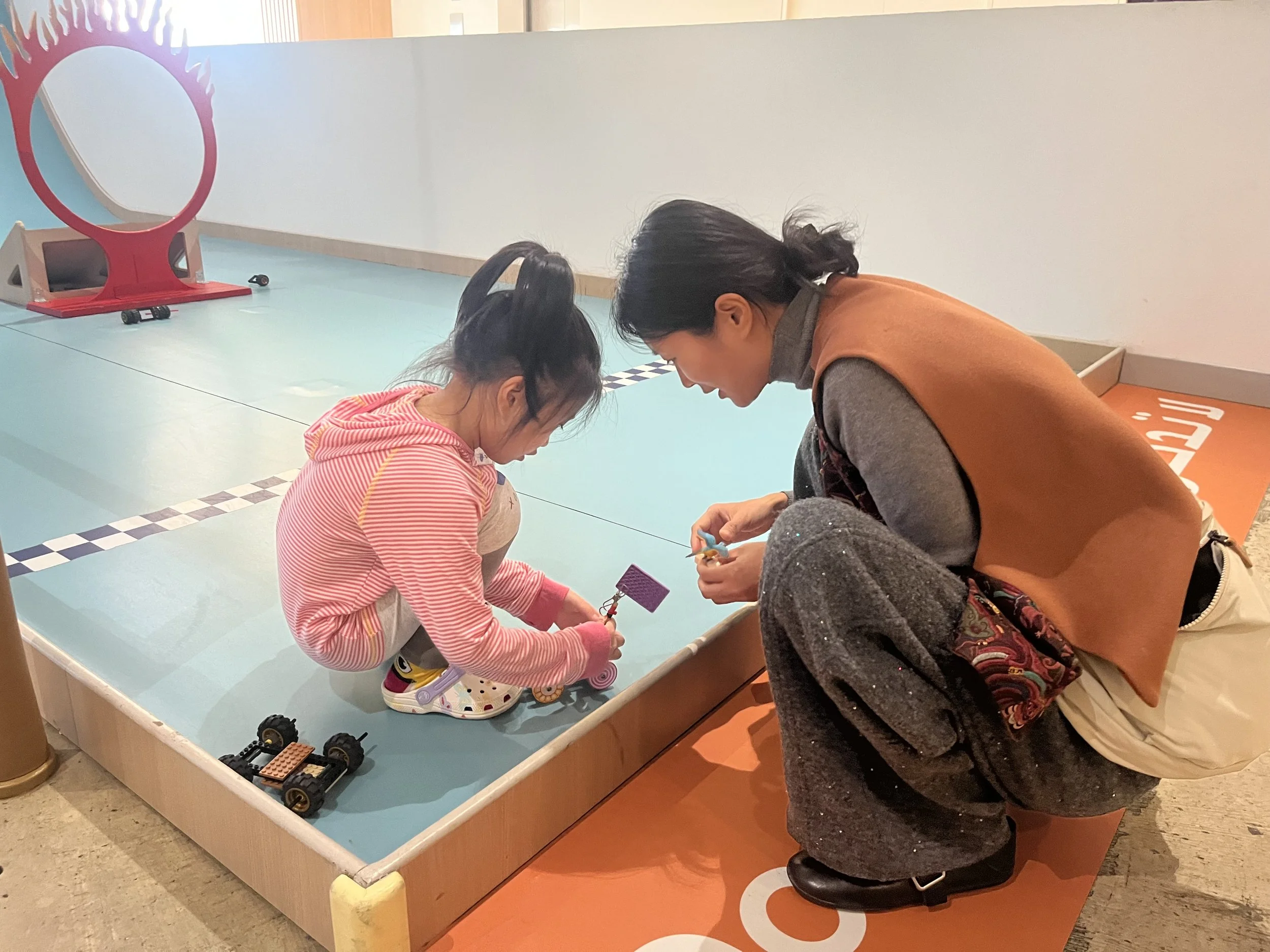
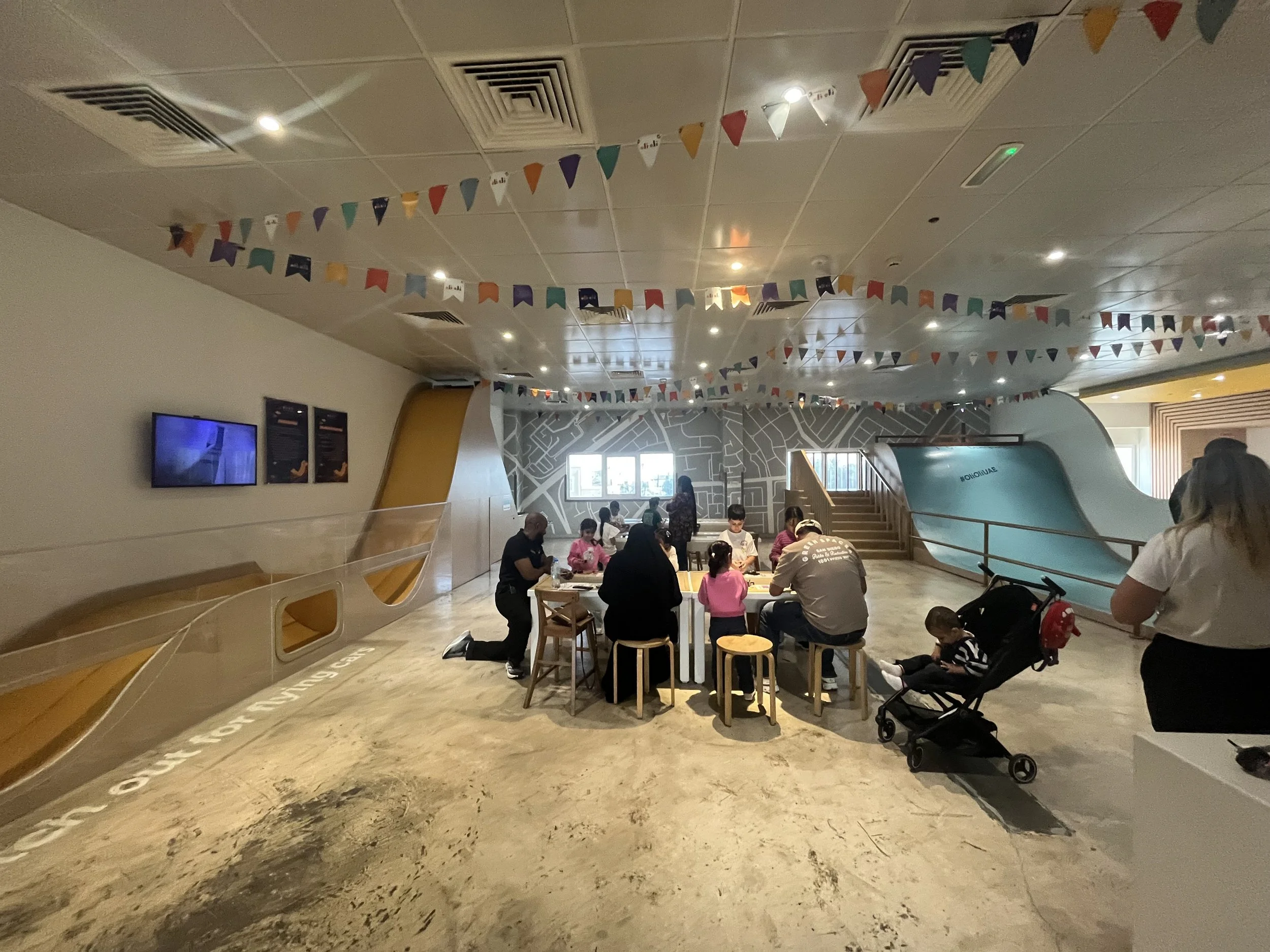
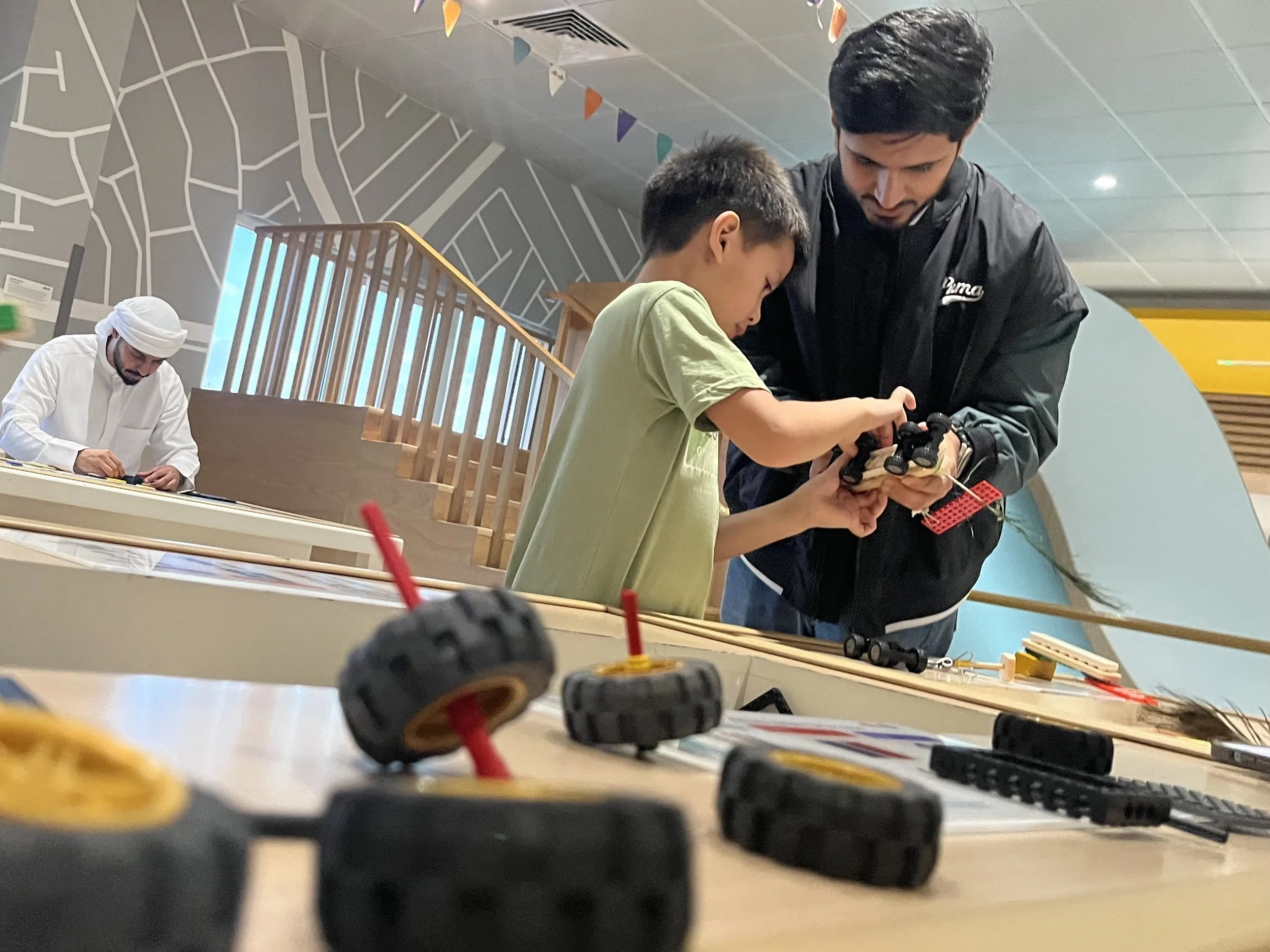
Over the next couple of days, we moved towards testing out cars and ramps ideas on the museum floor with kids, school groups and families. I brought a couple different materials sets featuring LEGO pieces, scrap materials, woodblocks and magnets that allowed visitors to get into the activity with a bit of a low threshold but hopefully still show the wide walls and possibilities. The building sets featured bases, interchangeable wheels and customizable characters and design elements.
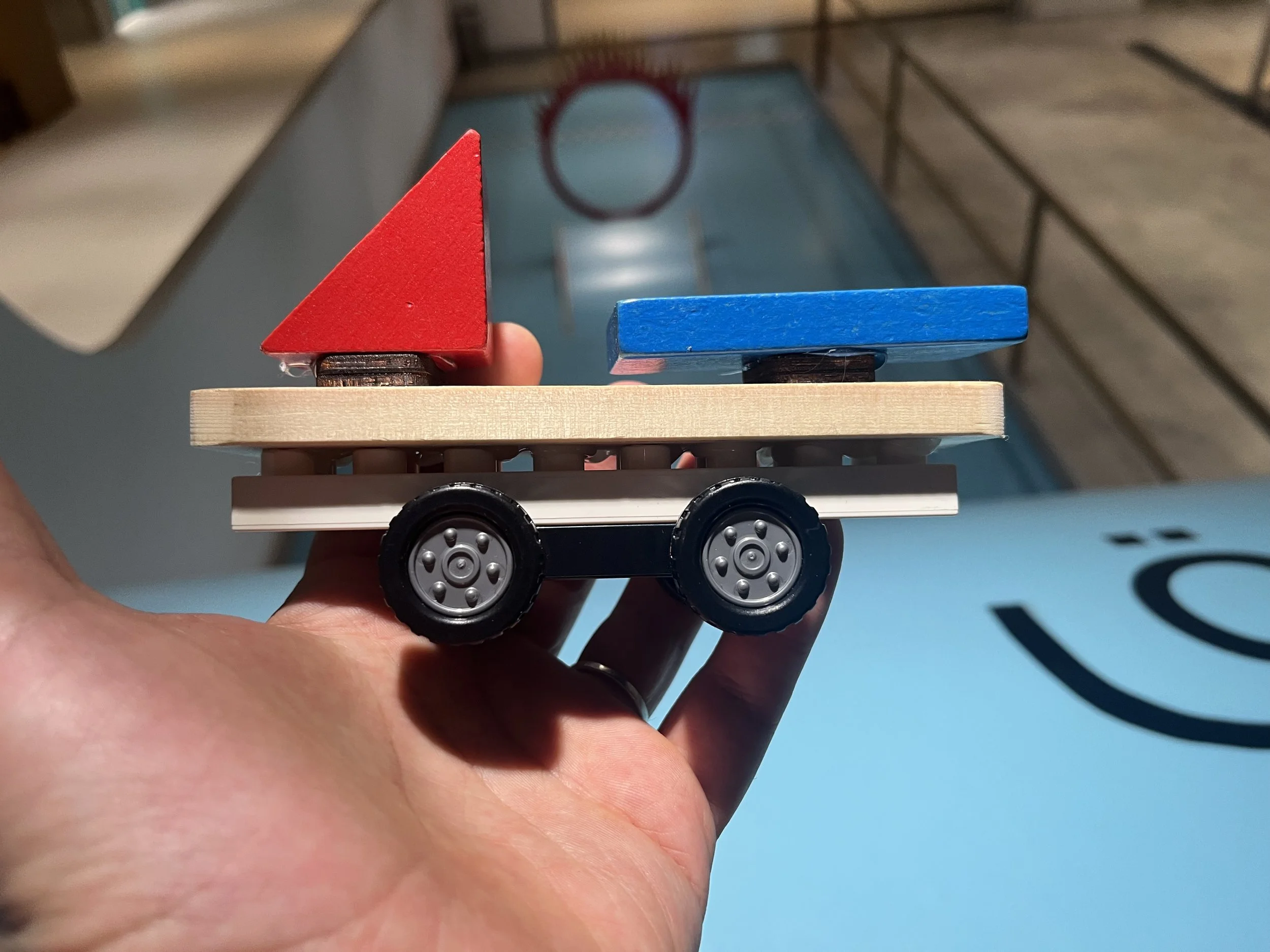
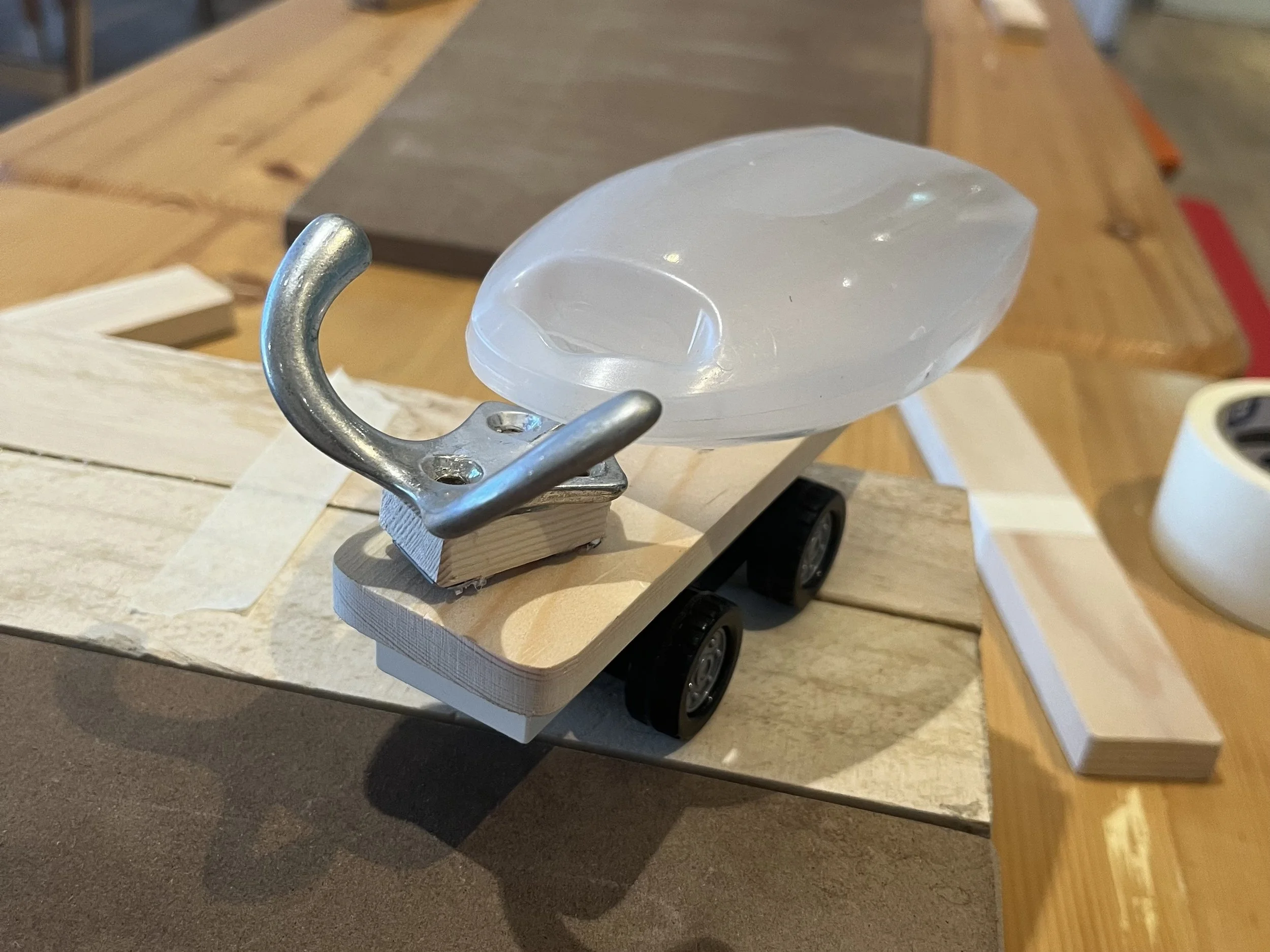
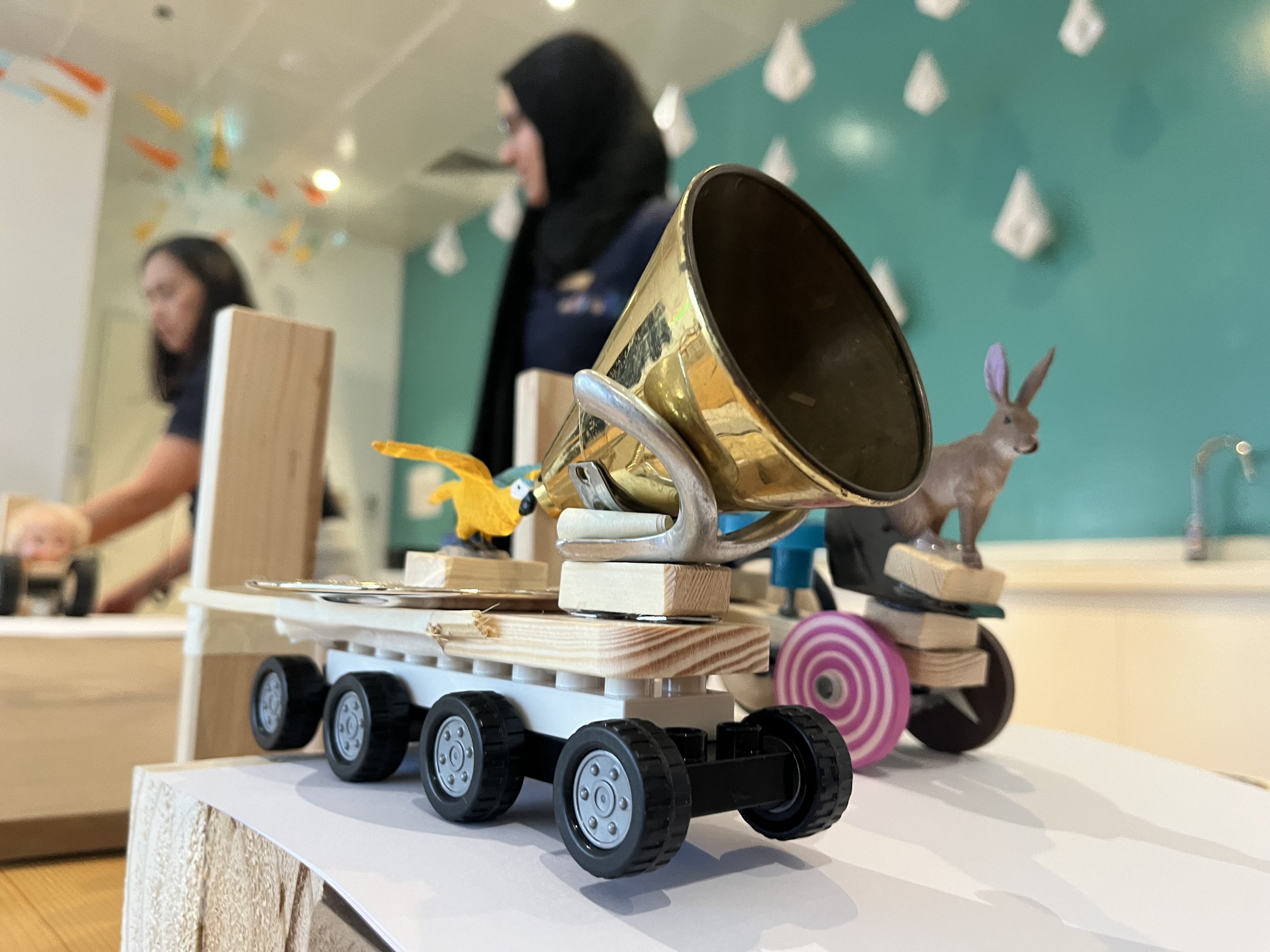
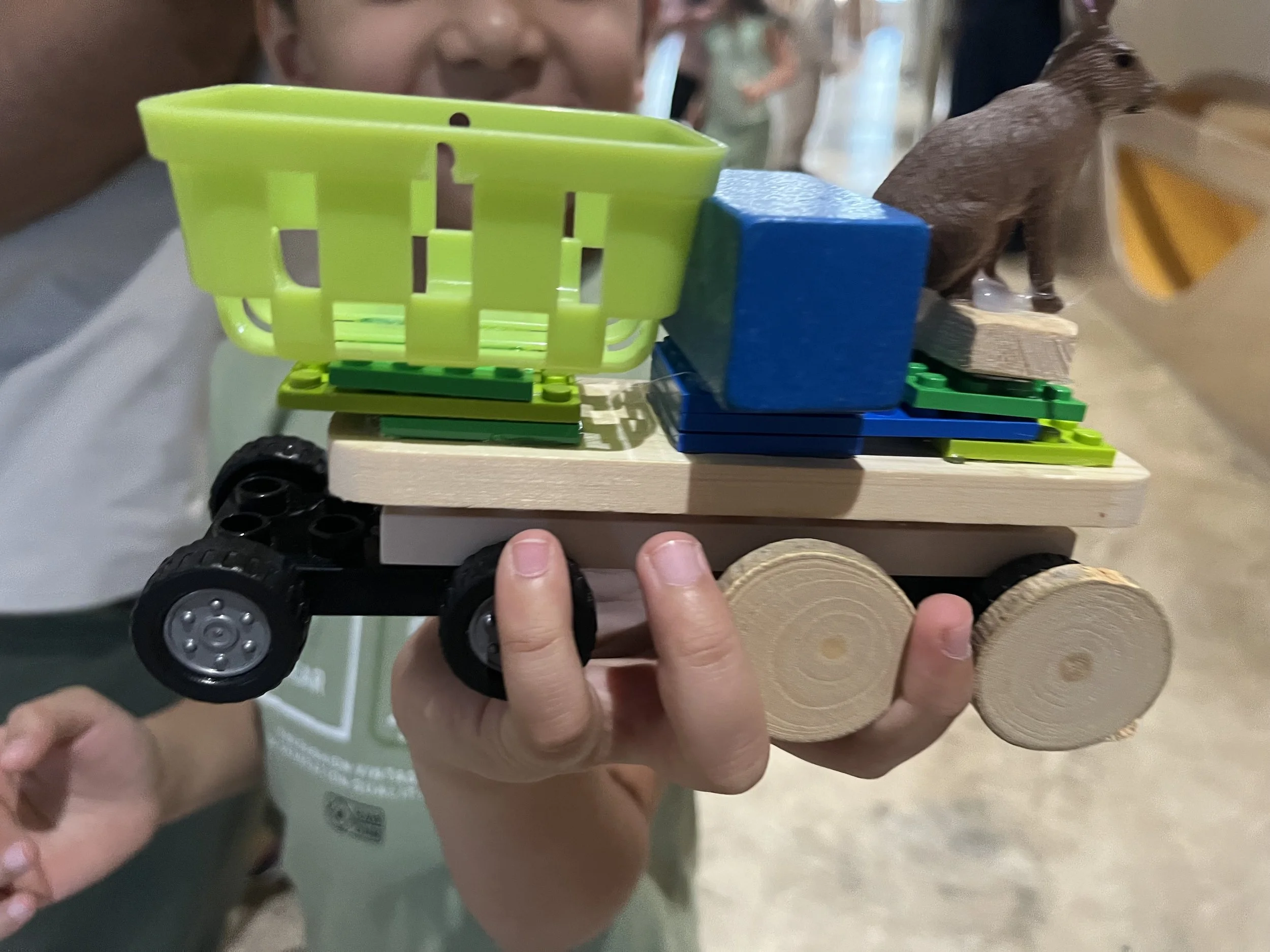
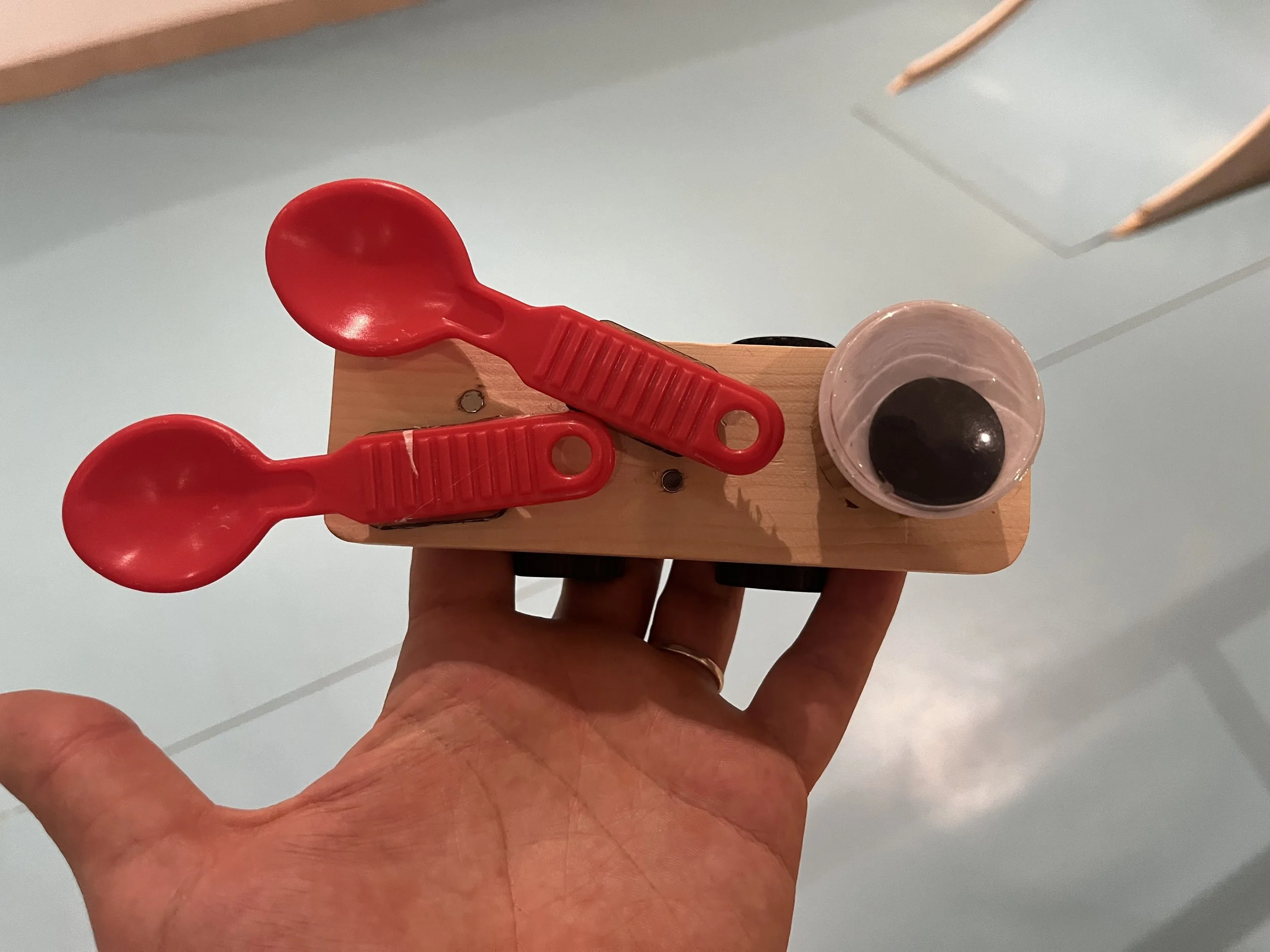
As much as possible, we had the goal for the elements up top to simultaneously support narrative and storytelling, but also affect the physics and aerodynamics of the cars. This way we could create many entry points for visitors to explore both the art and engineering side of the project.
The ramps at the museum have a very steep incline to make the cars jump at the end which leads to some spectacular crashes. So although we’re planning to make the tracks a little smoother for the final gallery design, it was a good test to see if the materials could stay together when added to the giant environmental tracks, elevators and jumps.
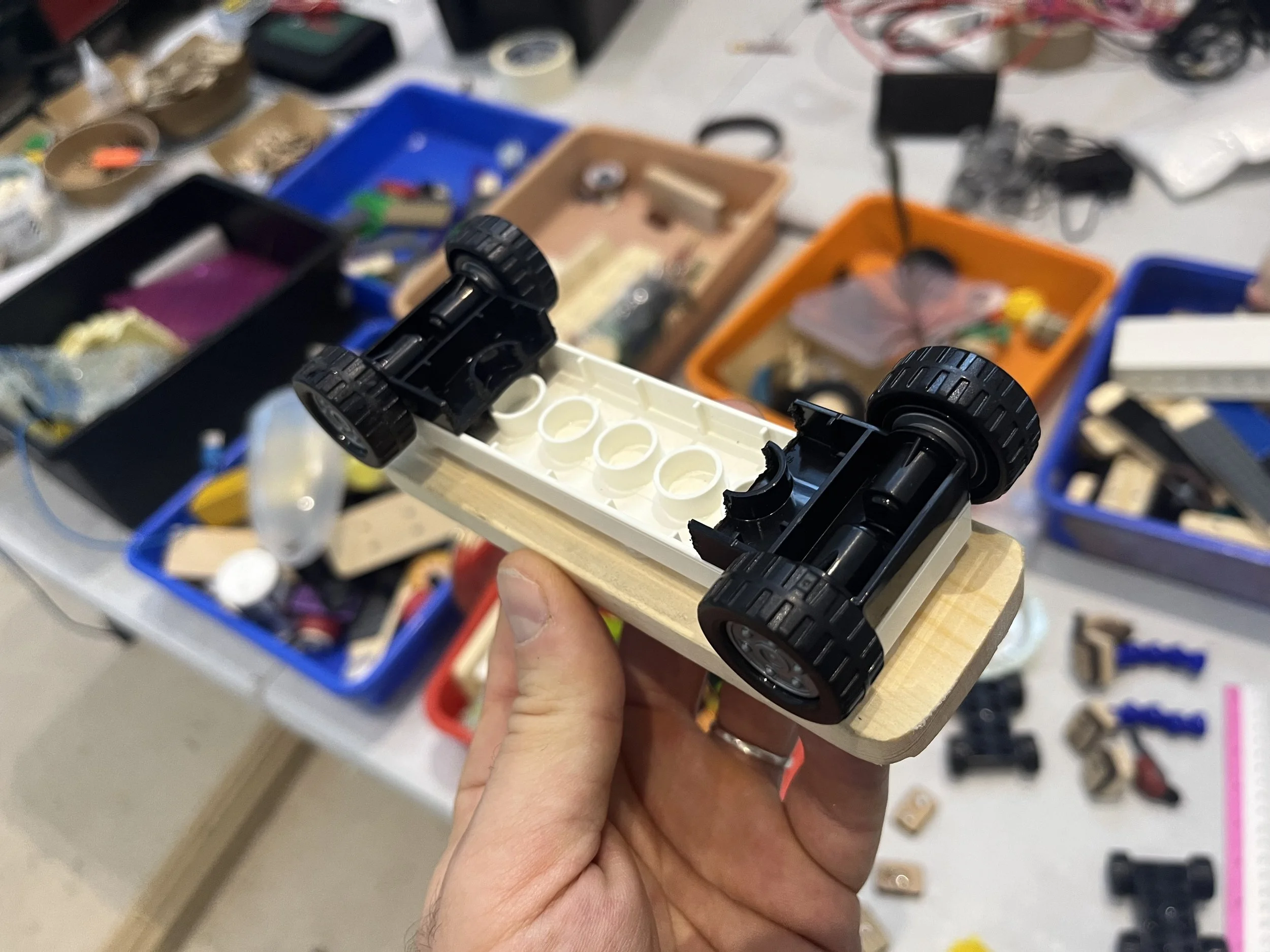
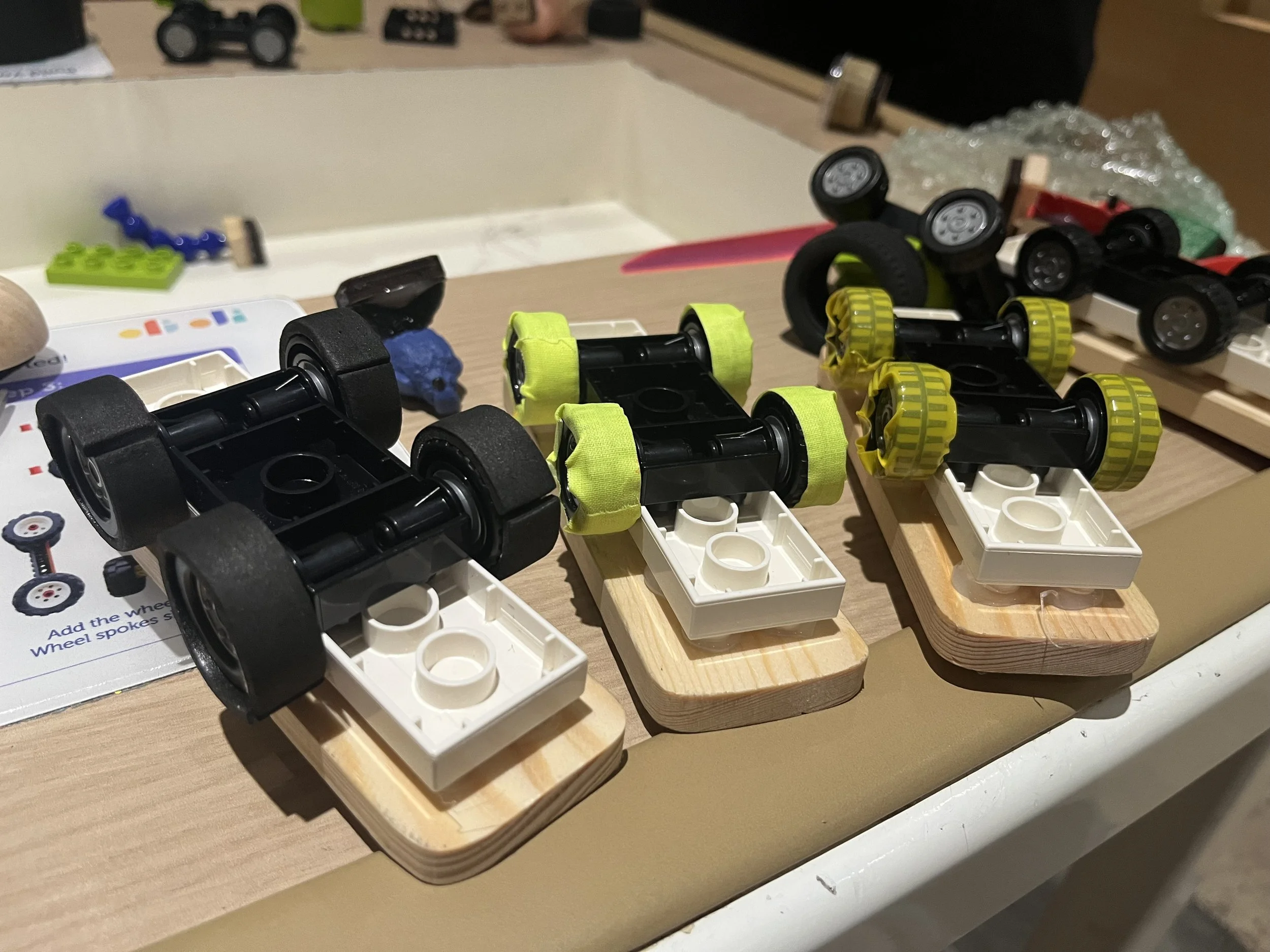
As moved back and forth between the public gallery and the behind-the-scenes workshop, we experimented with different base designs, cut DUPLO and LEGO bricks in half to see how far we could push the materials, worked on magnetic connections and tried out different ways to connect everyday objects to the wheels. These prototypes should lead to a selection of materials that are easy to put together but allow for a lot of different experiments.
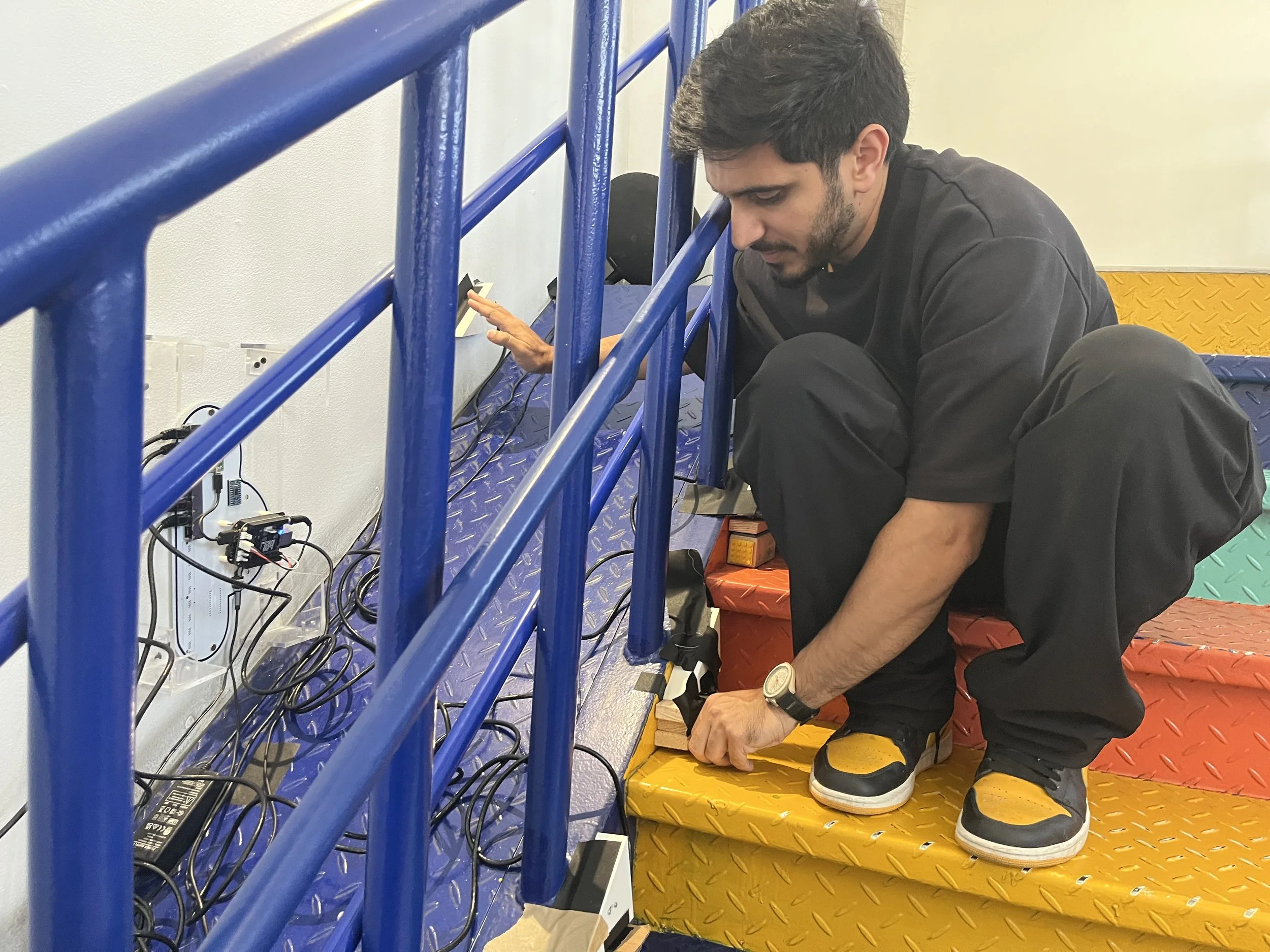
I also worked on a musical staircase designed in collaboration with sound artist Tom Fox of Vulpestruments. We worked together previously on the rhythm blocks UFTE with the tinkering studio team and it’s great to have his perspective and musical approach to develop the experience. We’re using ToF sensors to track when people step on each stair (and how far from the edge of the stairs they are). When onsite, we had a bit of a challenge to get everything set up and working properly.
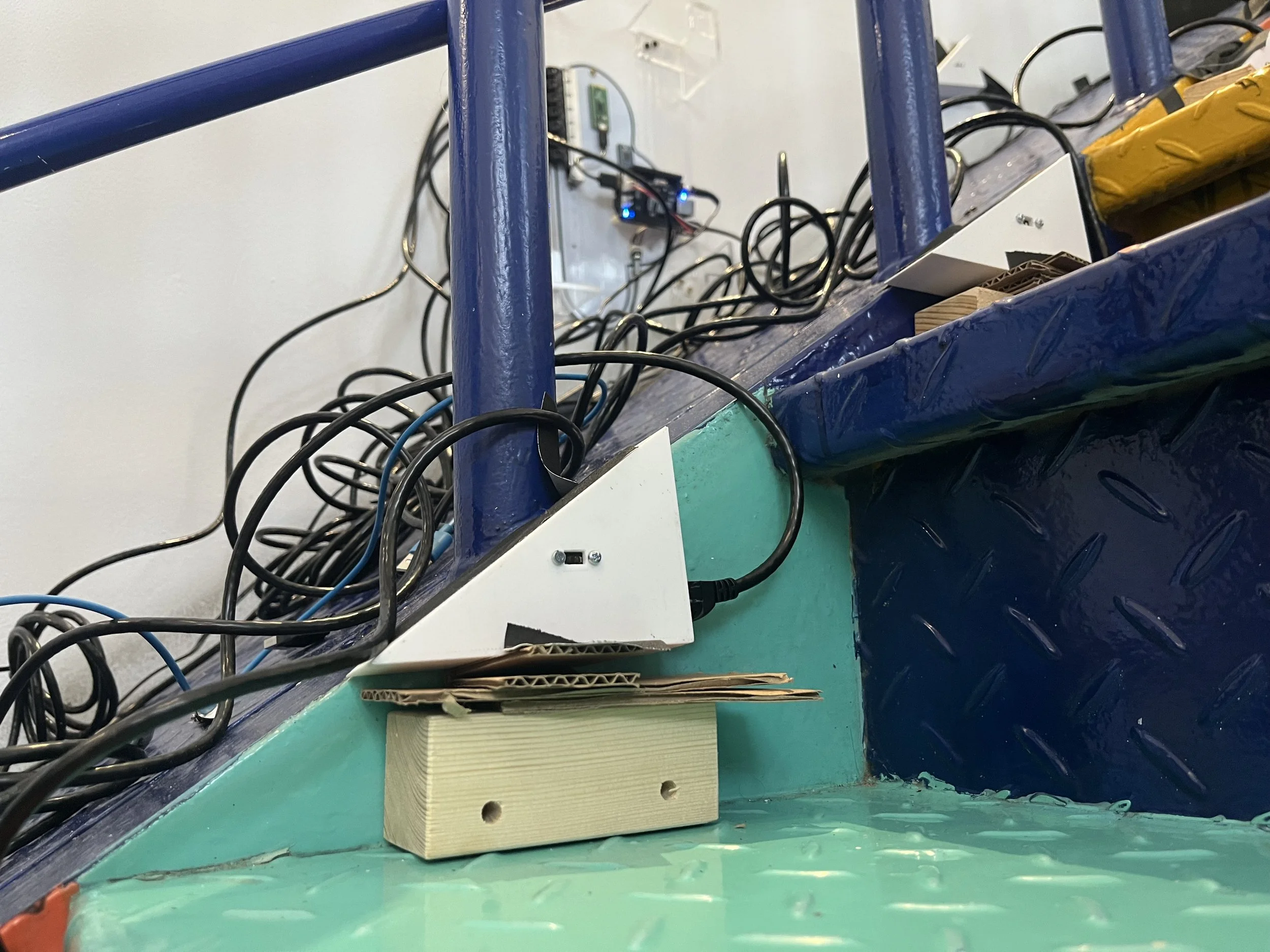
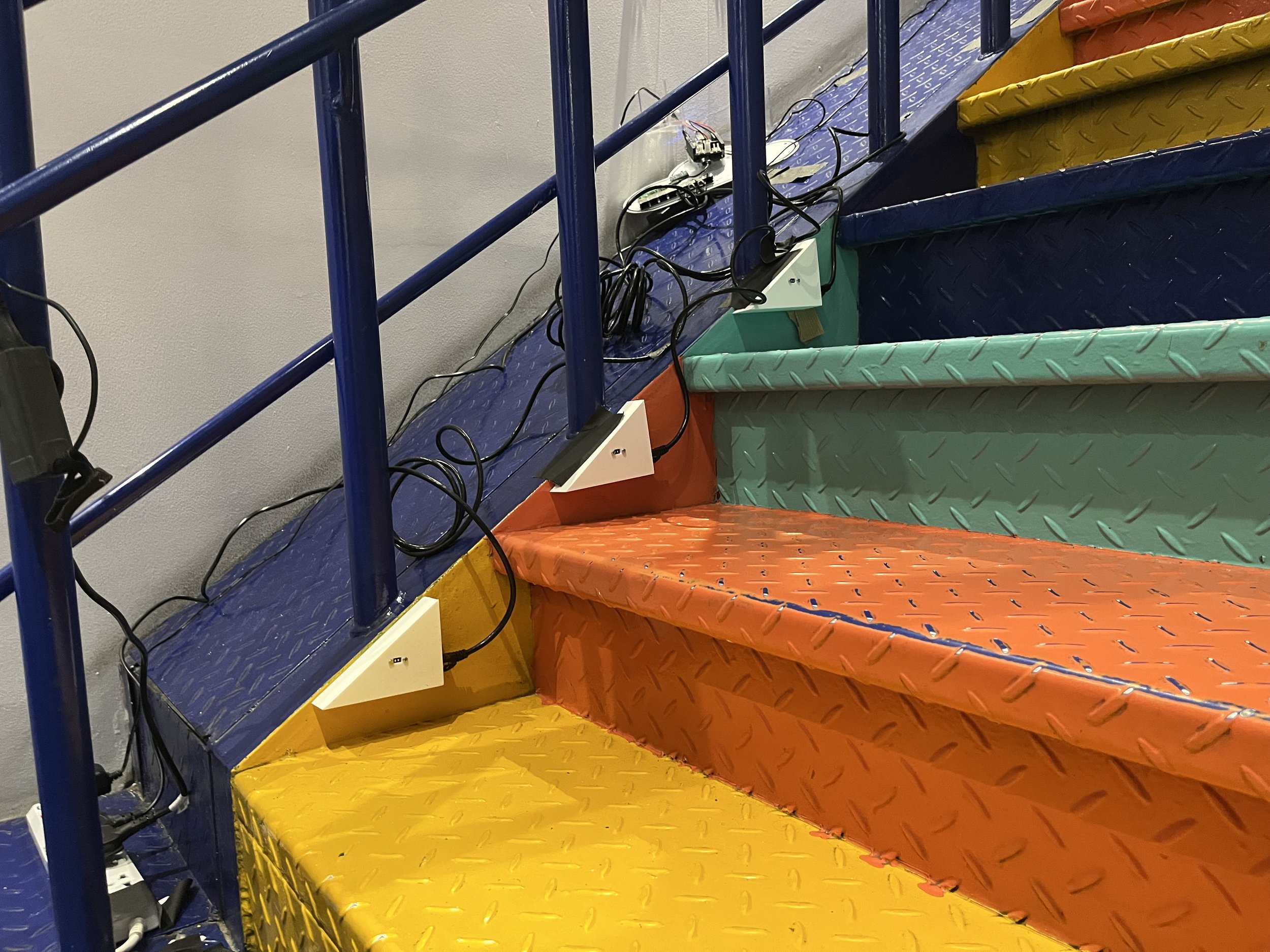
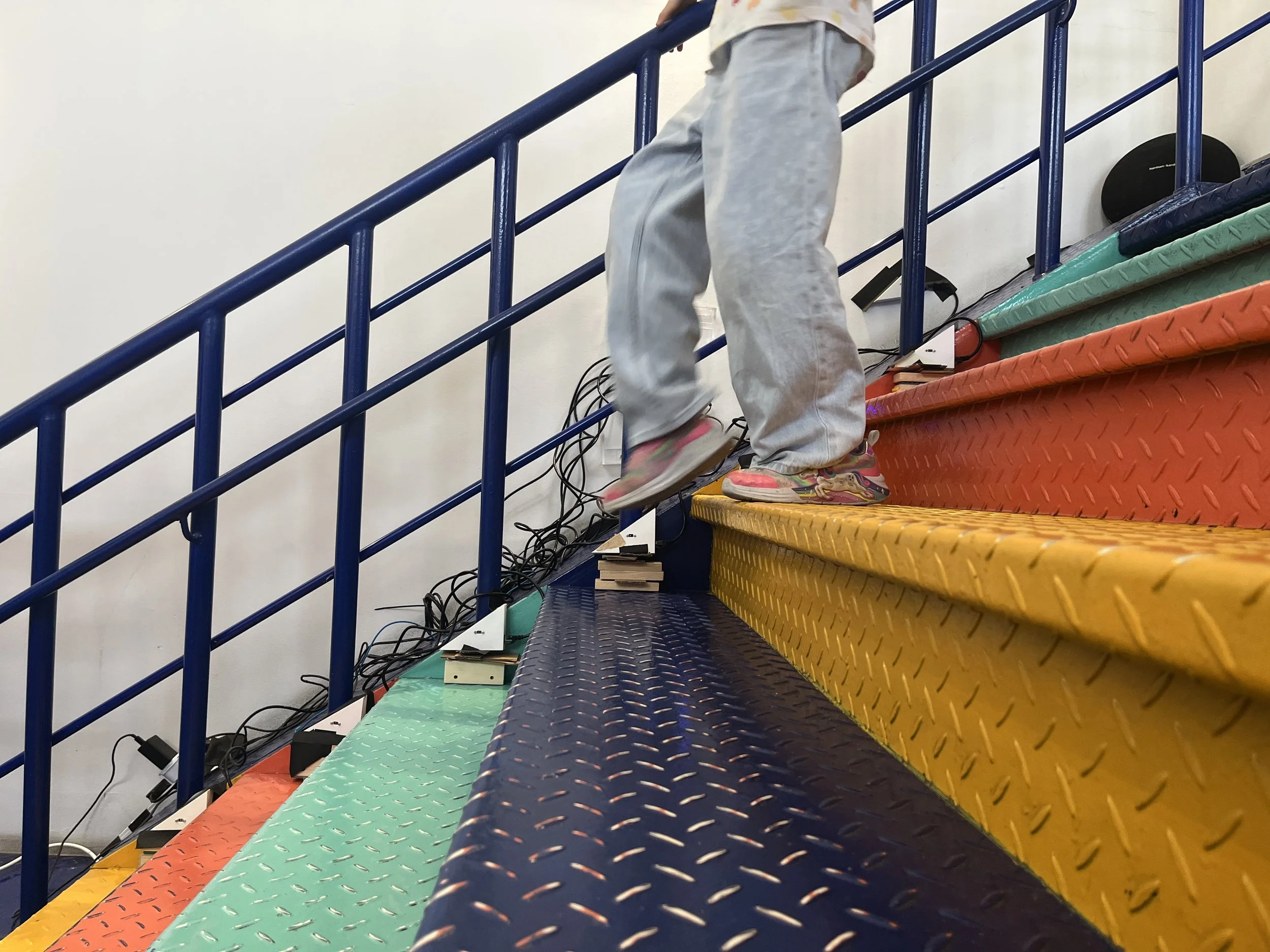
We constantly had to troubleshoot whether problems came from the Bela Board, Raspberry Pi (which controls the sensors) or the physical set up of the sensors. Finally, after lots of testing and experimenting, things slowly started working as expected. One helpful tip that Tom gave was to disconnect all of the sensors and try to get them working one by one. We also used spare pieces of cardboard and wooden blocks to get everything lined up right so that the system could accurately track the steps of visitors.
Once the steps and sensors were all working correctly, we found that it was really fun to play with the soundscapes. One of our favorites one has drumbeats that change speed depending on the distance to the sensor. This type of musical environment allows for a lot of noticing and experimentation. As we go deeper in this design, we’ll think about how the stairs sound at different moments in the day (during a busy field trip and a quite afternoon) and what other ways we can play with the digital tools.
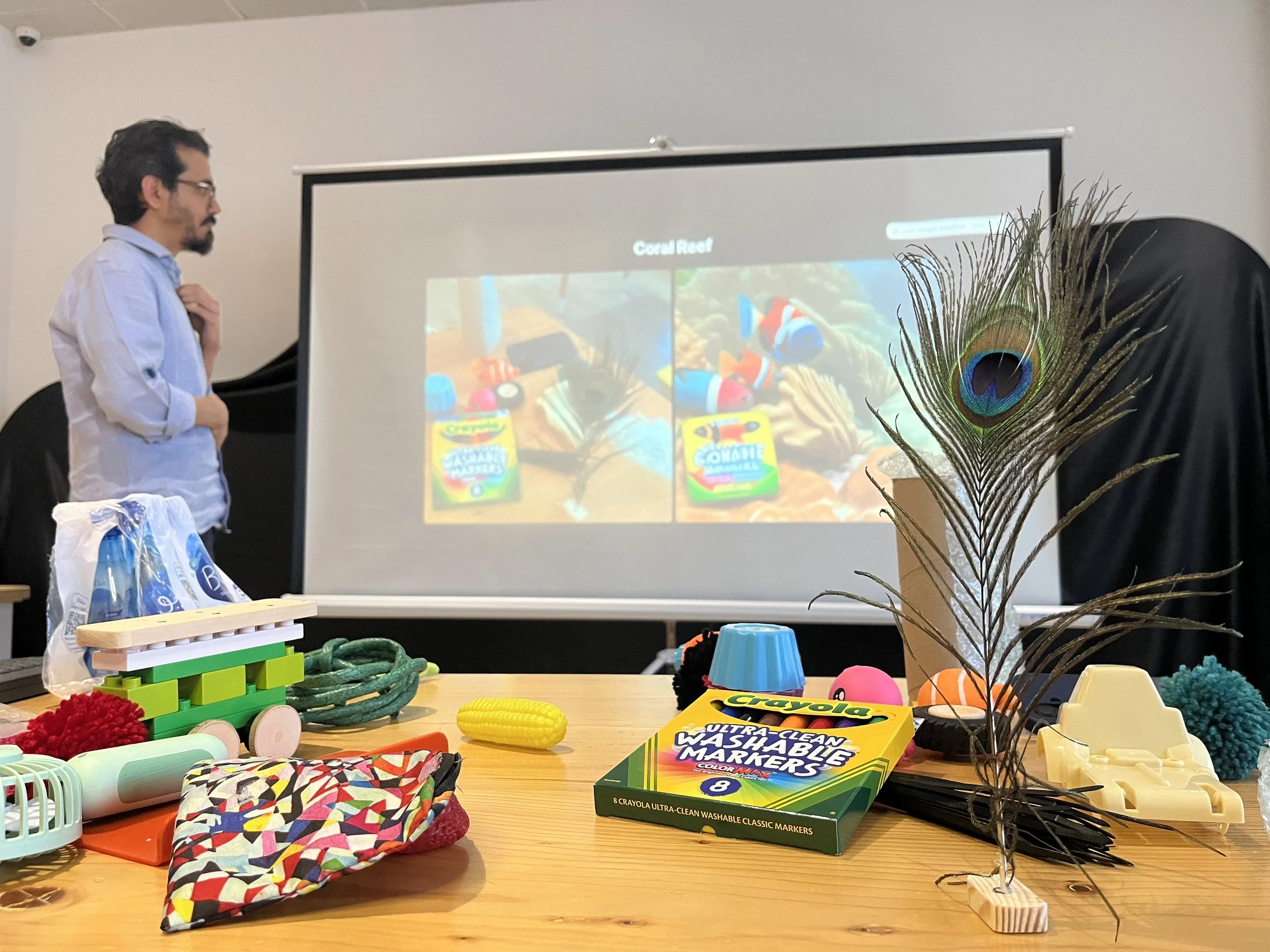
As part of the gallery that connects these two experiences, we’re also trying a couple other fun experiments. I’m really excited to be working with artist Radames Ajna to make a version of the AI Shapeshifter exhibit that was part of the Exploratorium Adventures in AI exhibition this summer. This set up works by mixing a AI image generation prompt with the live image captured by the webcam that’s created in real-time by visitors.
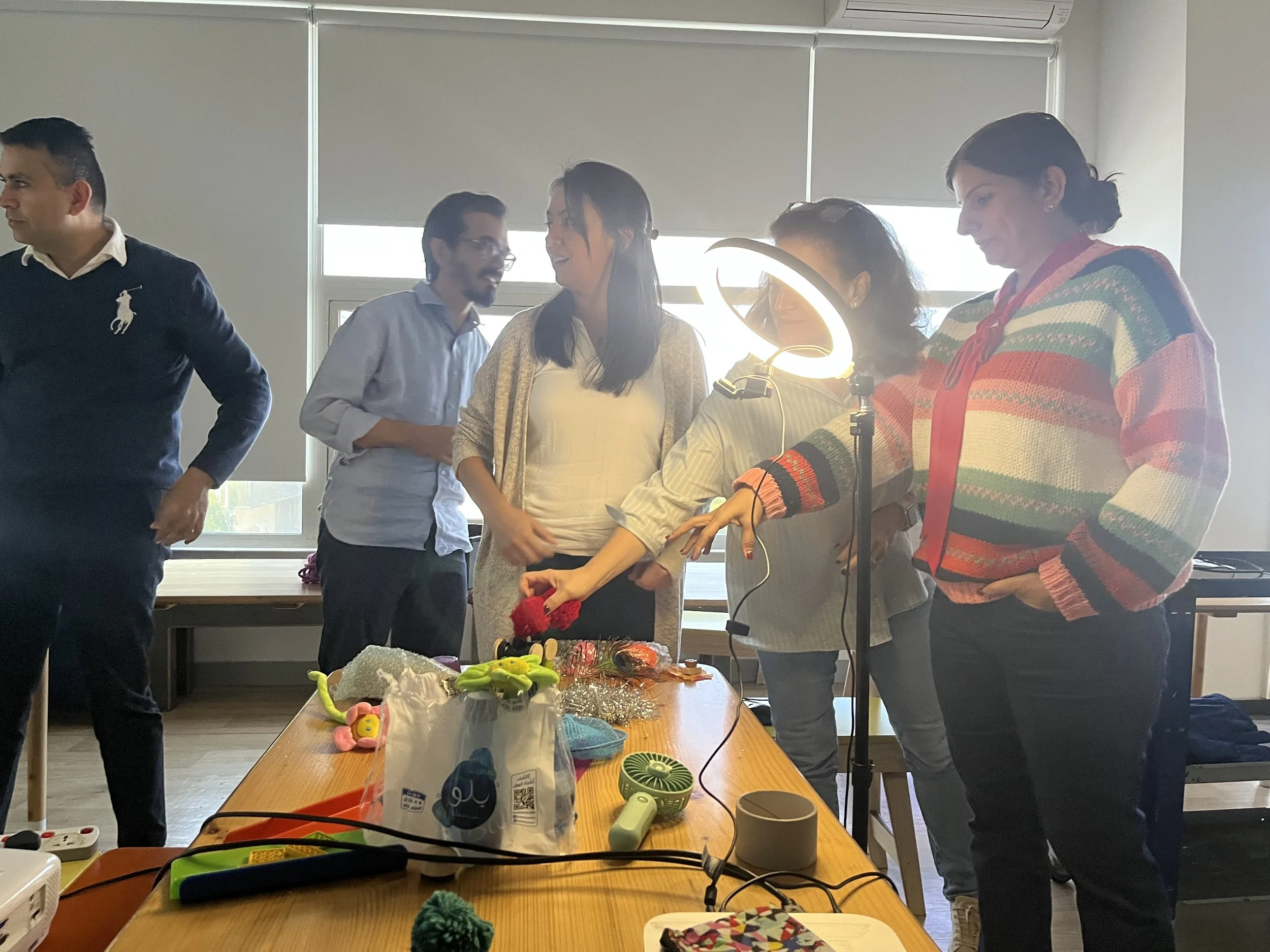
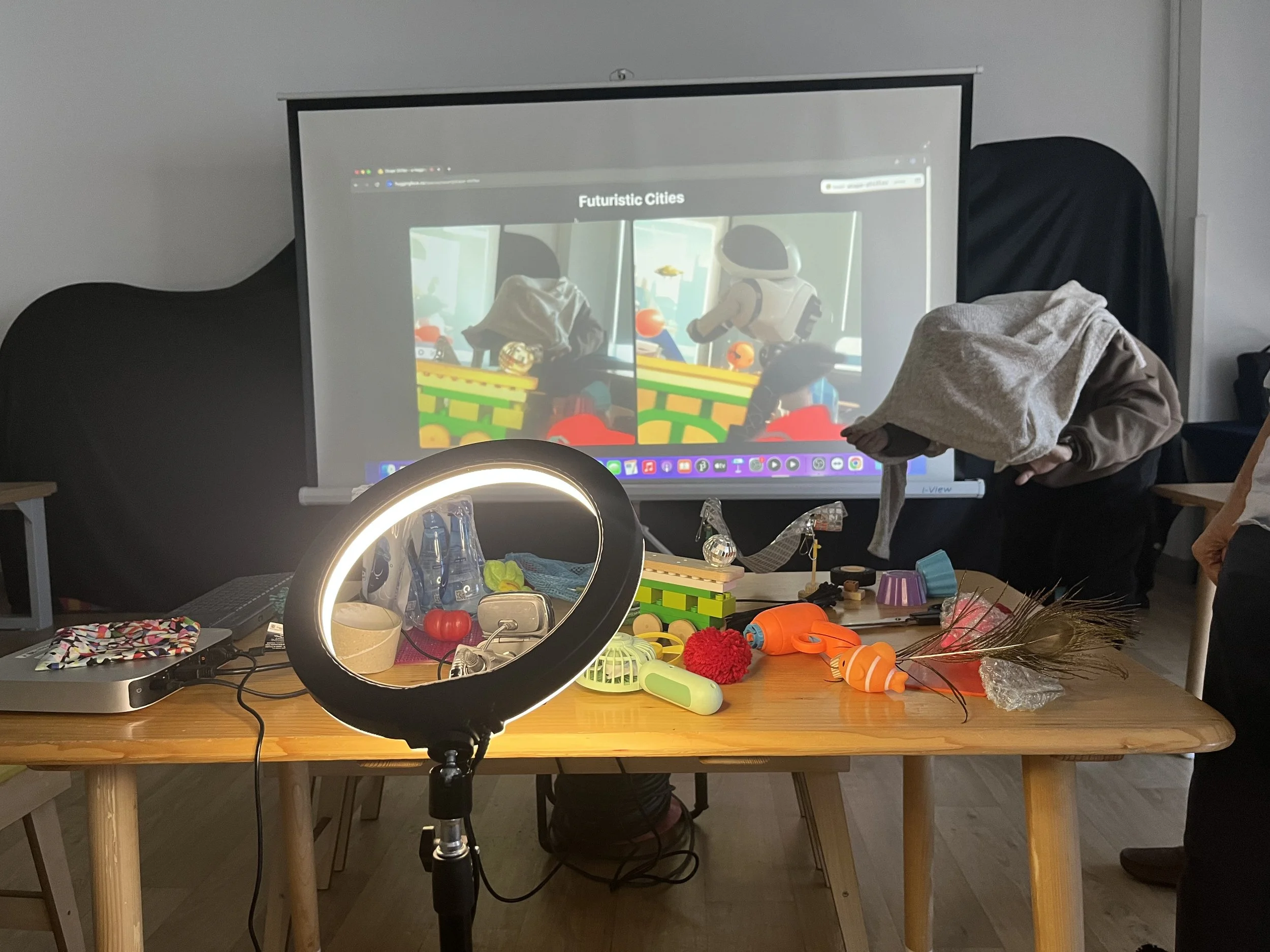
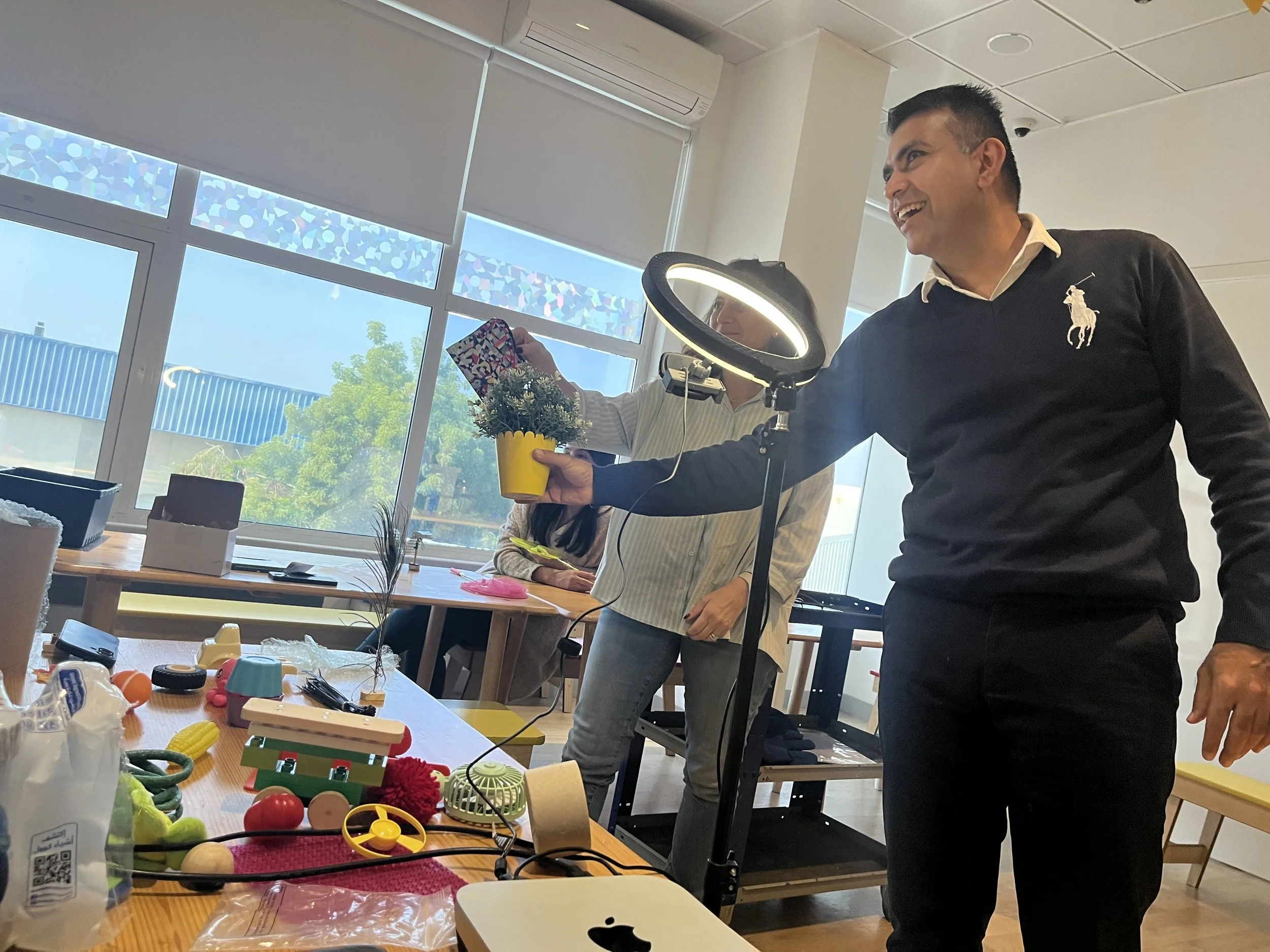
To kick things off we set up a version of the exhibit to try with staff in a small workshop setting. We experimented with different materials, alternate camera angles and putting our faces and bodies into the image. There were lots of great ideas about ways to build on the experience and emphasize visitors creative play.
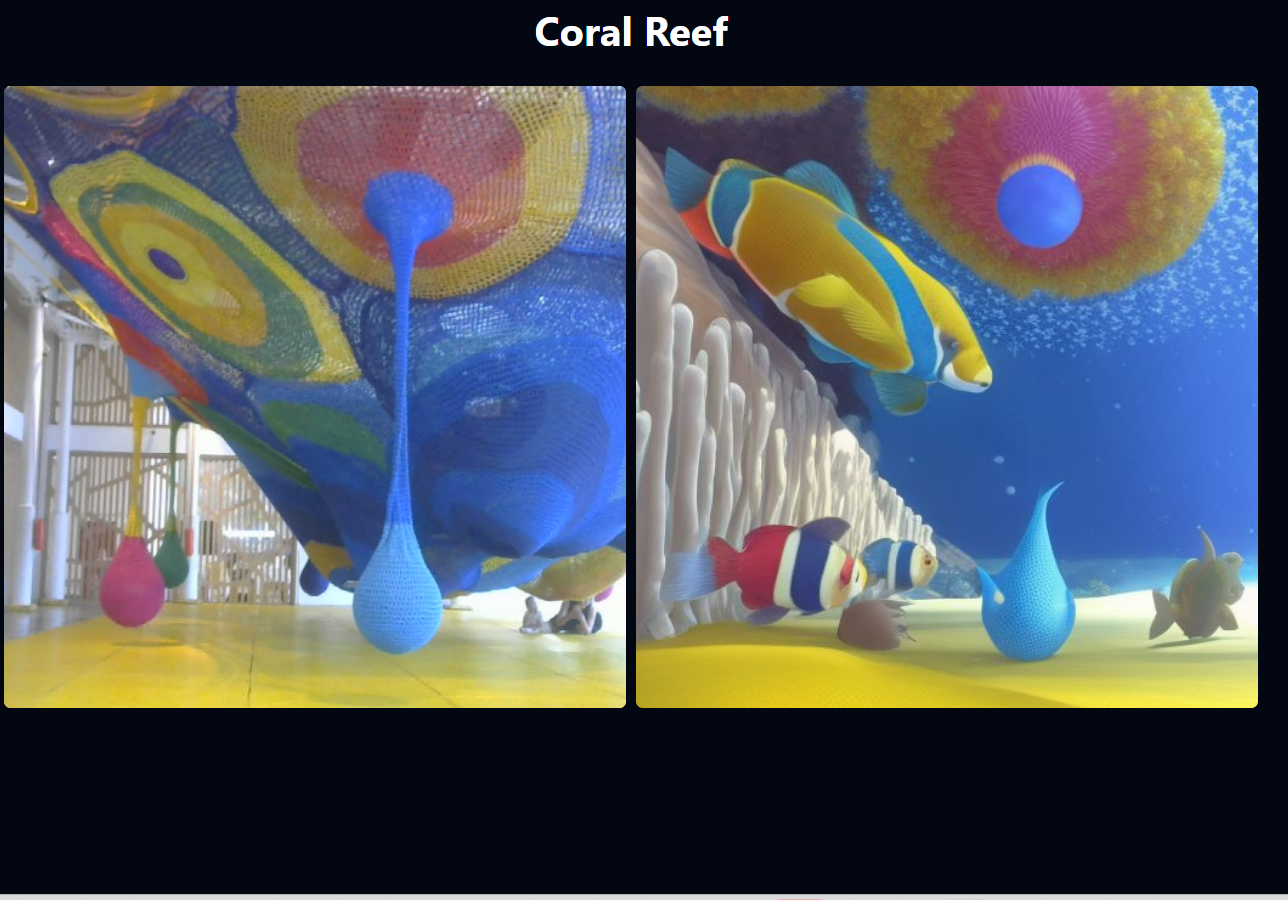
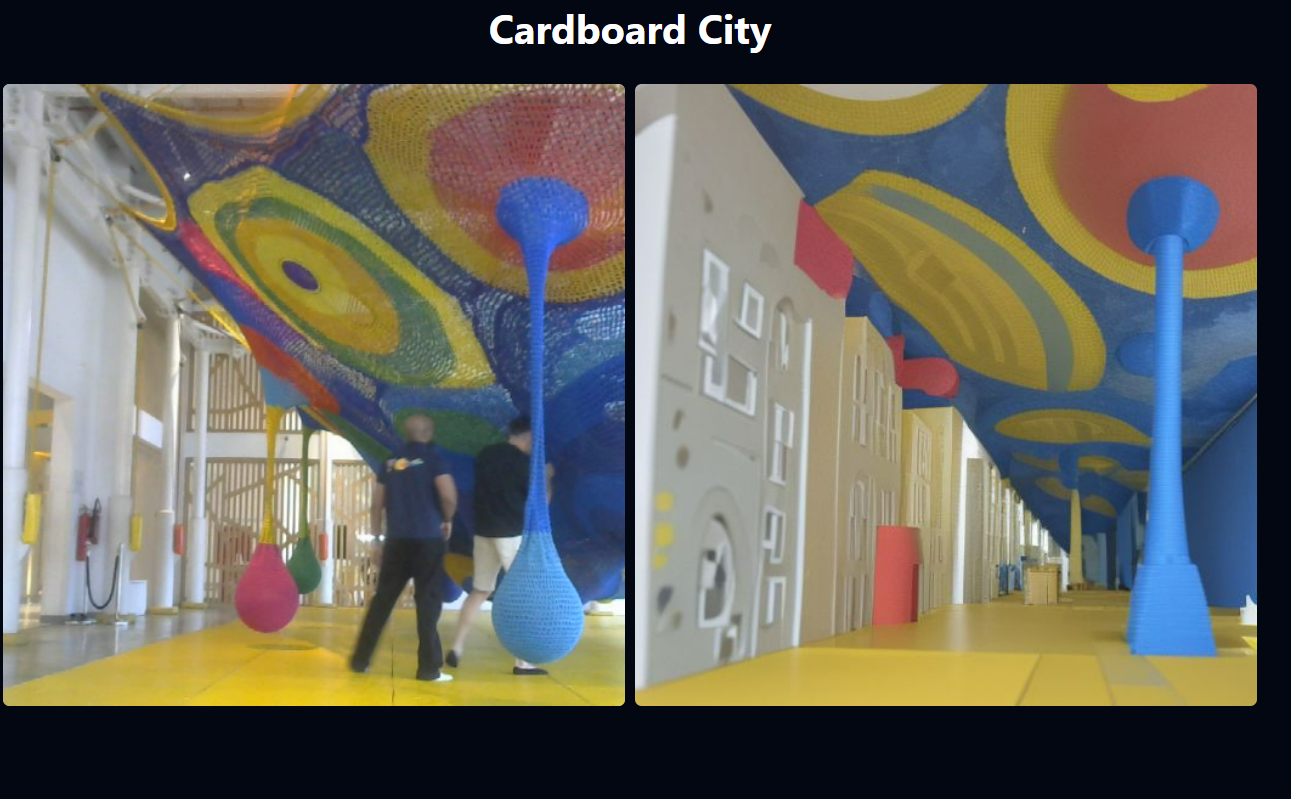
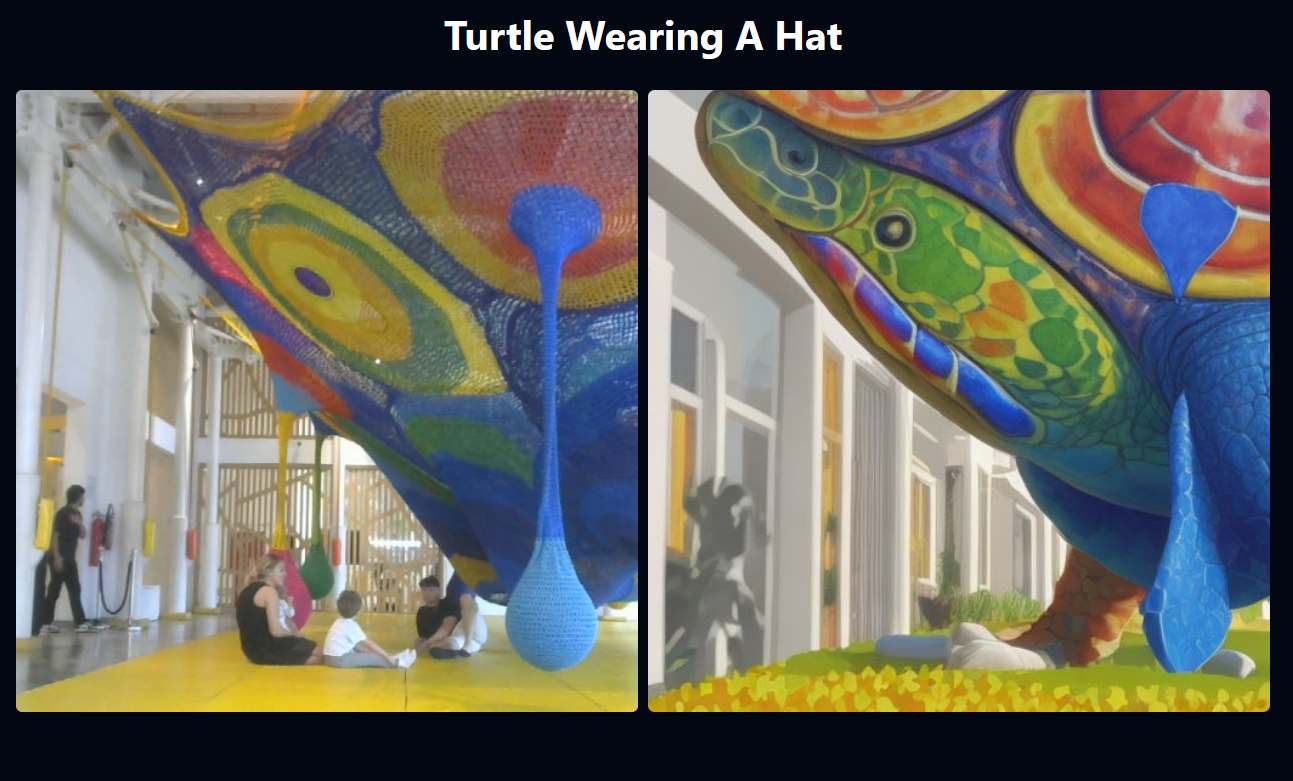
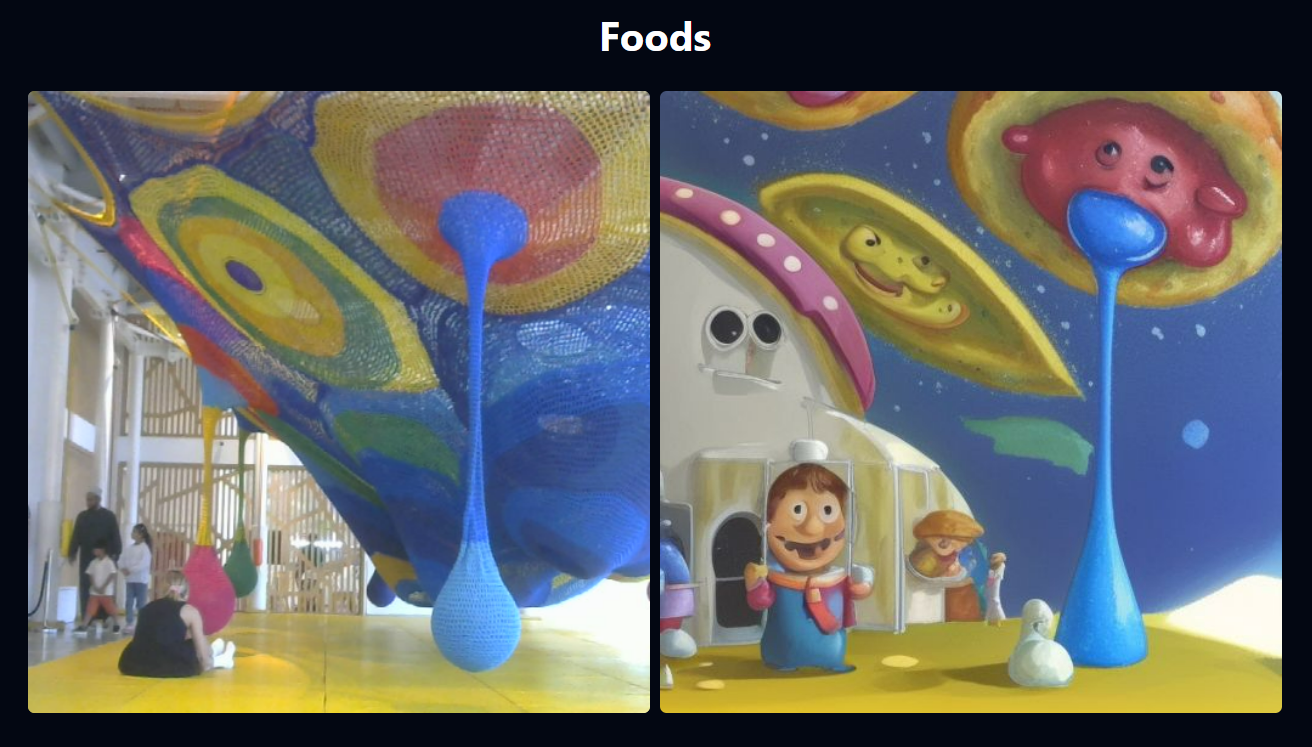
Some of the interesting things that I tested out as well with the AI Shapeshifter was pointing the camera out the window or at different galleries in the museum. These created really interesting images depending on the prompt and could be something to explore further. As well, we started to group prompts (and even design new ones) that worked well with specific sets of materials or camera orientations.
Over the next weeks and months we’ll be engaging in some parallel prototyping to refine these concepts and create “finished versions” for the museum floor. I’m looking forward to continuing the experiments and creating more playful and engaging experiences for museum visitors at OliOli.