Early Childhood Creations with Code and Cardboard
I’ve been continuing lots of tinkering experiments with my three and a half year old son and reflecting on the ways that we’ve been engaging with materials, art/science phenomenon, imagination and storytelling. Its been amazing to get to observe his process to approach these projects and really fun to faciliate his interactions with physical and digital objects. I wanted to share a couple of recent observations and ideas around early childhood tinkering.
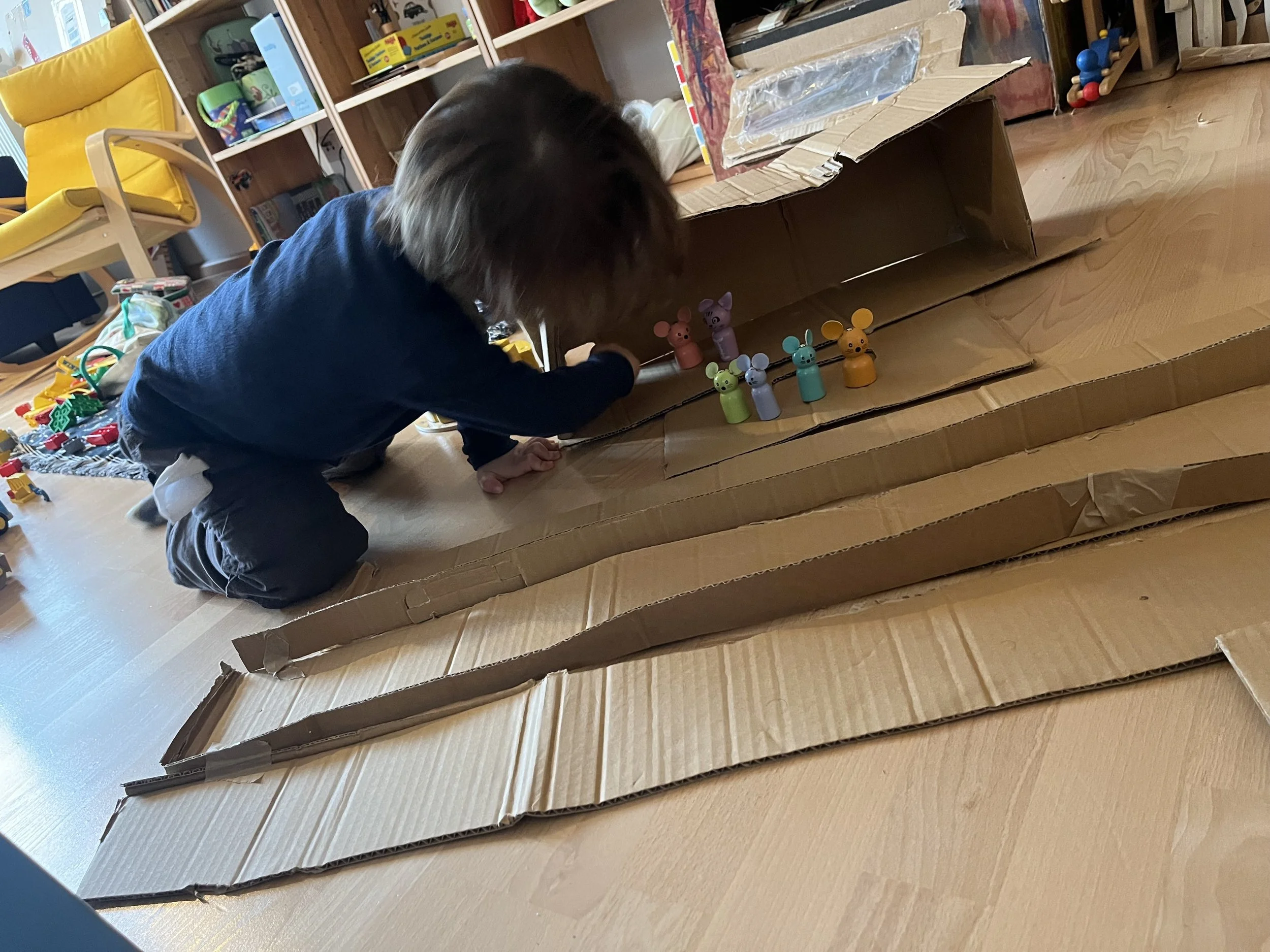
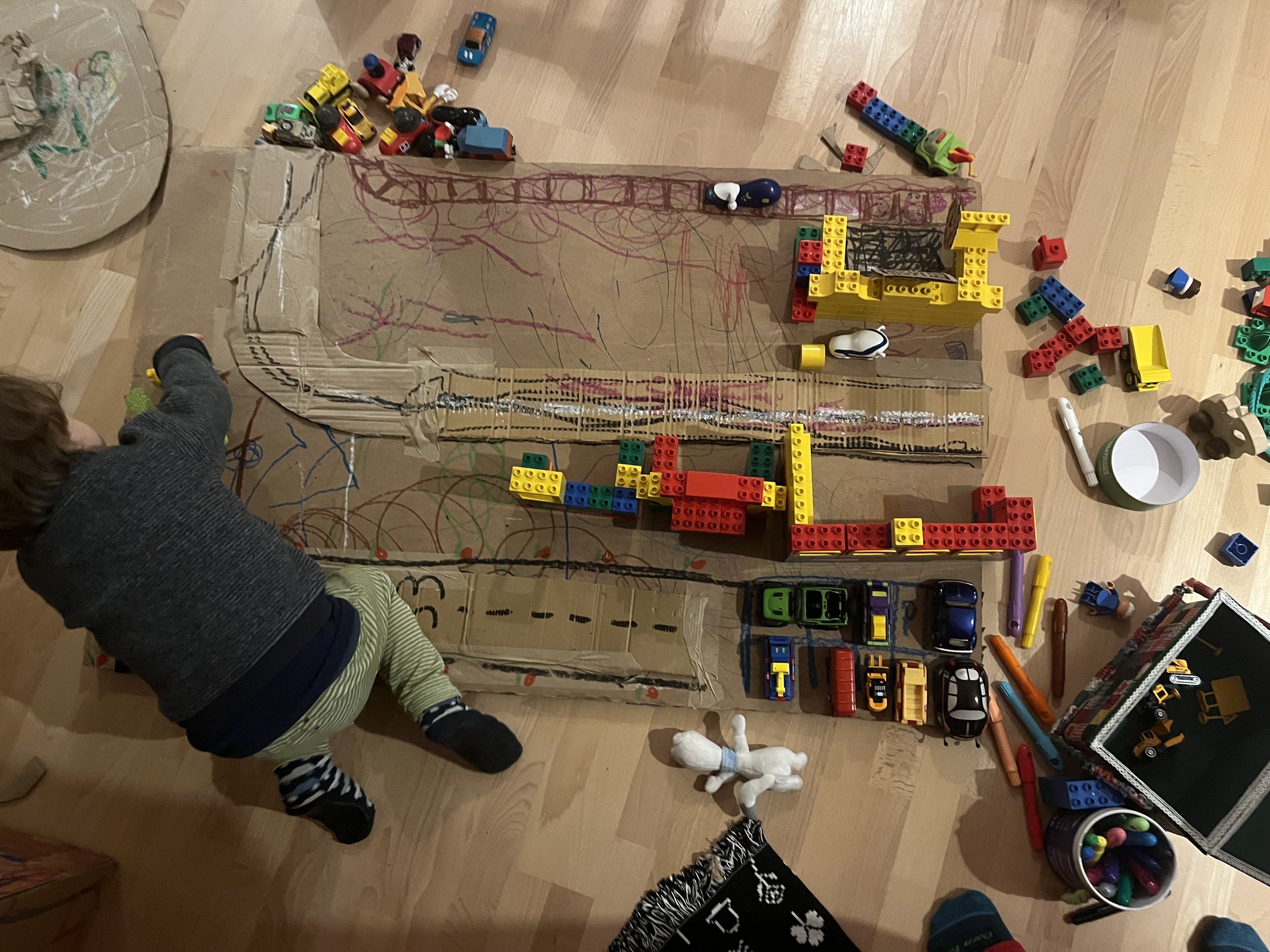
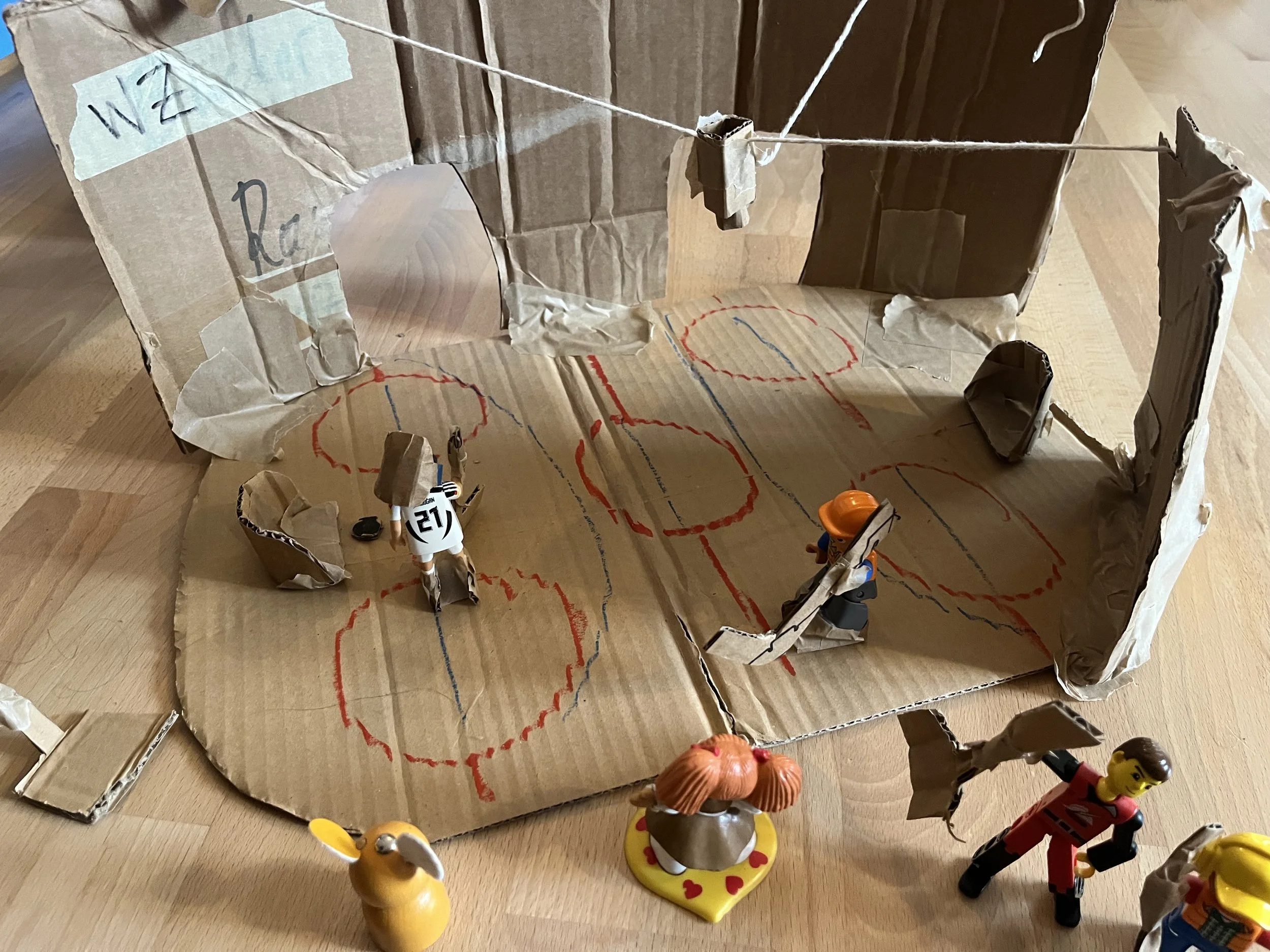
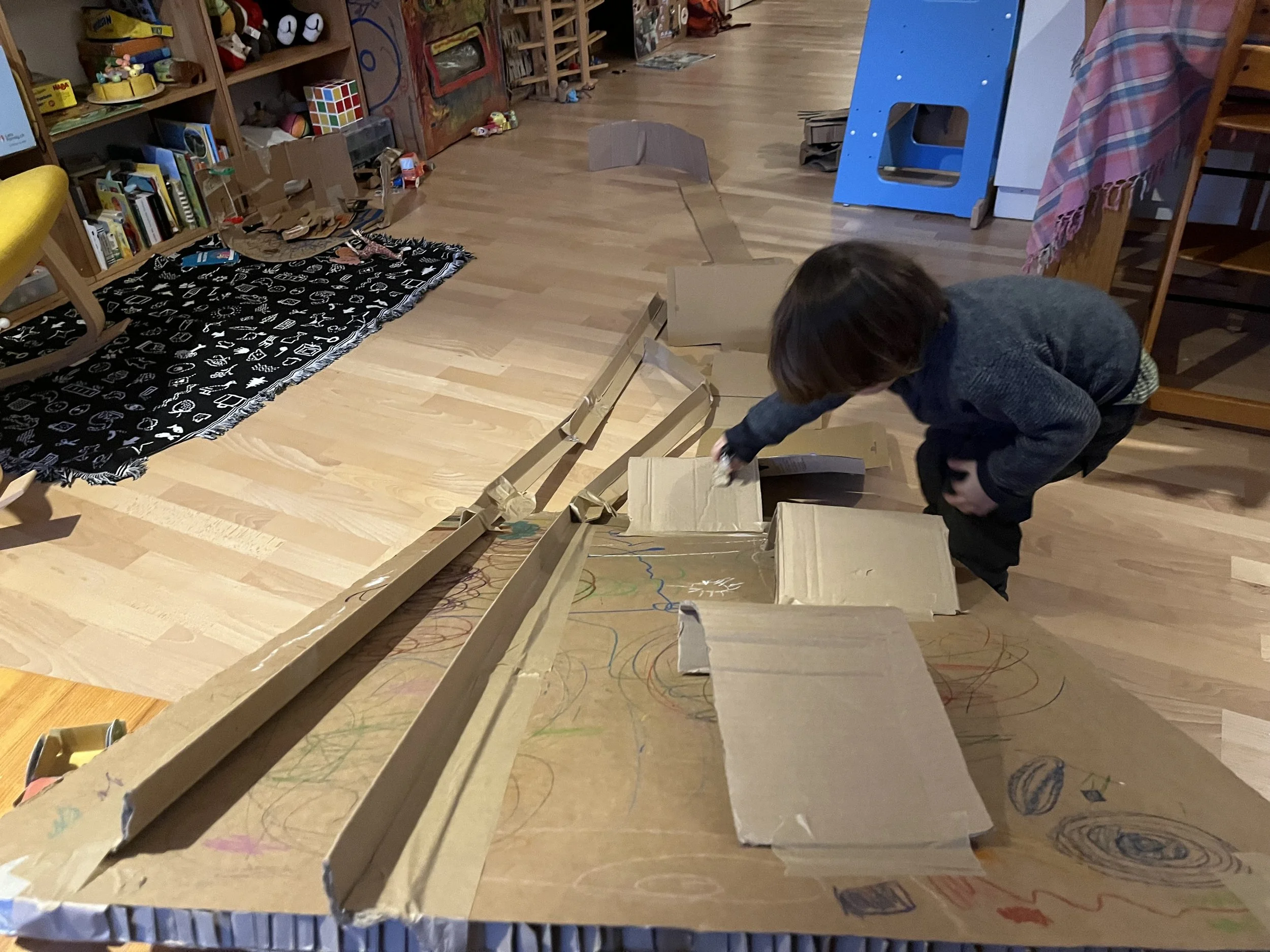
He’s at a stage now where he really wants to act out stories, make up narratives, “be” characters and construct representions of things that we’ve seen or done. For example we watched a bit of the Winter Olympics which sparked a series of cardboard constructions from ice hockey rinks (complete with zambonis to ski jumps to figure skating costumes for stuffed animals to bobsled tracks. I can see how for him, building something tangible helps him to inhabit and have agency over experiences.
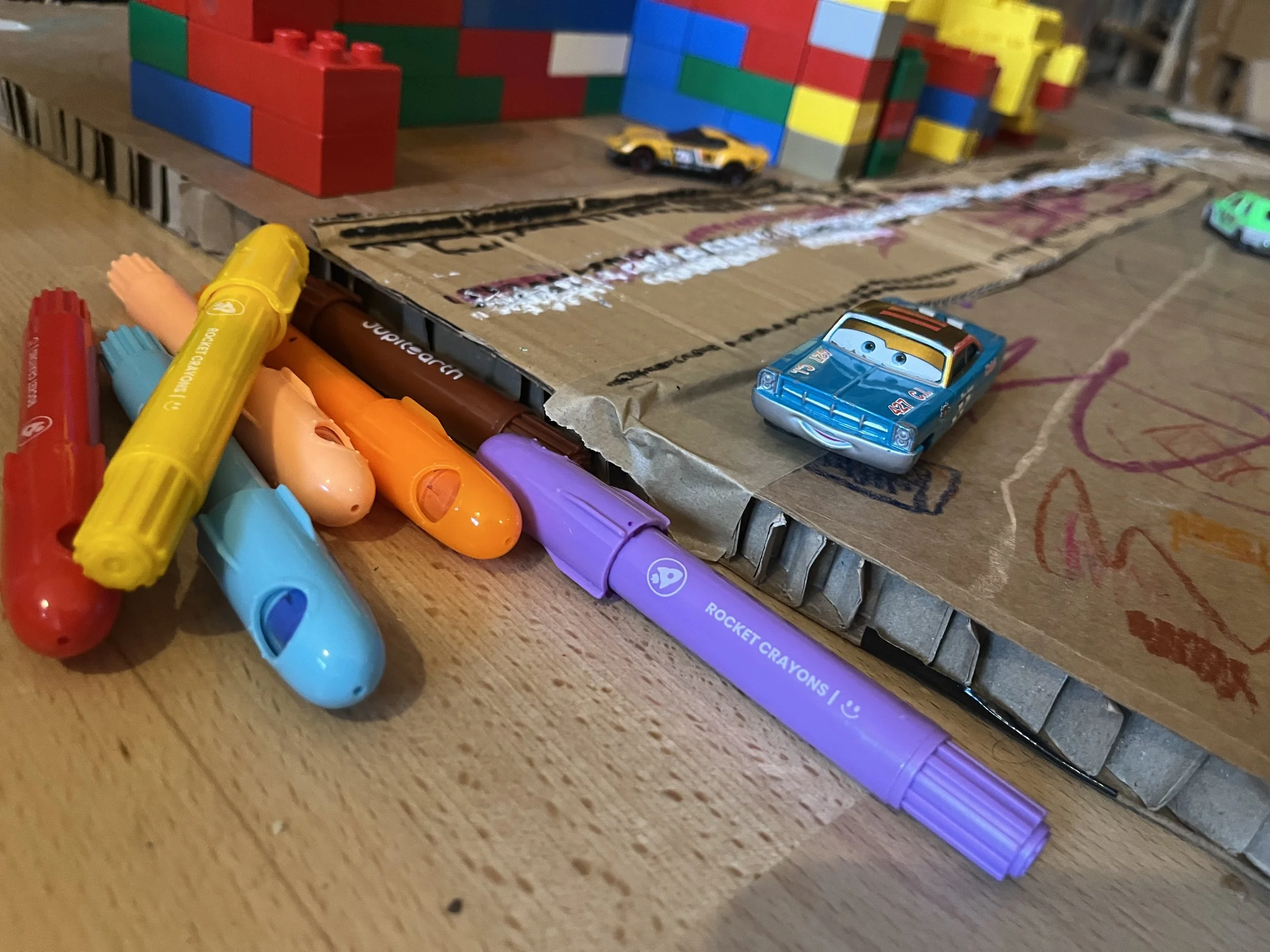
I think one of the biggest takeaways as a faciliator of these experiences is how wide the materials set should be. Our best explorations take place when we’re mixing cardboard, crayons, blocks, DUPLO and toy cars/figures all in the same construction. Especially for early childhood learners having a wide selection of materials that can be used flexibly opens up so many possible pathways.
That’s why I’m also really interested to see how he approaches scratch and other programming tools. We made a few of these micro:bit robots inspired by different animals in Julia Rothman’s Nature Anatomy series of books using make:code. But recently he wanted to make a dog that made a realistic barking sound so we moved to Scratch to explore that idea. We used the micro:bit A button as the way to start the story which I think was nice because it gave him something to hold and some control over the process. It was really cool to see how he got oriented to scratch, of course at first wanting to see all of the sprites and hear all of the sounds but them moving into telling a little story and recording his own voice. It was so interesting to see how he started talking about making the the project just like how we think about cardboard or DUPLO as a flexible material that can be turned into almost anything.
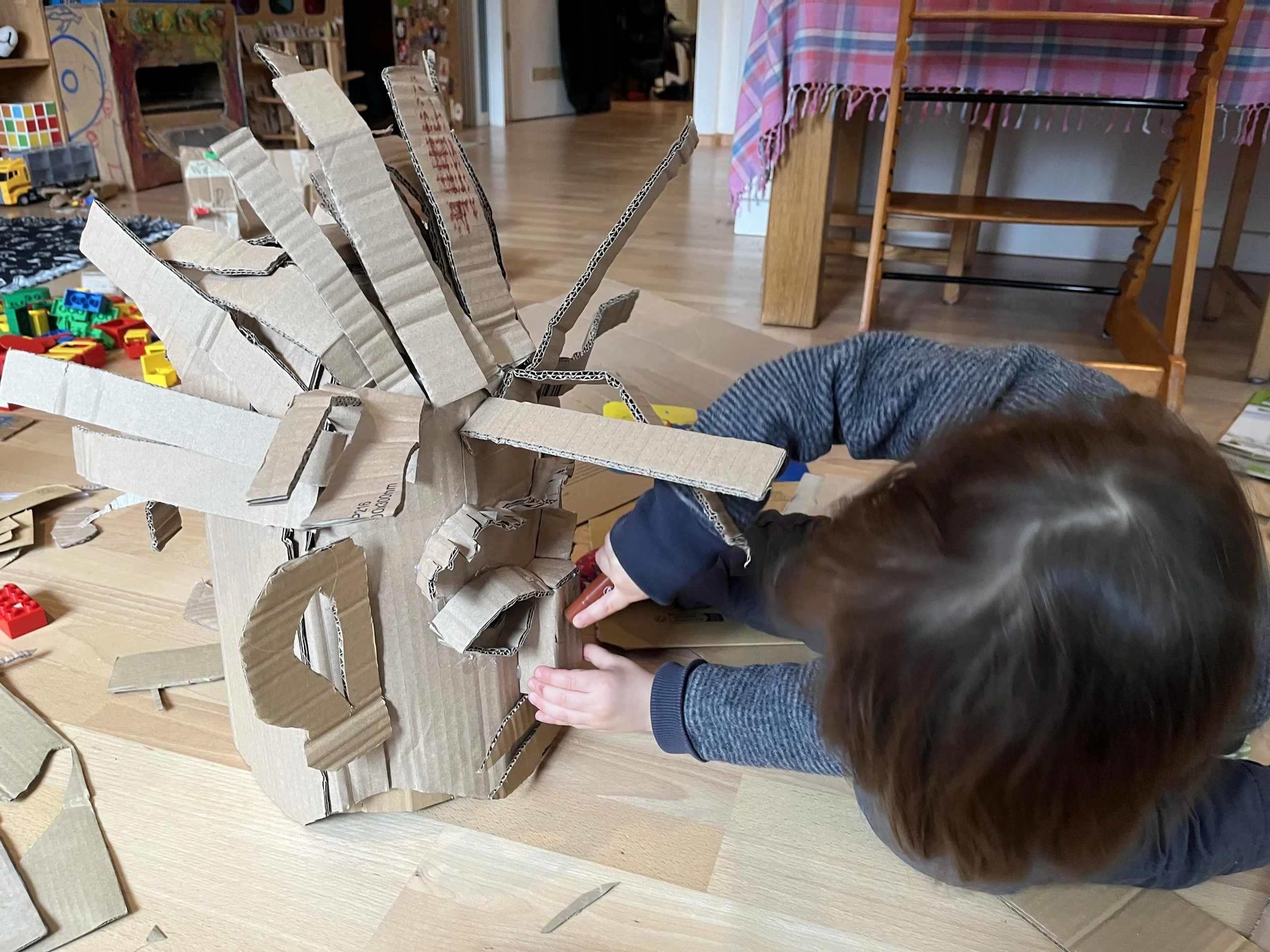
I’ve been thinking about Seymour Papert’s quote where he says that “the computer is the Proteus of machines" and with open-ended tools like scratch it feels that way where the computer can create a near infinite possibilities for screen base projects. Alongside these programming tools I think it’s also important to look for the “proteus-quality” that can be found in physical materials. Crayons, cardboard, DUPLO and other objects can also be turned into almost anything with the right approach, a playful attitude, and a pair of scissors and bit of masking tape). I’m excited to keep exploring these ideas and sharing them with other young learners in schools, libraries and museums.