AI Trainshifter Explorations
Over the past weeks, I’ve been working with artist Radames Ajna to create a new version of his AI Shapeshifter exhibit for OliOli children’s museum in Dubai. The software at the heart of the exhibit combines generative AI image prompts with the real-time video input from a webcam creating an ever shifting and changing landscape that blends a real world scene with fanastical digital creations.
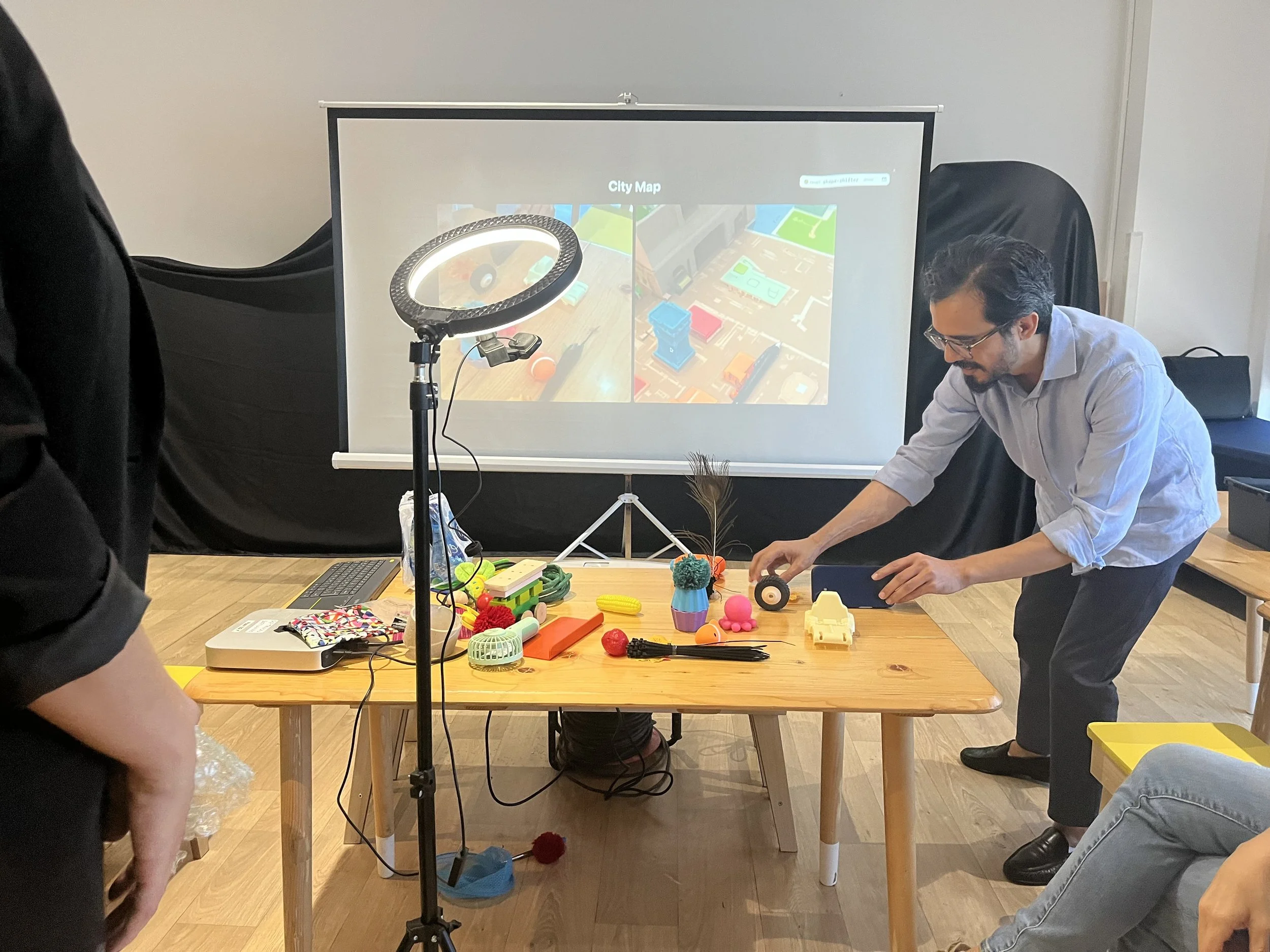
Last month when I was on-site in Dubai, we had a prototyping session with staff to share ideas and questions about the prototypes. As part of the continuing development process we’re thinking about the prompts, physical materials and station setup as well as following unexpected discoveries and pathways.
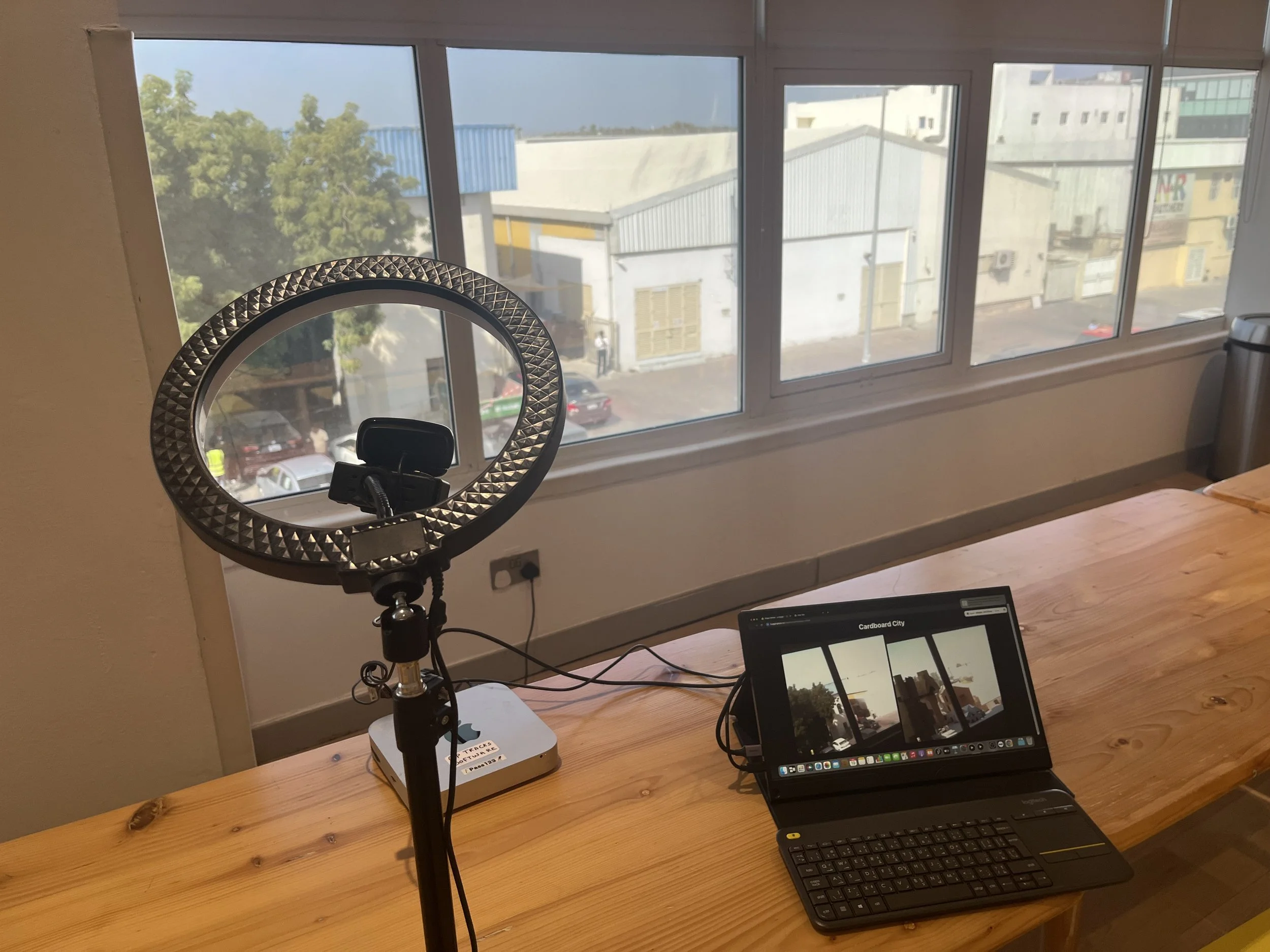
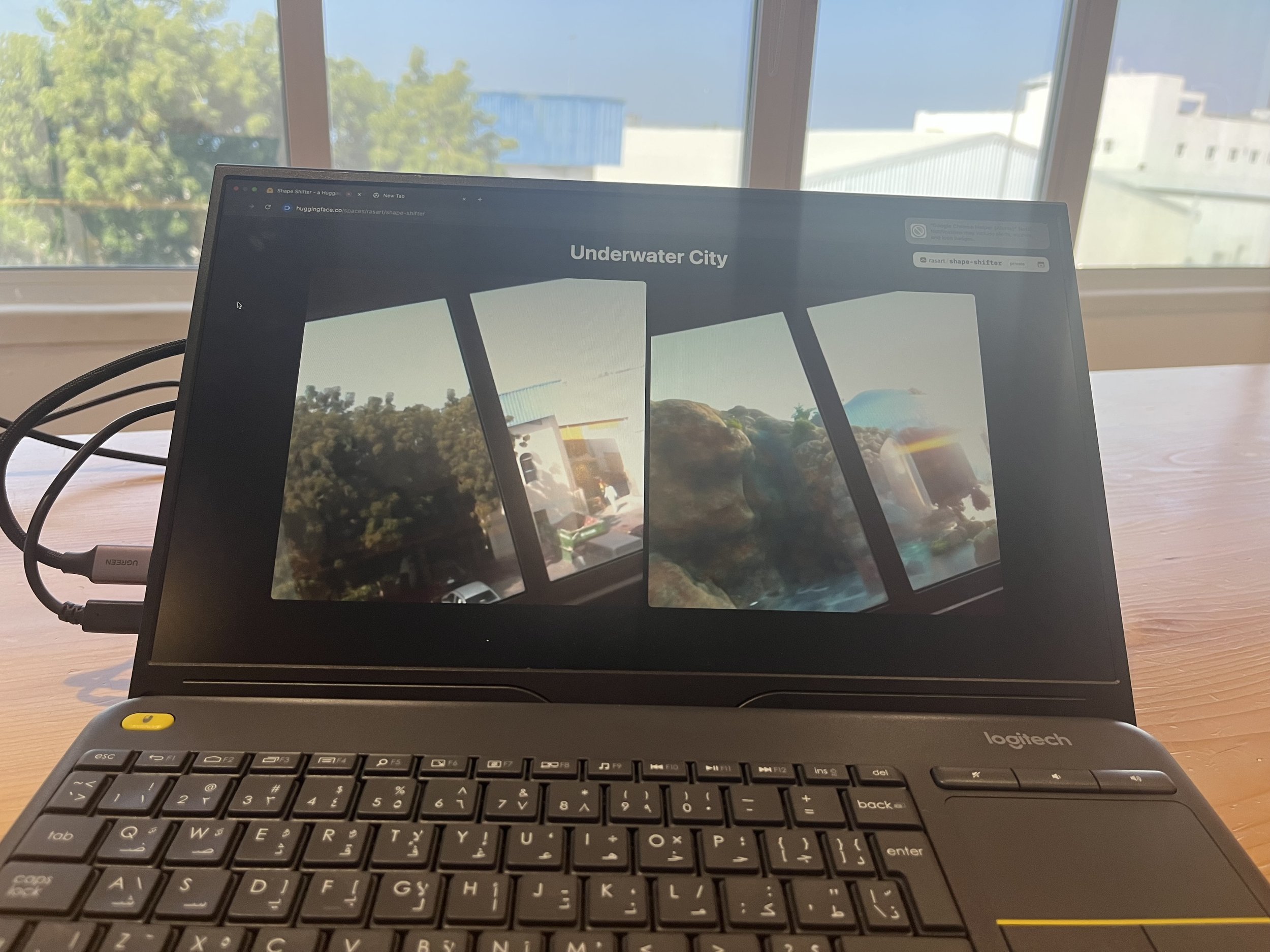
One thing that I noticed almost by accident was how compelling it was to just point the camera out the window or towards a museum gallery to see how the scene could be translated into a cardboard city, coral reef or enchanted forest. Small movements of people or cars crossing the image changes the way that the AI “sees the scene” and which affects the resulting image. This discovery made me think that the exhibit could also work well as part of a “false window” like an augmented version of our Tinkering Studio office virtual window way back when.
This experiment gave me the idea to test the AI shapeshifter while traveling on the train which coincided with trips this week to Milan and Heilbronn. We’re running the station online using cloud based GPU power and a bit of spotty wifi so the quality is less than the actual exhibit but it was really fun to experiment with this idea.
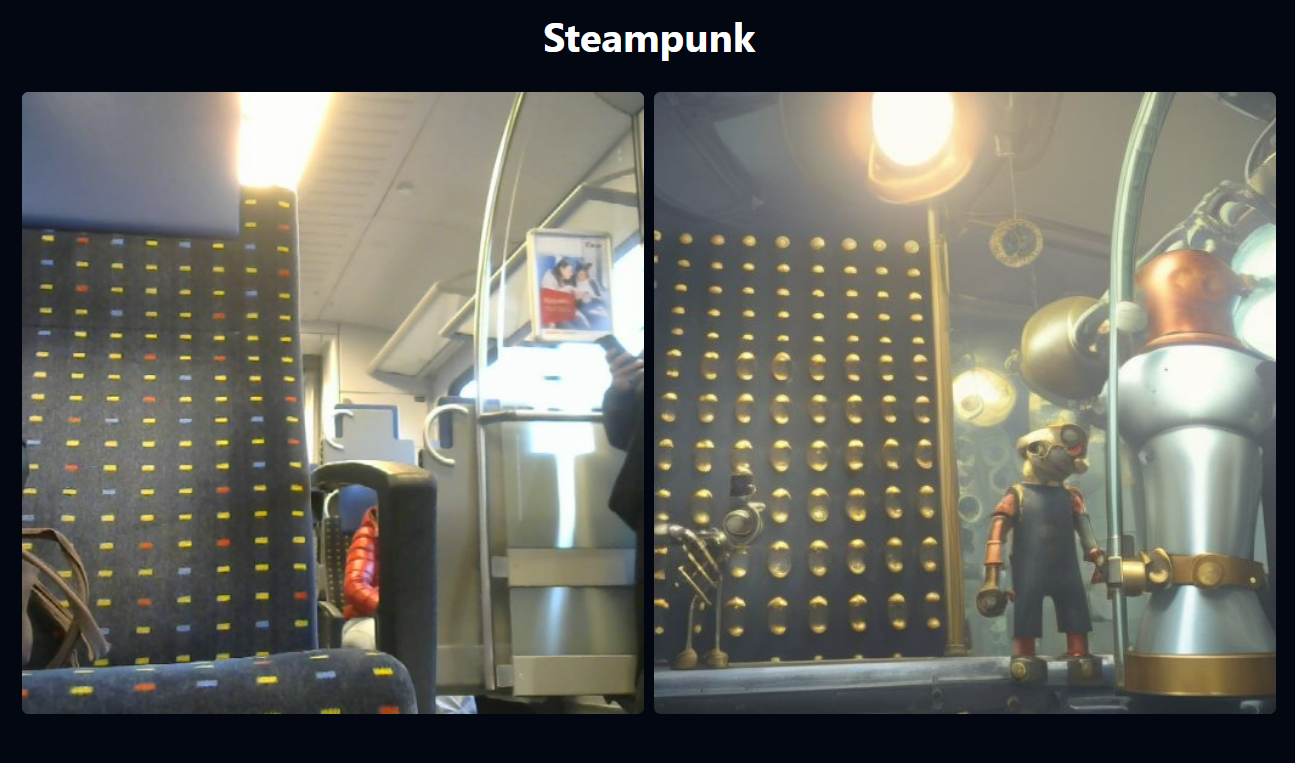
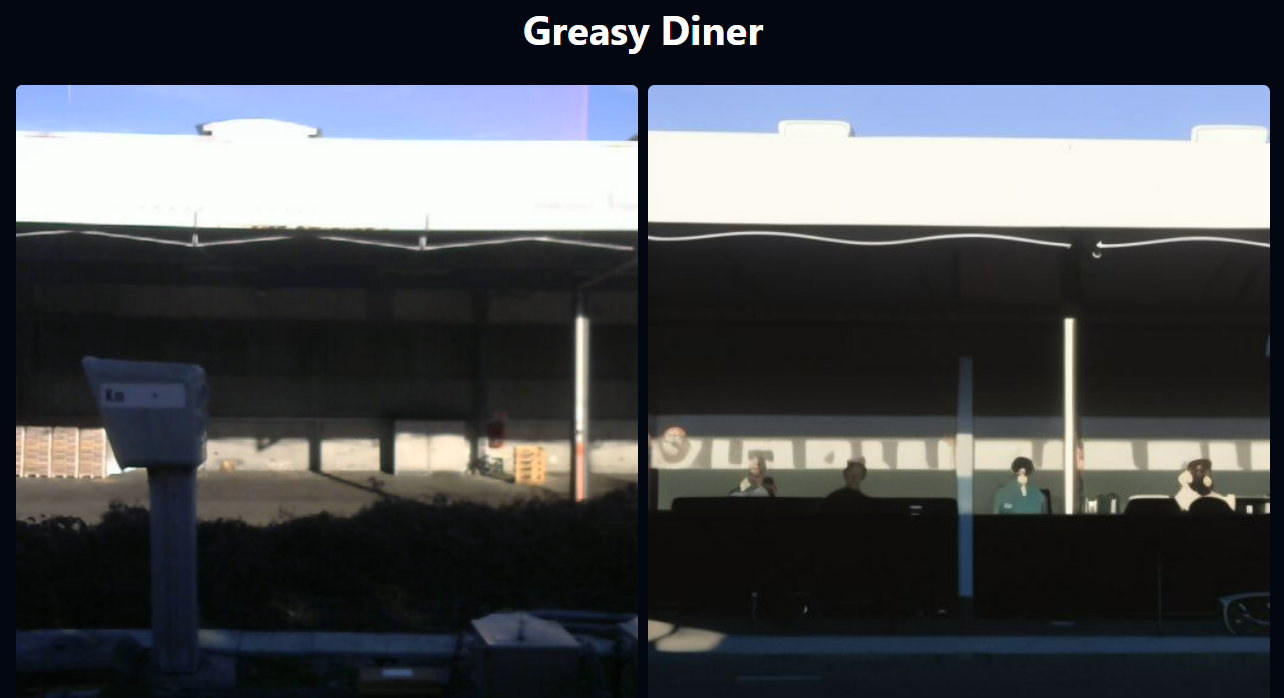
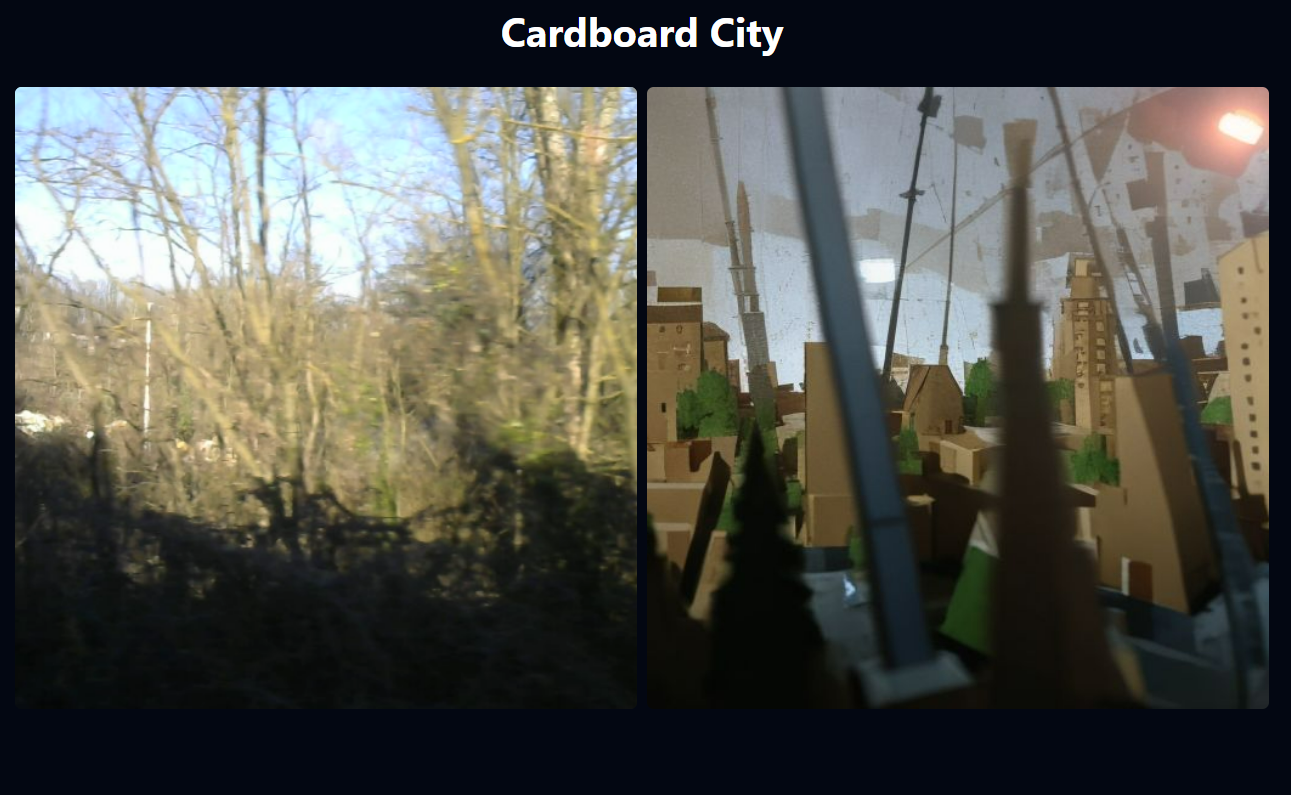
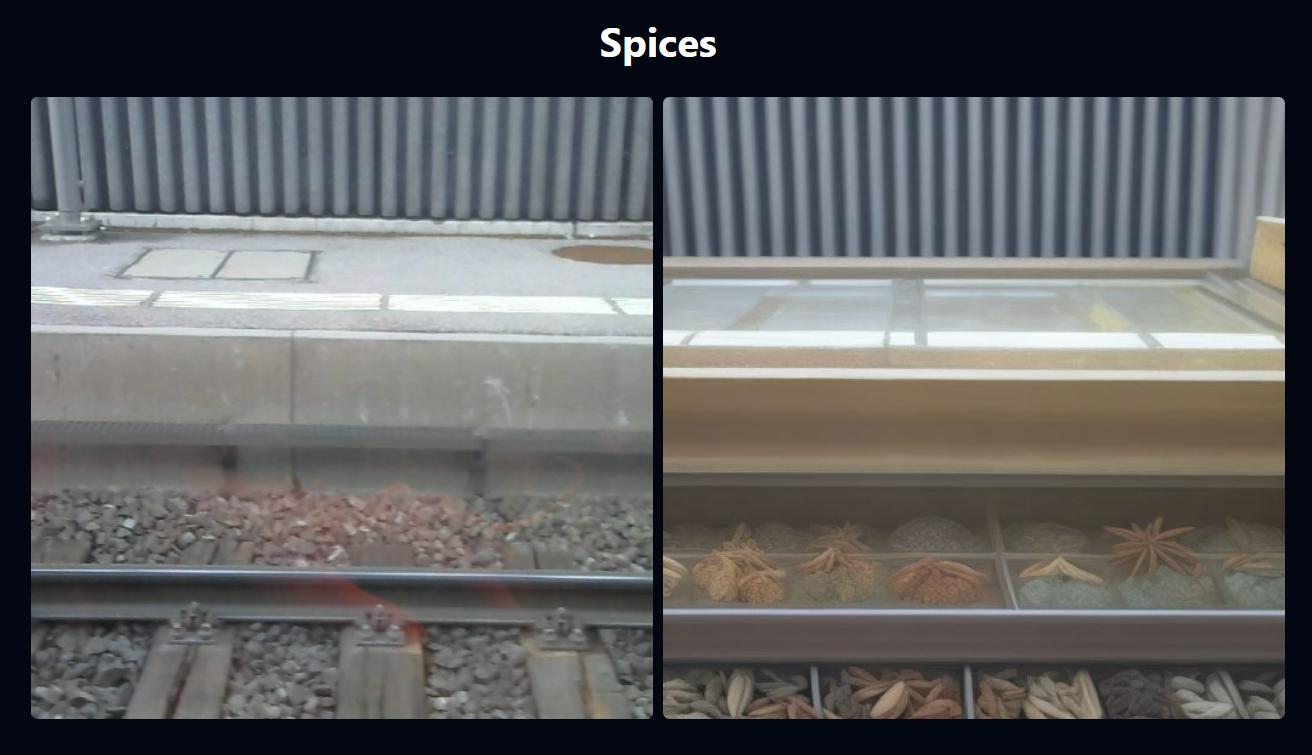
I propped up the webcam on the window and tried a bunch of different experiments with prompts and scenery. It was interesting to see the sweet spot of train speed and closeness of the background. It was also fun to see which prompts created the most interesting scenes.
Ways like this to play off of naturally changing backgrounds seem really interesting from the prototyping perspective. One thing that we want to try is adding motion to the exhibit station (even temporarily with slow moving platforms) and experimenting with the right combination of prompts and materials. Radames has created a open-ended platform that allows for a lot of experimentation with AI instead of presenting an experience of learning about AI. For this reason I’m excited about the tinkering possibilities and will share more explorations.