Wayne RESA Micro:bit Art Bots
A couple weeks ago I lead a professional development workshop with a group of maker educators from Wayne RESA program based in Michigan. As part of their “making spaces” series of events we set up a three hour session centered around constructing programmable drawing machines using micro:bit, servo motors and everyday materials.
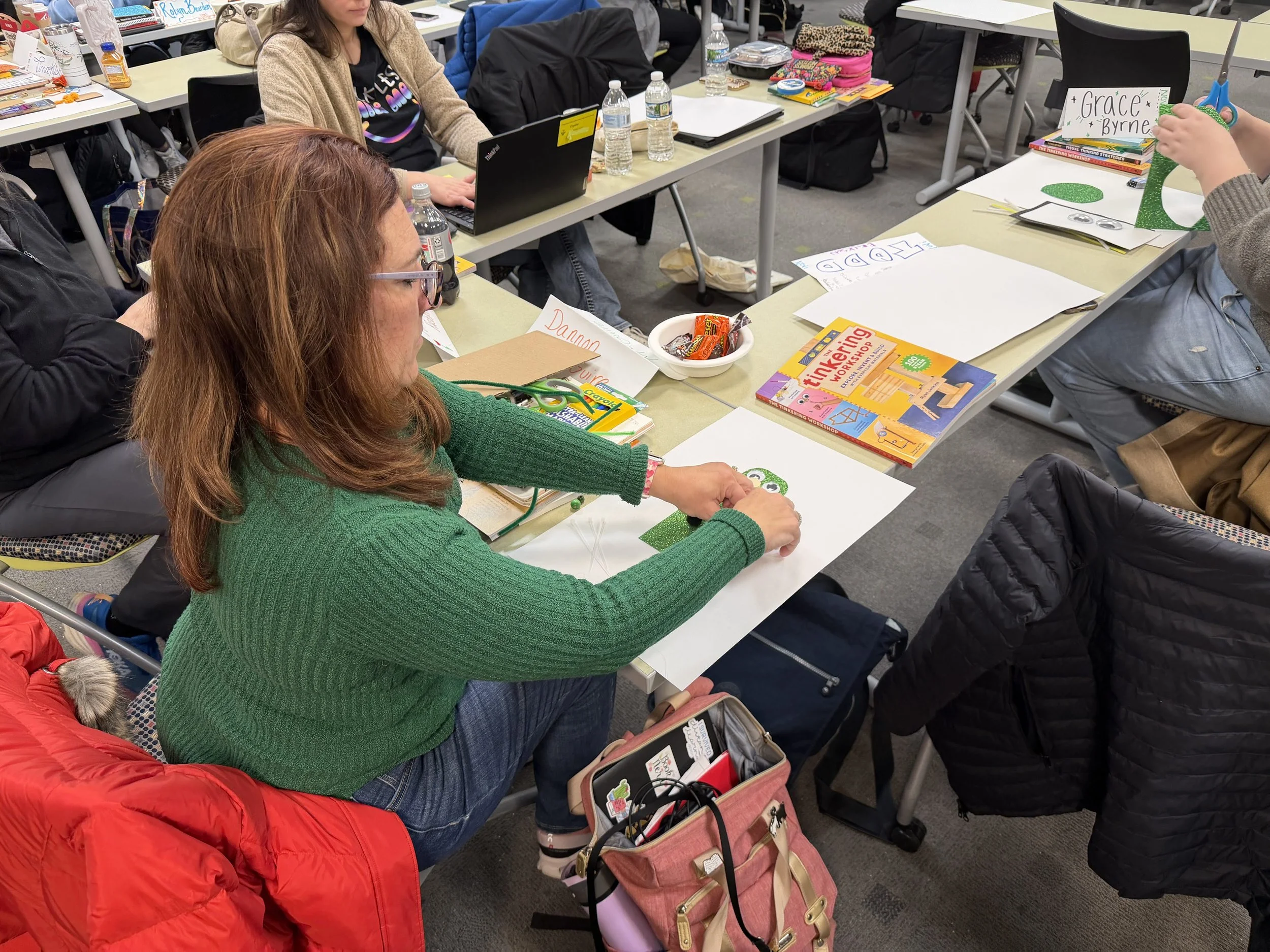
This workshop built on some of my previous prototypes that I tested out at the Tinkering School summer camp and during WICO professional development workshops several years earlier. More recently I’ve been experimenting with how to use AI chatbots and vibecoding to explore more complex designs. It’s really interesting to build on the tradition of drawing turtles made by Seymour Papert and other colleagues at the MIT Media Lab through these workshops that explore more scrappy designs instead of precise plotters.
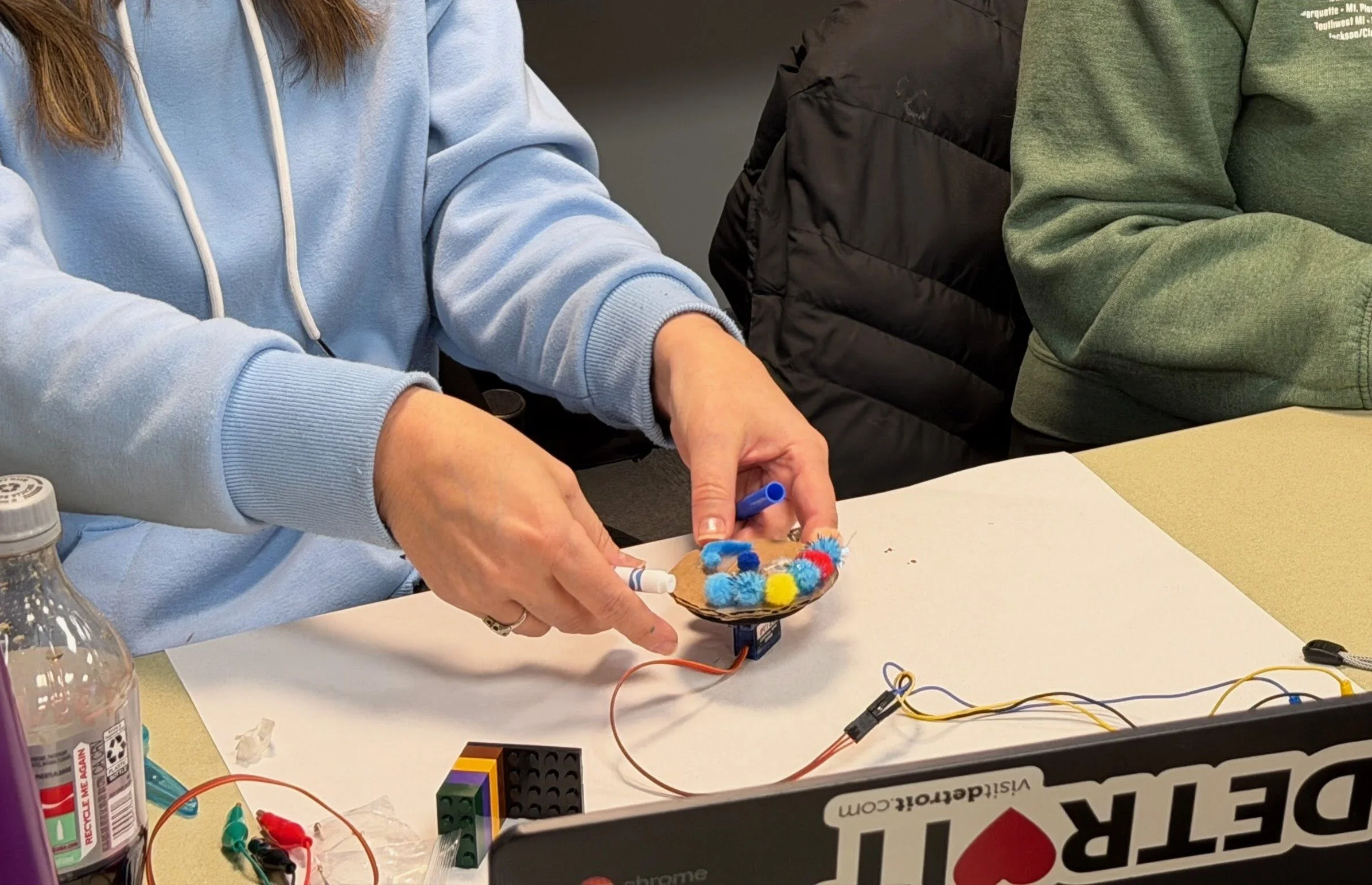
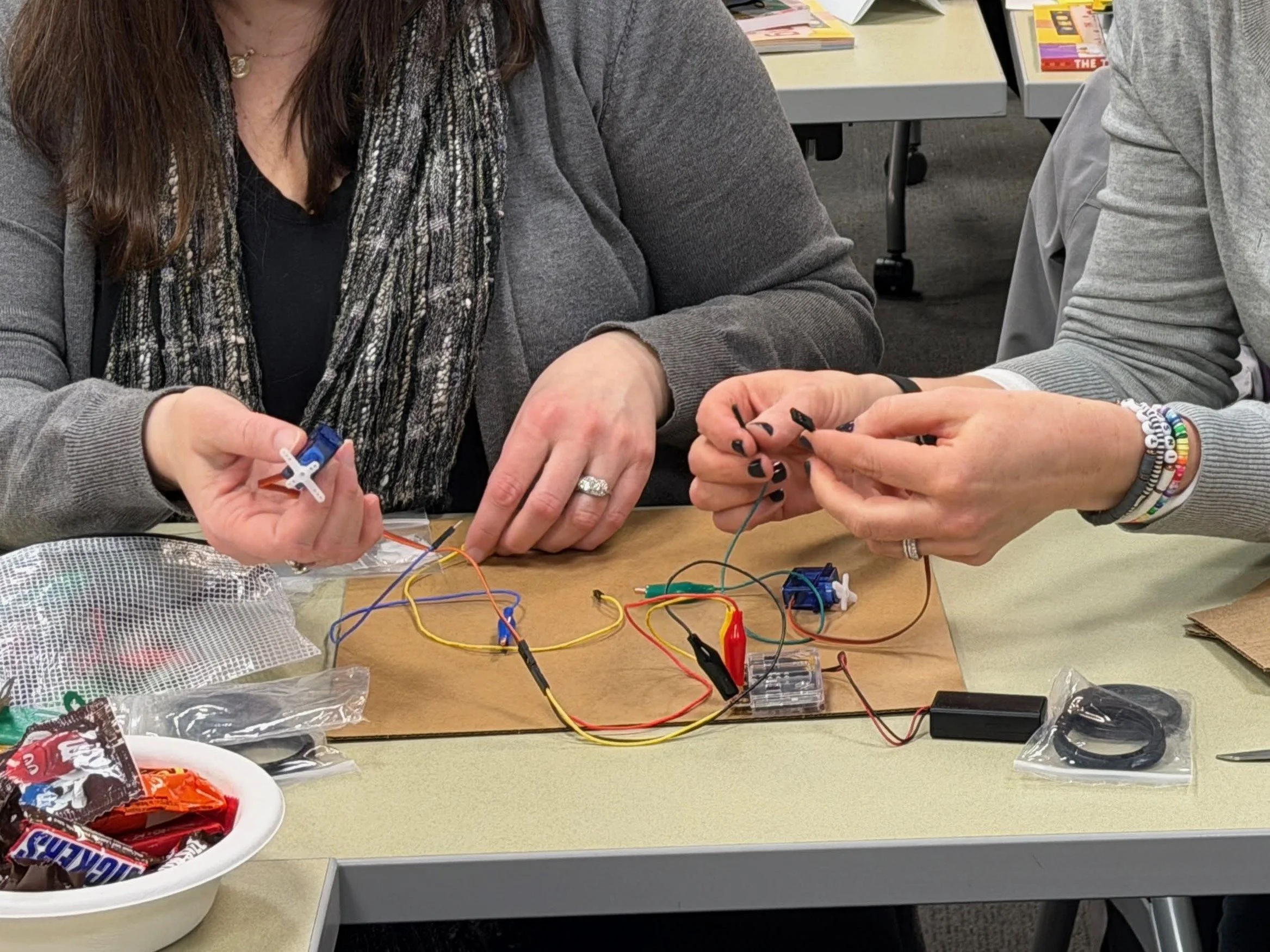
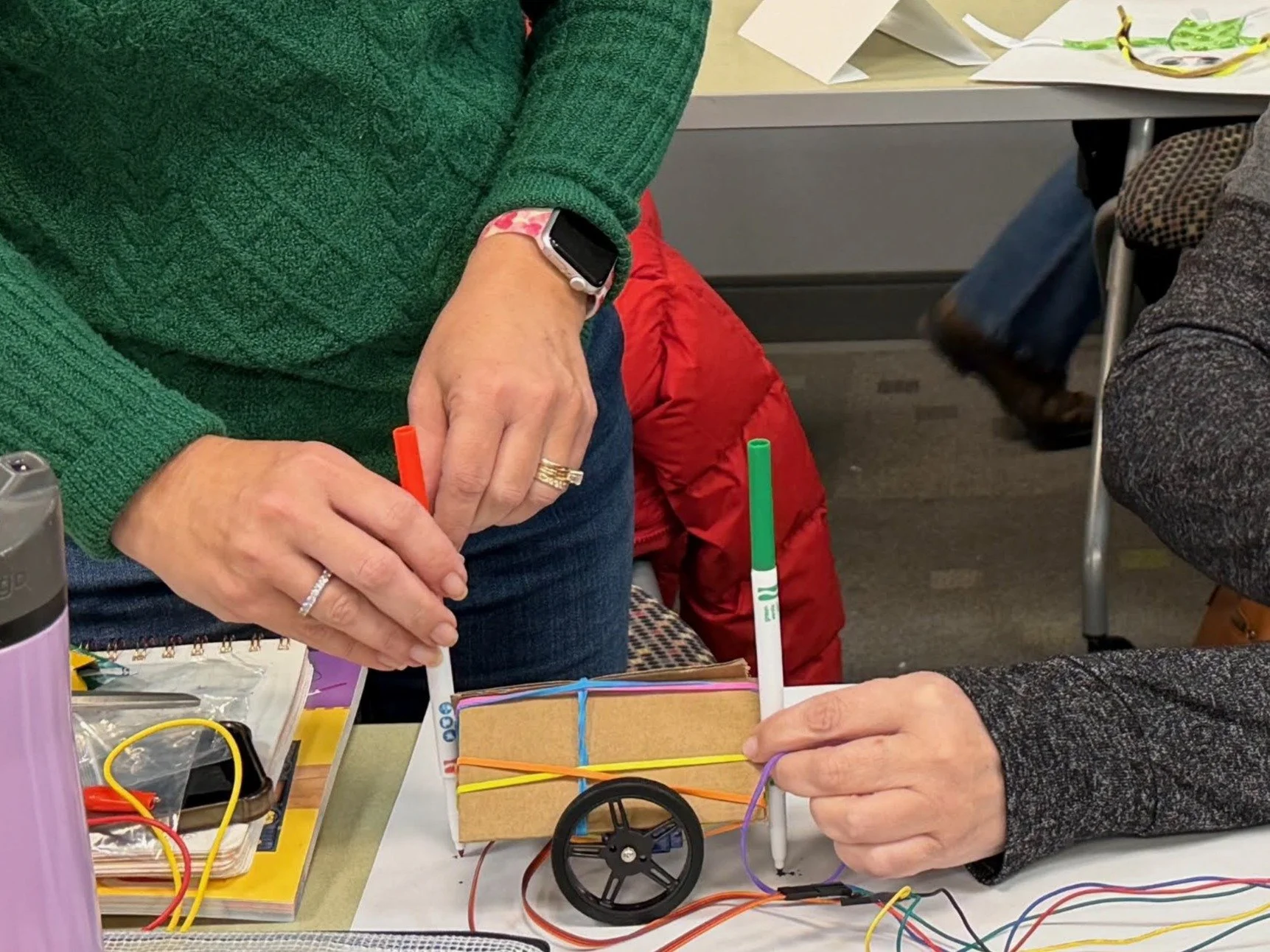
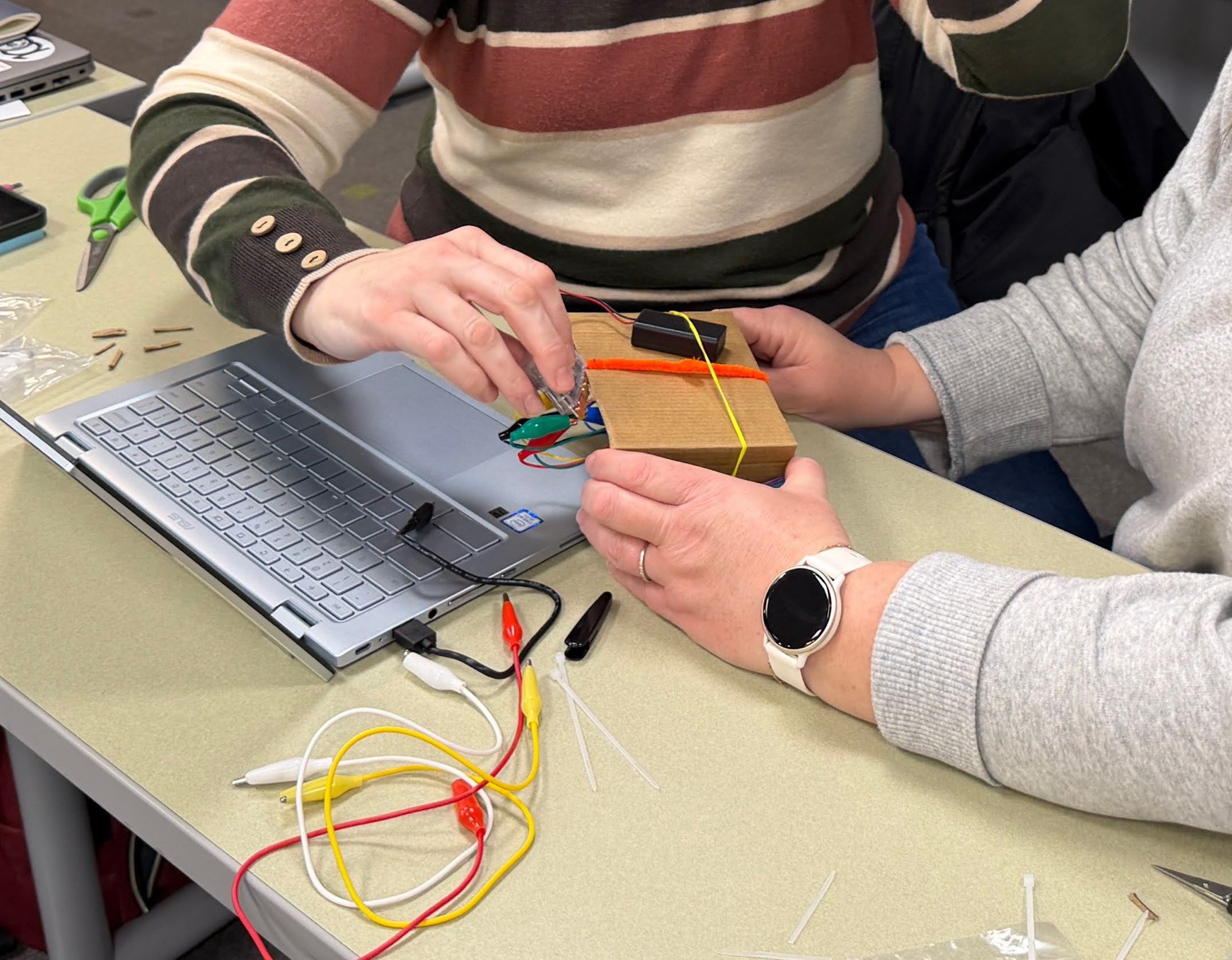
This project was a bit challenging for both facilitators and participants especially with the online component of switching back and forth between showing the makecode programming language, physical materials and in-progress projects. One way that we hoped to address the difficulty of the project was to start slow by all uploading a program to the micro:bit to make the screen LEDs change together.
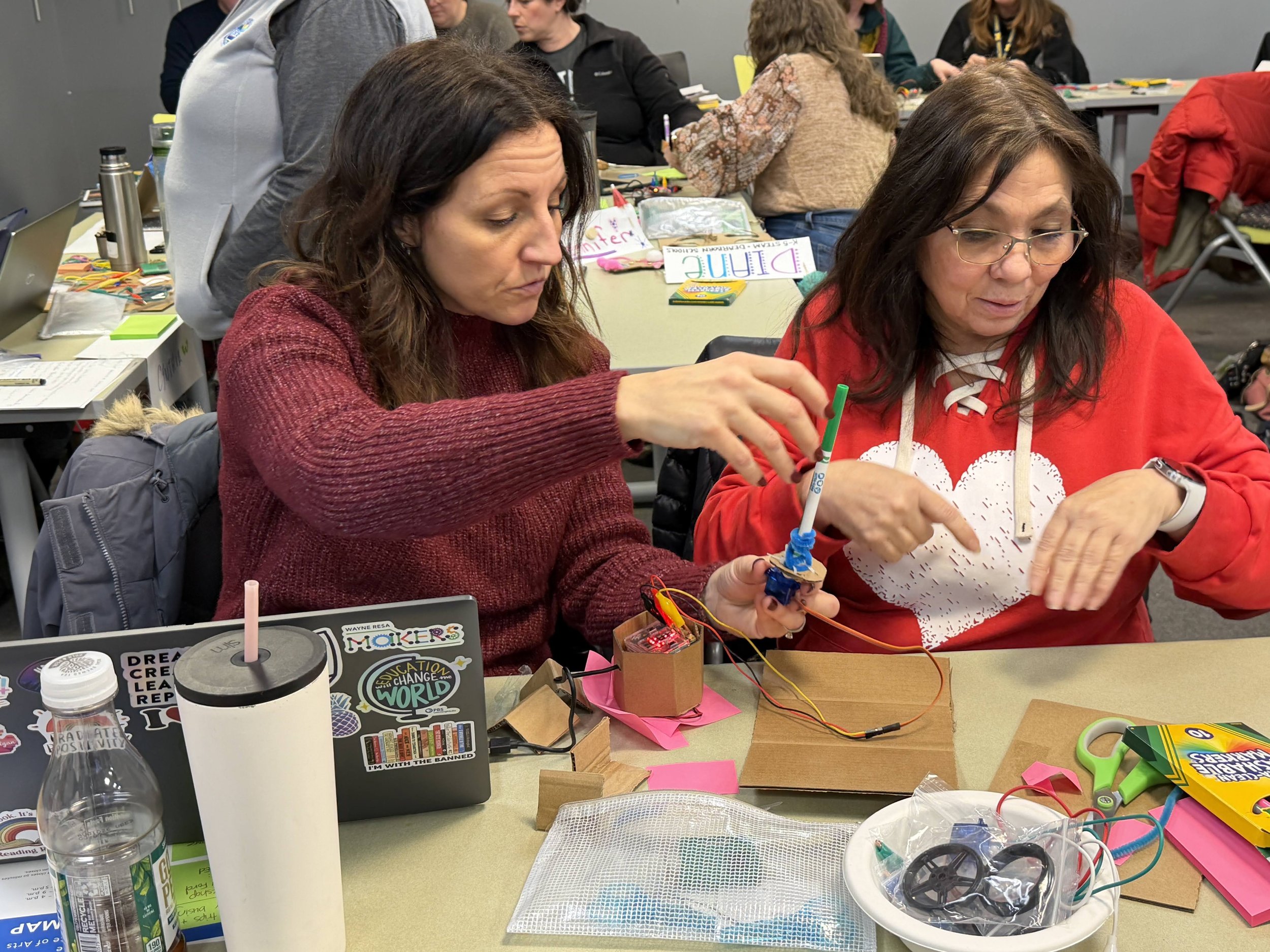
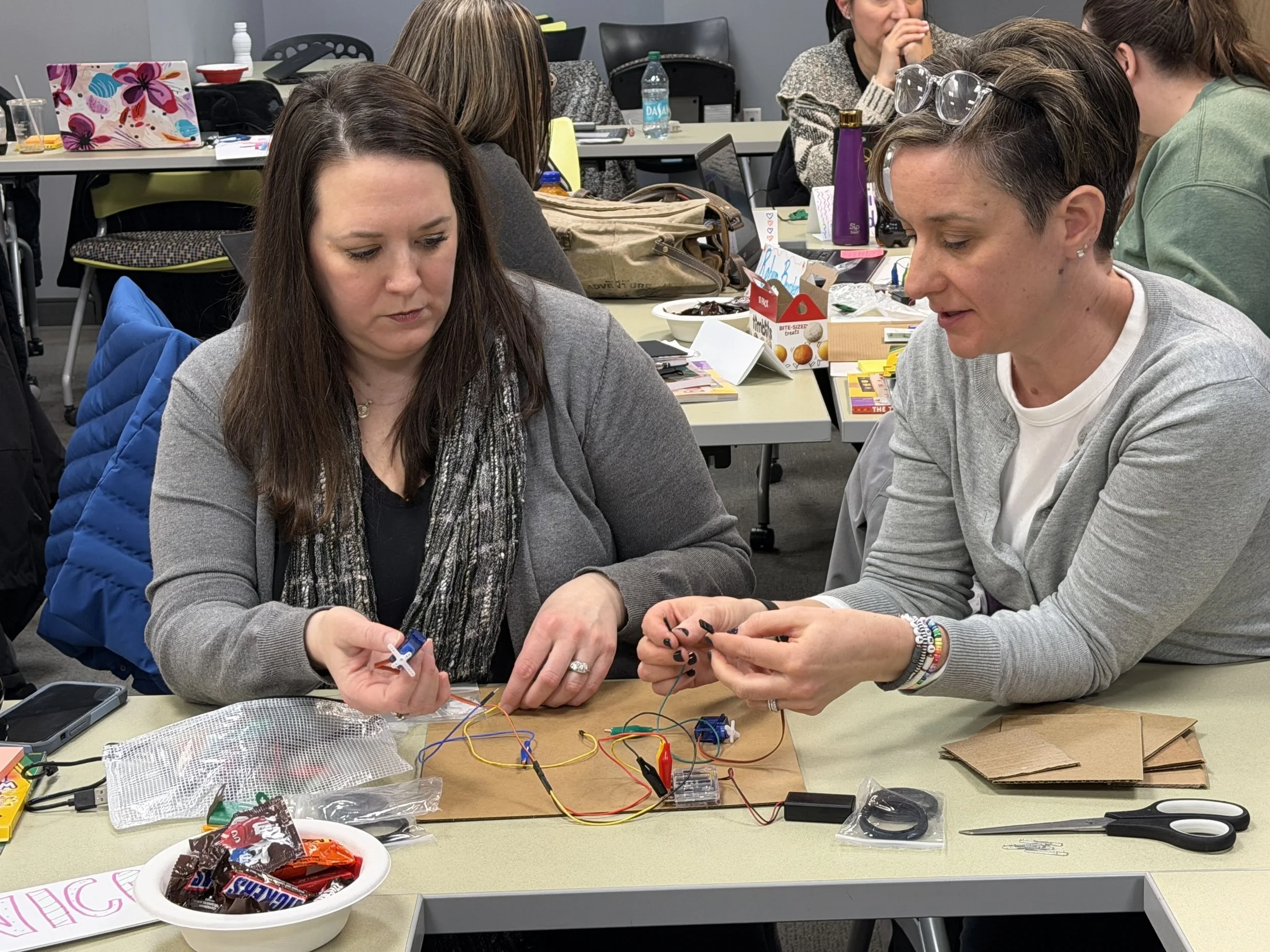
Then we worked on making one rotational servo move (while attaching a piece of cardboard, wire or straw). Once the group could all transfer the code to the device and get something moving, we opened things up and let them play and explore creating drawing machines for about an hour and fifteen minutes.
Facilitating this workshop online meant that it was hard for me to follow the progress of the group but seeing the projects, I was impressed by the variety of ideas and designs that the group explored. This activity was squished together but I could imagine students working on similar projects for weeks or months as part of a maker unit.
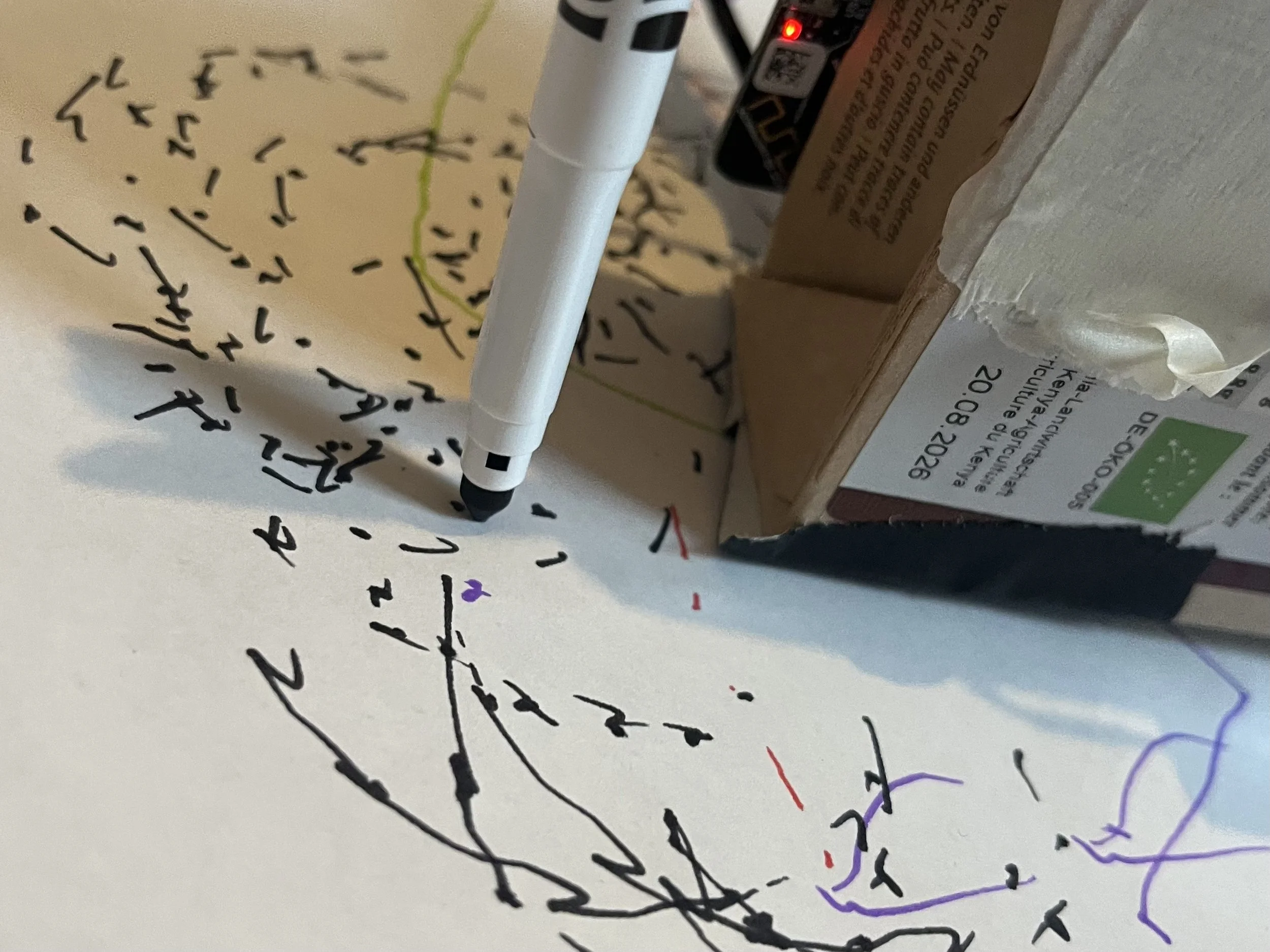
These programmable art bots lend themselves to deeper explorations. I would like to continue to think about how to incorporate AI chatbot tools to be a ‘programming assistant’ to help learners test out more complicated designs faster. There are a wide variety of sensors, remote control, artistic mediums and digitally fabricated elements that could provide ways to go deeper for these bots. And making micro:bit art bots can lead to further projects like robot petting zoo, computational automata and programmable marble machine elements, I’m looking forward to more explorations of these ideas.