Cars and Ramps Testing at Spielmobil
As a way to finish up the intensive prototyping for a new cars and ramps workshop and gallery environment at OliOli children’s museum in Dubai, I made another test of the materials and prompts with local families at Spielmobil play action events here in Freiburg last week. It was really useful to check the durability of the workshop elements and test out how the interaction worked in terms of the learning goals and values for the activity.
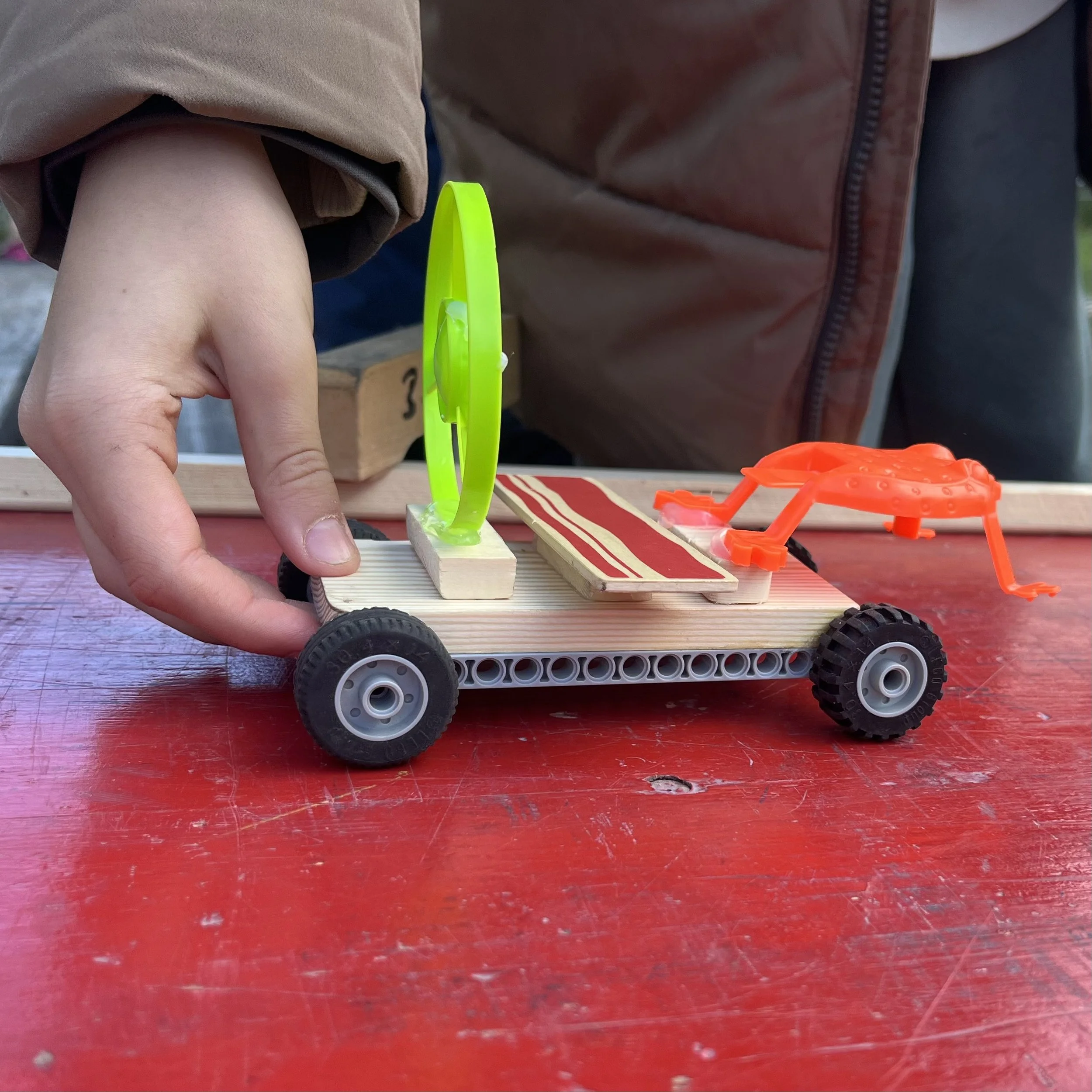
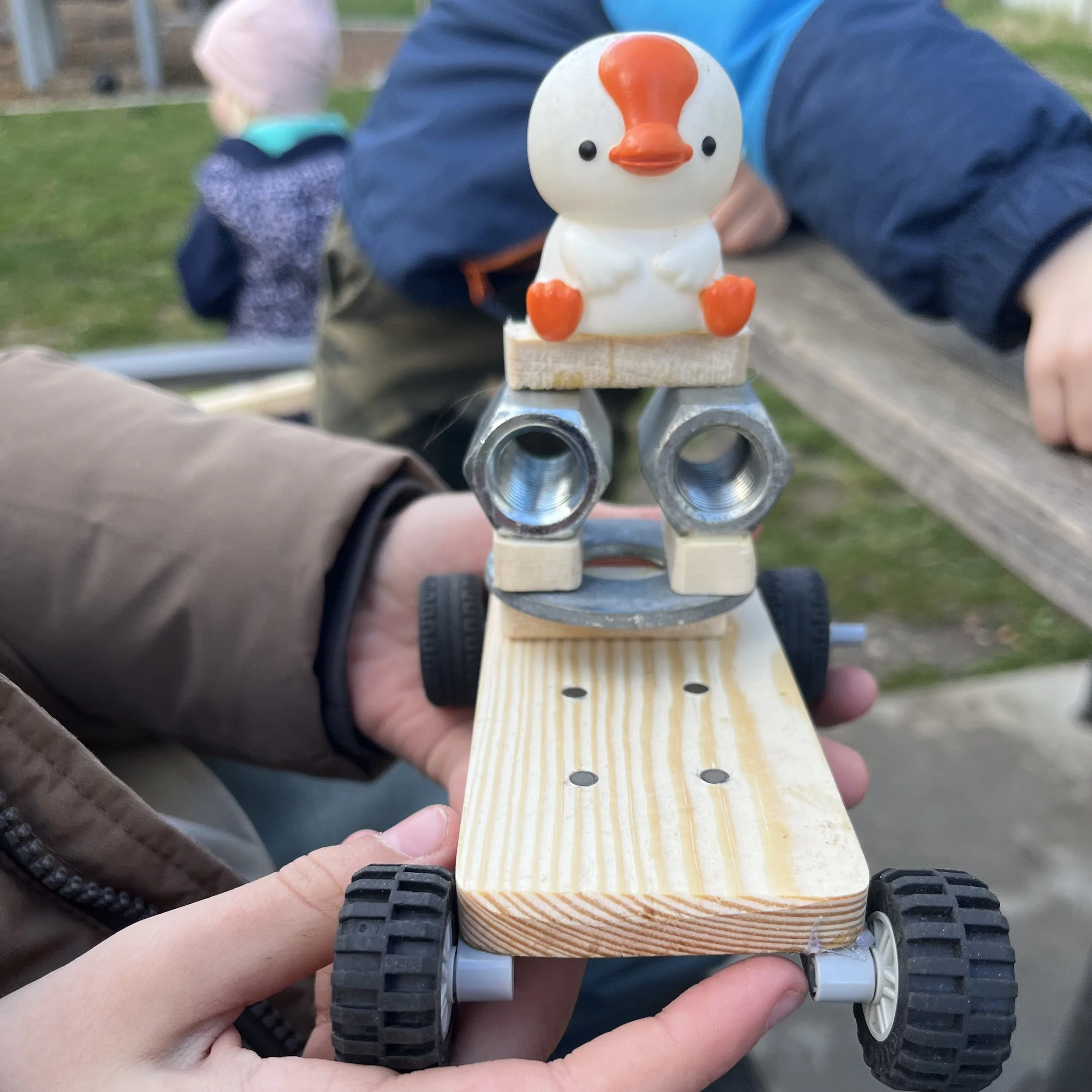
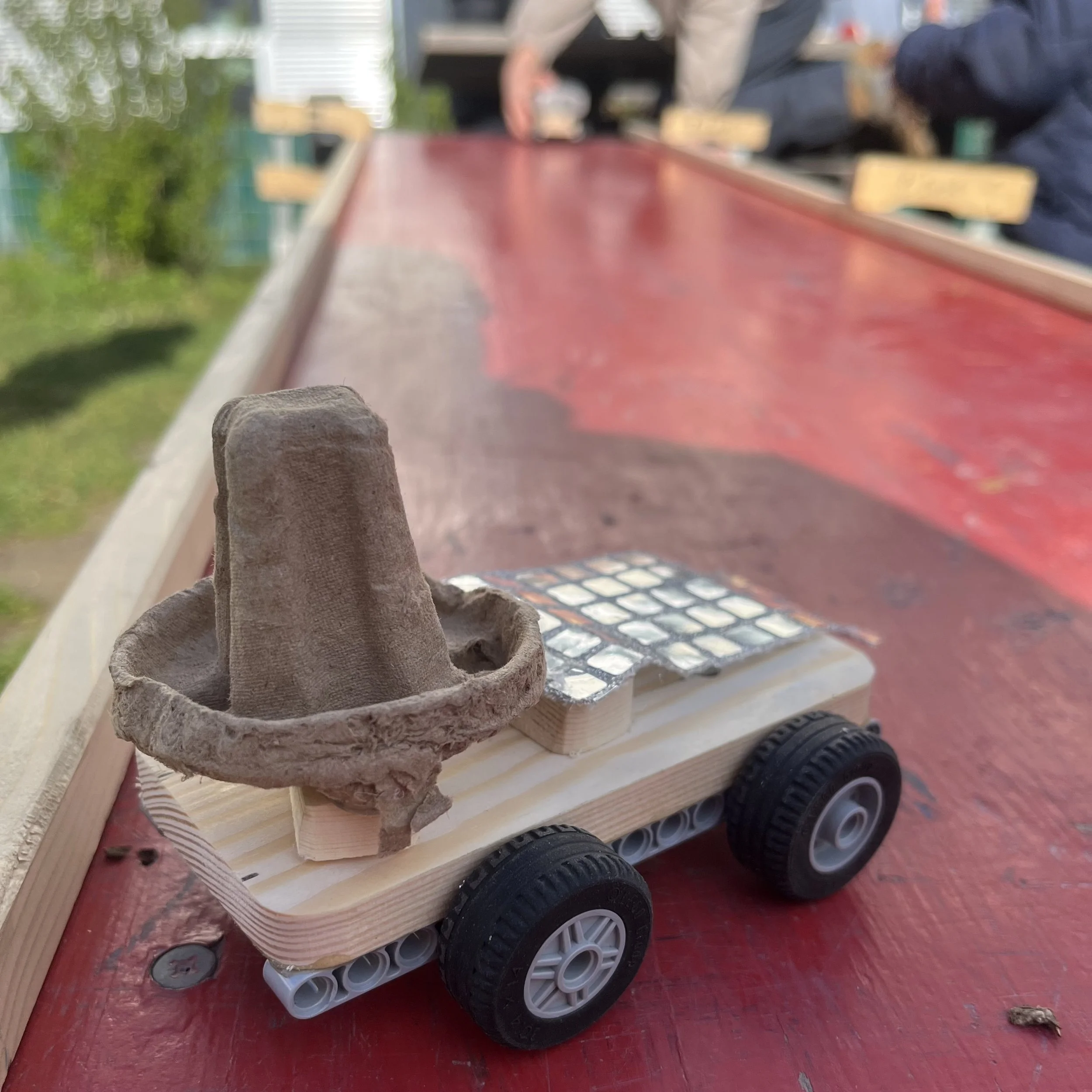
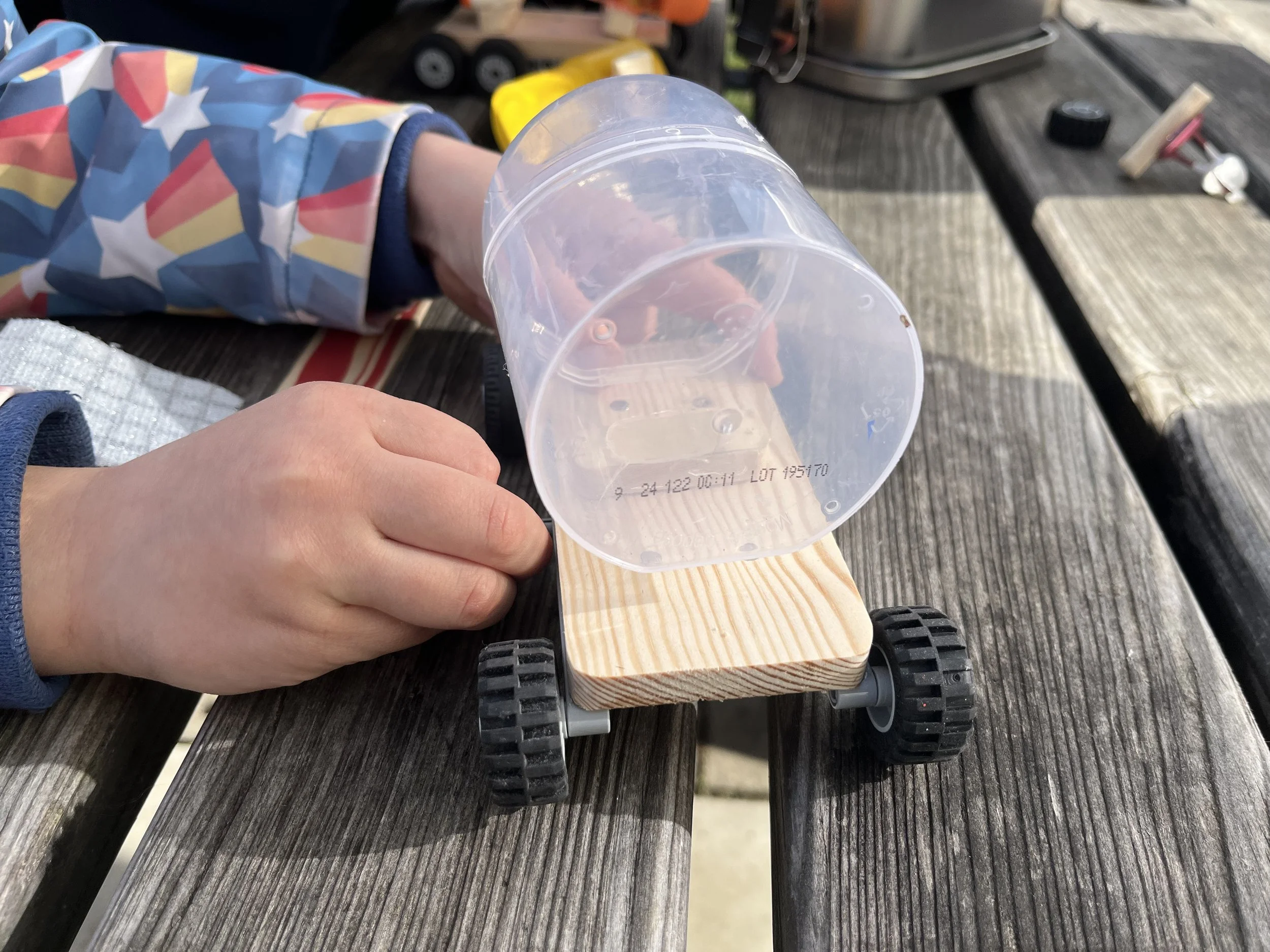
The goals for the workshops is to have an activity that allows for testing and new ideas that involve both technical elements as well as aesthetic or storytelling possibilities. The changes that participants make should have affect the way that the cars move in a way that’s visible. There should be more of a collaborative environment instead of just a competitive one. And there should be the possibility to go deep and spend a lot of time exploring ideas.
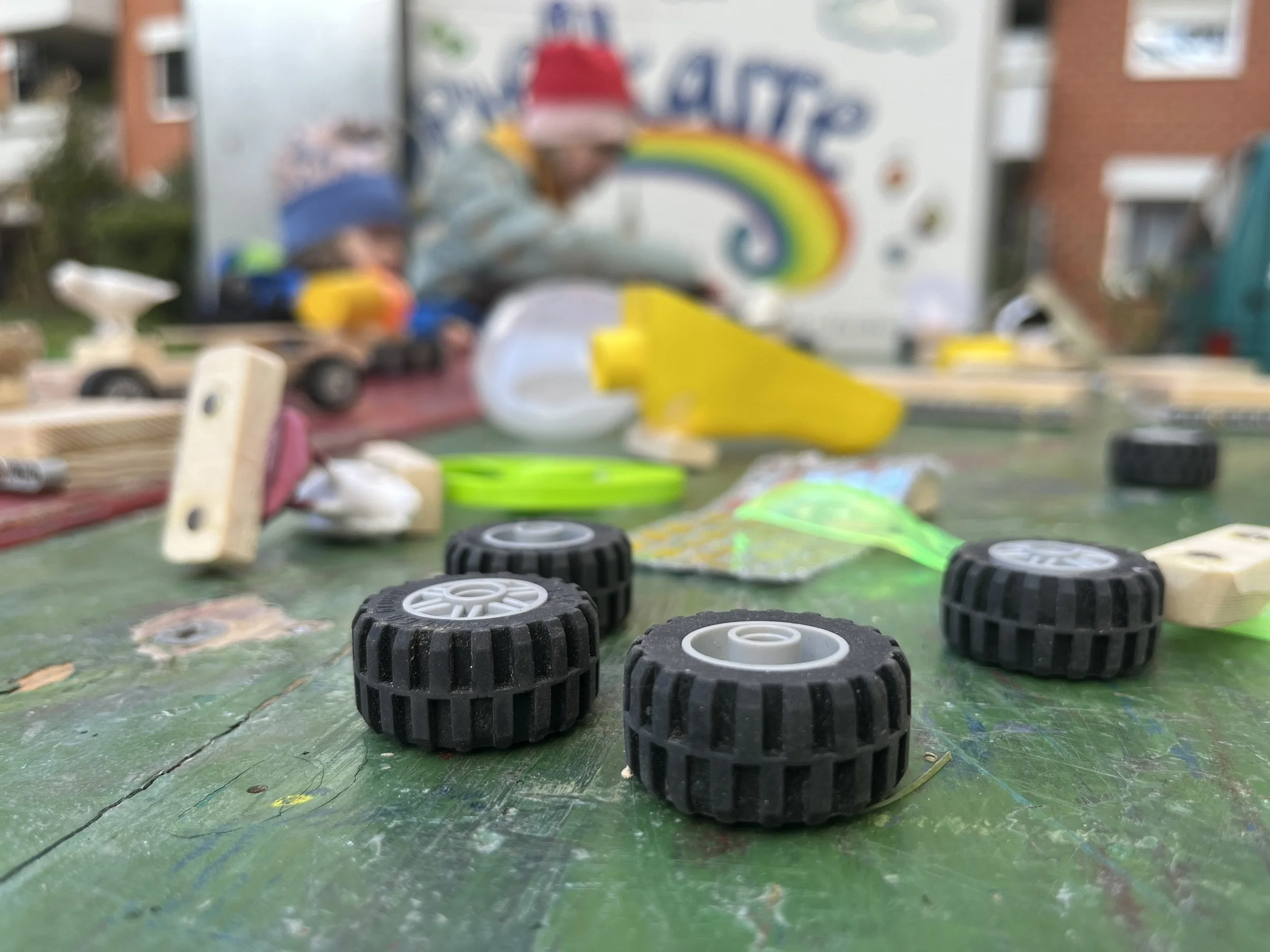
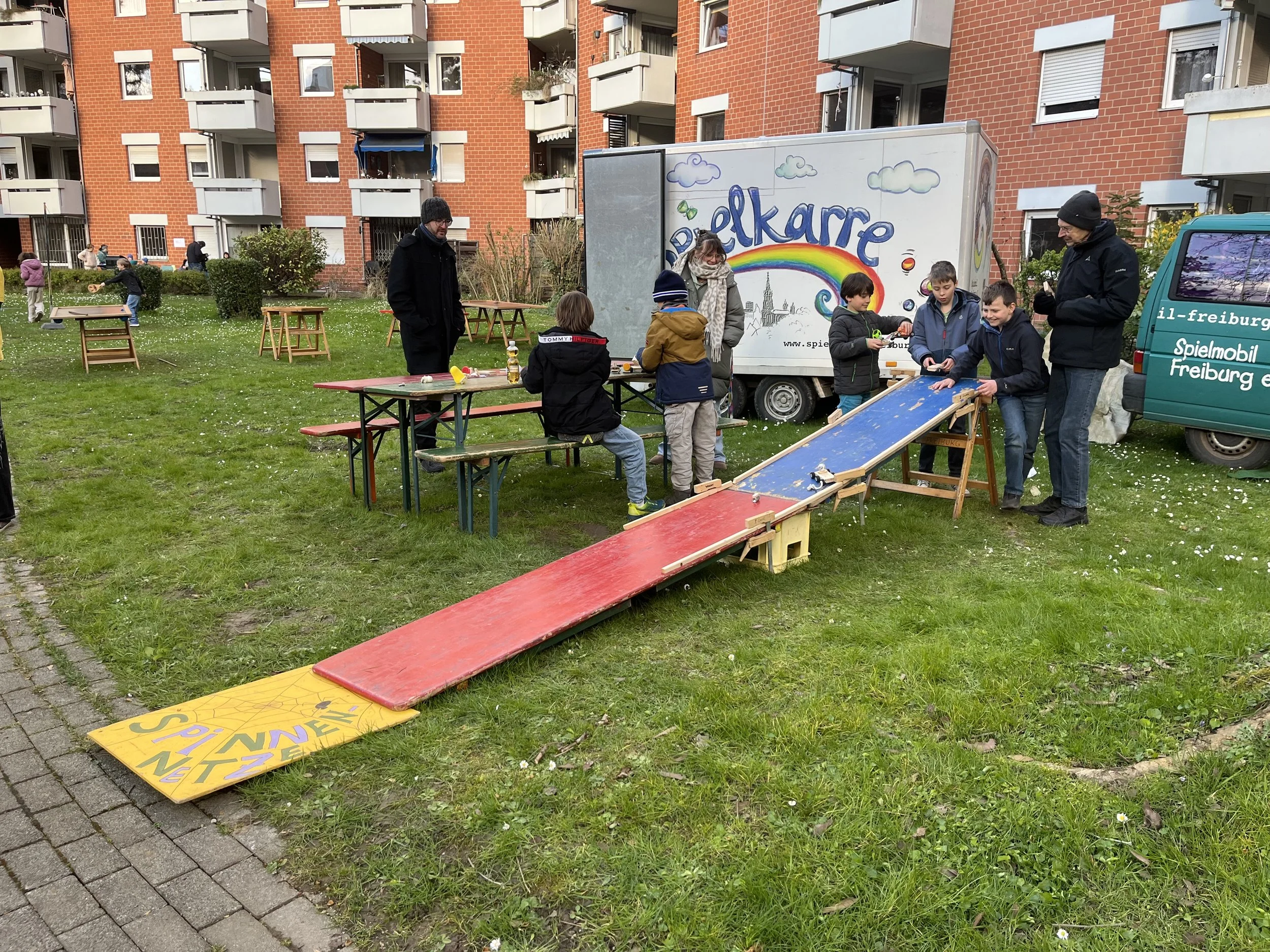
The prompts and materials seem to be getting close to those goals in these two days of testing, especially while taking into account experiments at Oli Oli in January and Maker Faire Heilbronn in February. I brought wooden bases with LEGO technic beams, LEGO wheels with pins that allow them to spin freely and a bunch of magnetic objects that allow for easy connection to the row of magnets on top of the wooden block. Near the working table I set up a makeshift ramp with another table balanced on a beer crate with wooden rails clamped to the edges. The ramp was fairly shallow (and short) so that learners could observe the way their cars moved on the way down.
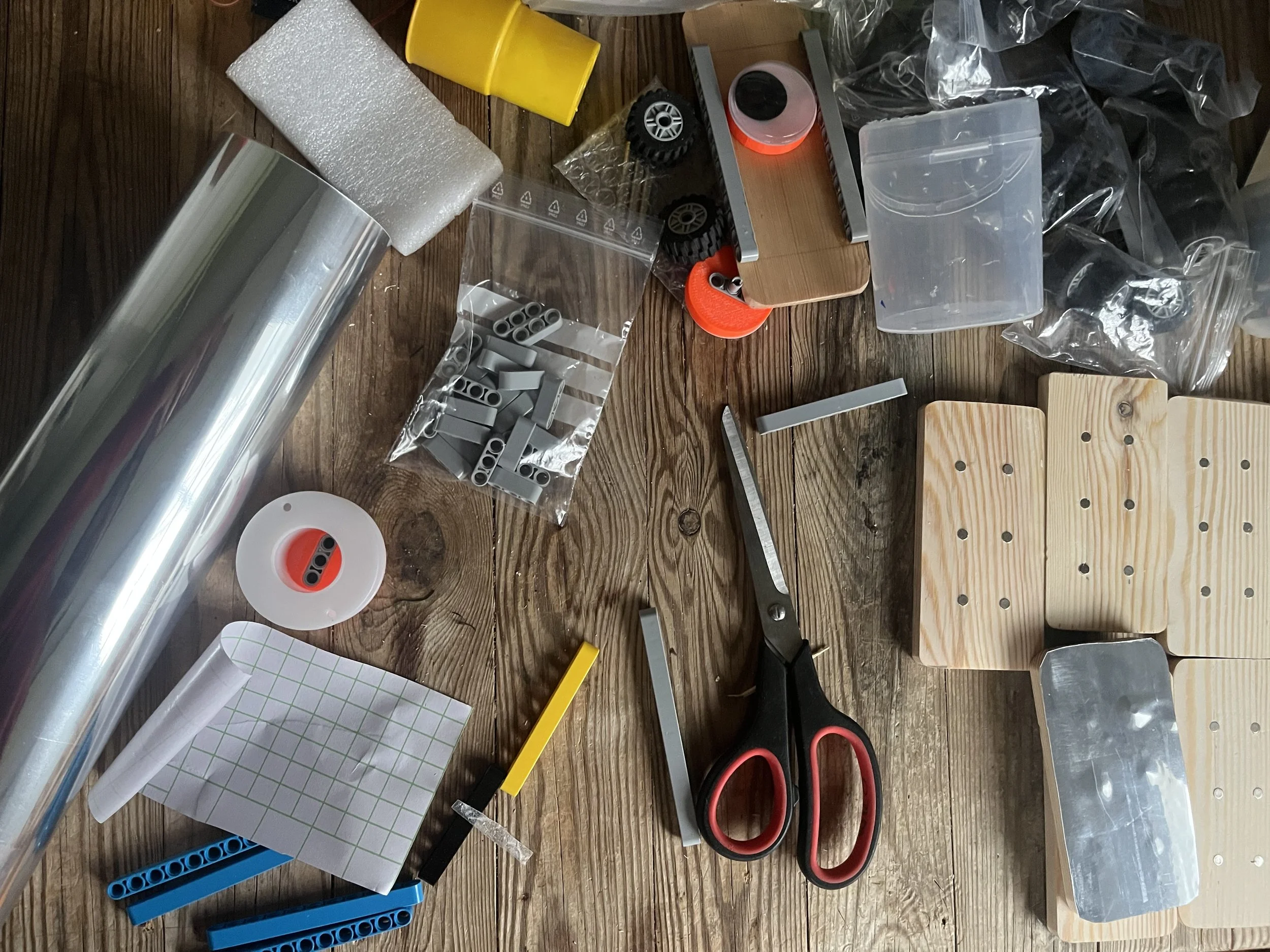
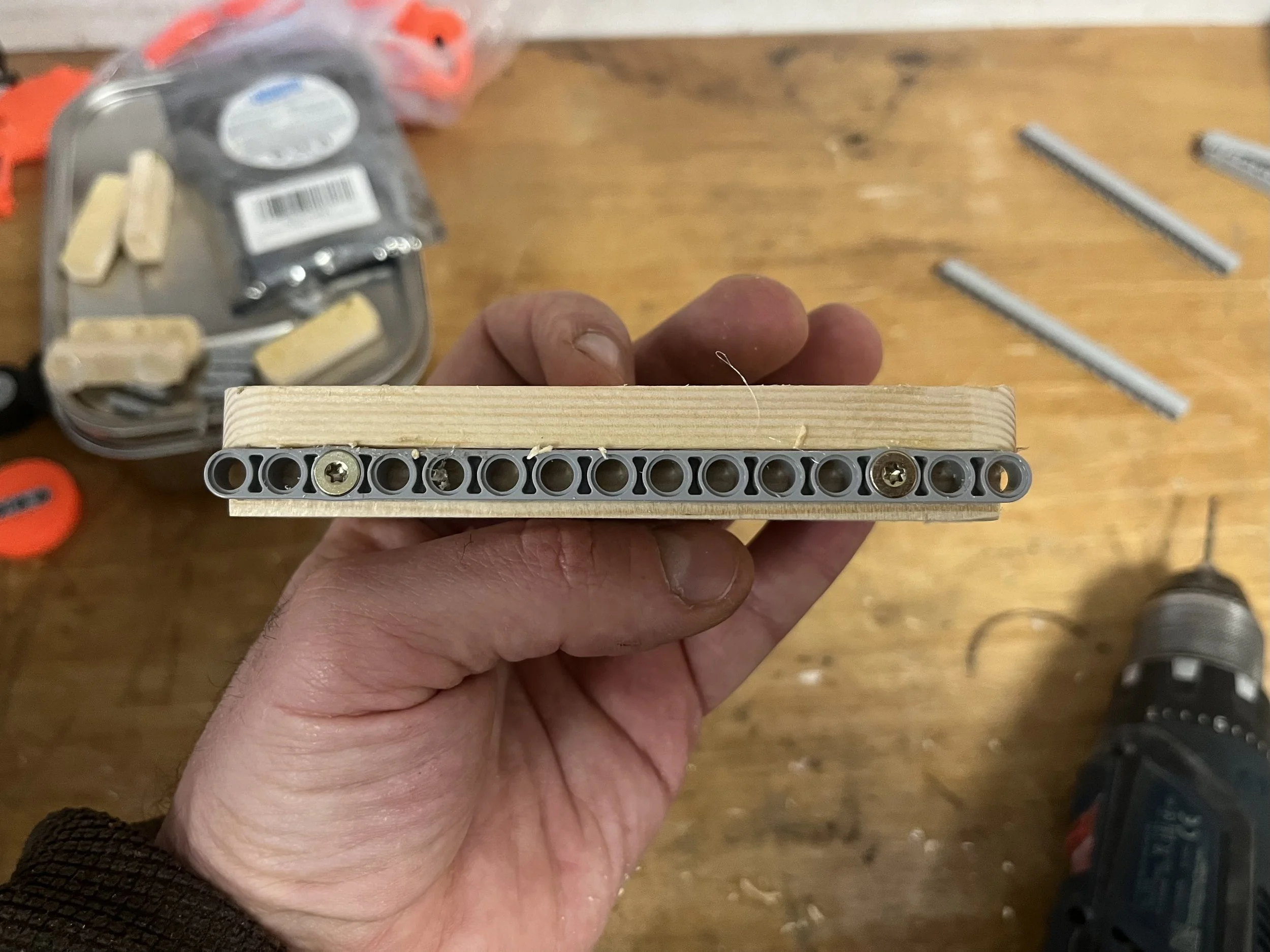
The experiment gave me the chance right away to see a problem with my initial design of the car bases. Although all of the elements worked for the learning outcomes, the construction technique was not strong or consistent enough for the first session and in about two hours almost all of the cars broke. The issue was that I used glue to attach the LEGO technic beams to the bottom of the bases and the pulling back and forth on the tabs put too much pressure on the parts. I had to go back to the drawing board and make a similar setup but with a second wooden piece on the bottom and the technic beam screwed in through two of the holes. This worked great, the blocked holes didn’t trip up anyone and for the second session all of the bases stayed intact.
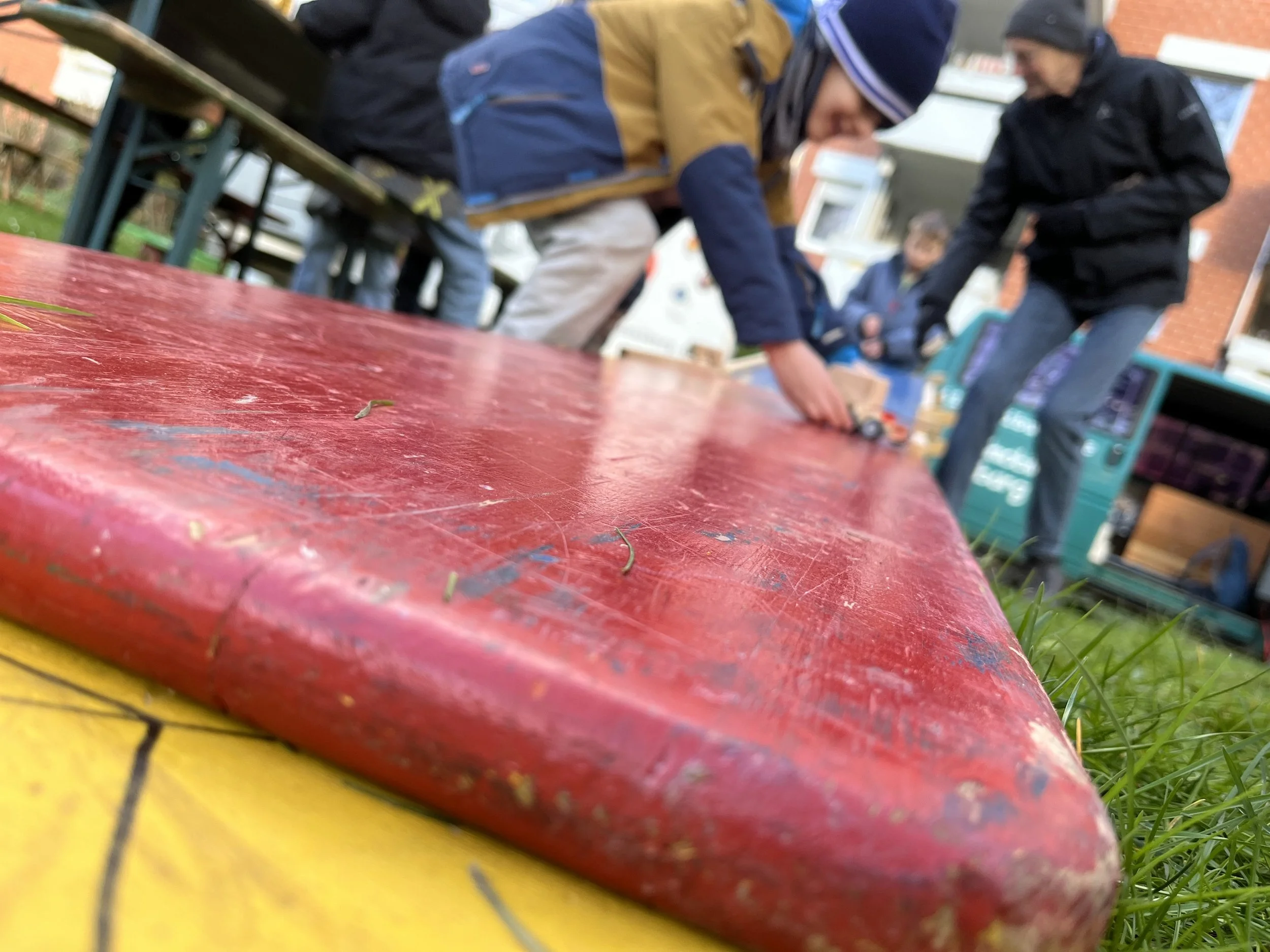
One thing I noticed once the cars were fixed, was how this activity seemed compelling to a wide range of ages. There were boisterous groups of 10-11 year old boys who spent a long time playing and racing, but it also supported 2 and 3-year-olds to send simple cars down the ramps again and again. Sometimes both of these types of interactions were happening at the same time.
Some of the elements gave more possibilities to get materials feedback than others. I would like to push on having more elements that either added weight to make the cards faster or arms to make the cars more stable. There were some amazing “trick” cars that flipped or turned down the track and it would be good to have more possibilities for these unexpected results.
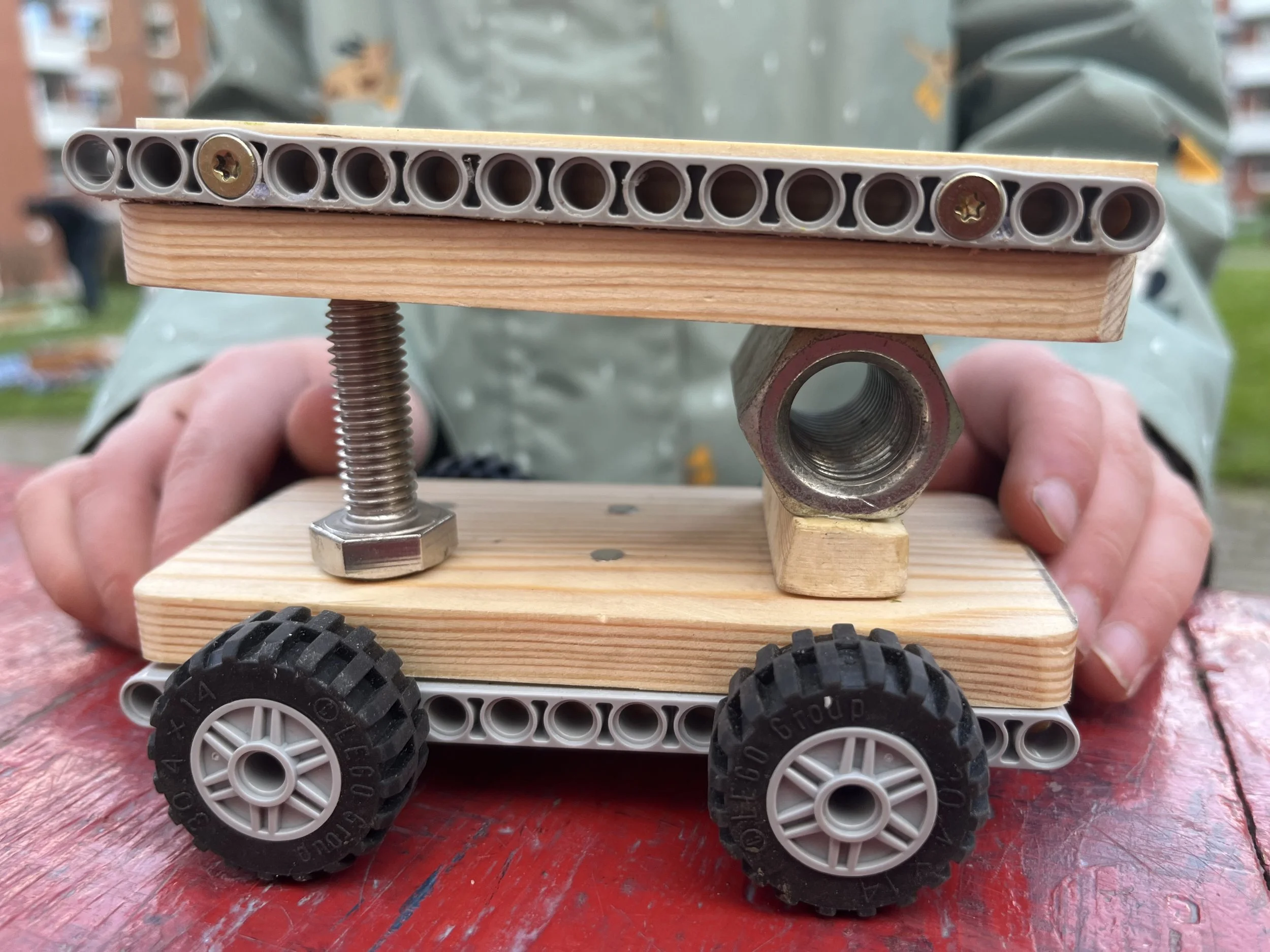
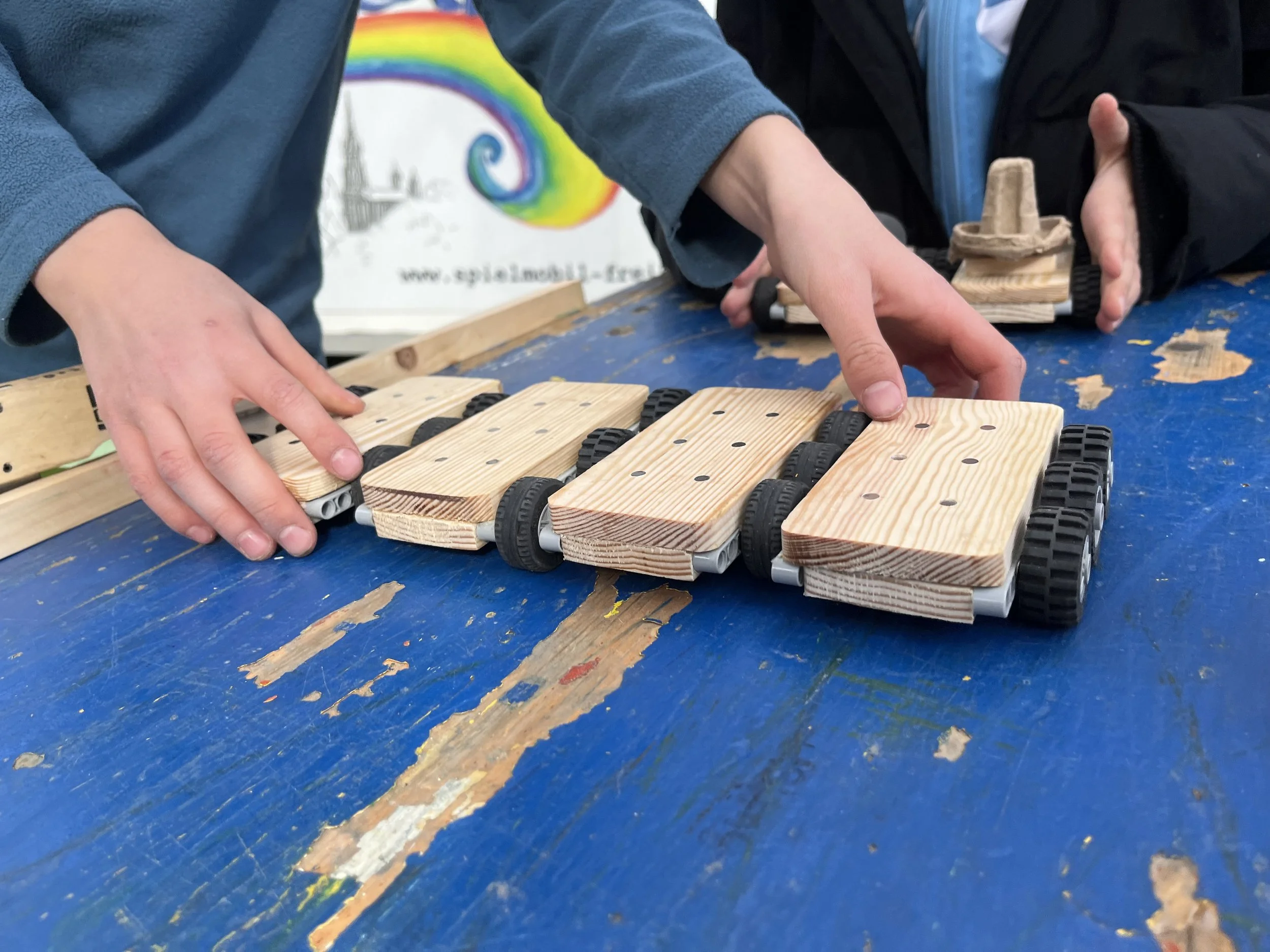
I was surprised at how much the participants pushed the limits of the relatively simple materials set. Kids clamped the fabric materials together to make longer cars, stuck bases together with pins to make them wider and even explored making double decker vehicles.
Some experimented with totally wild numbers of wheels and stacked the magnetic elements on top of each other. I would like to push on the materials set more to support these experiments.
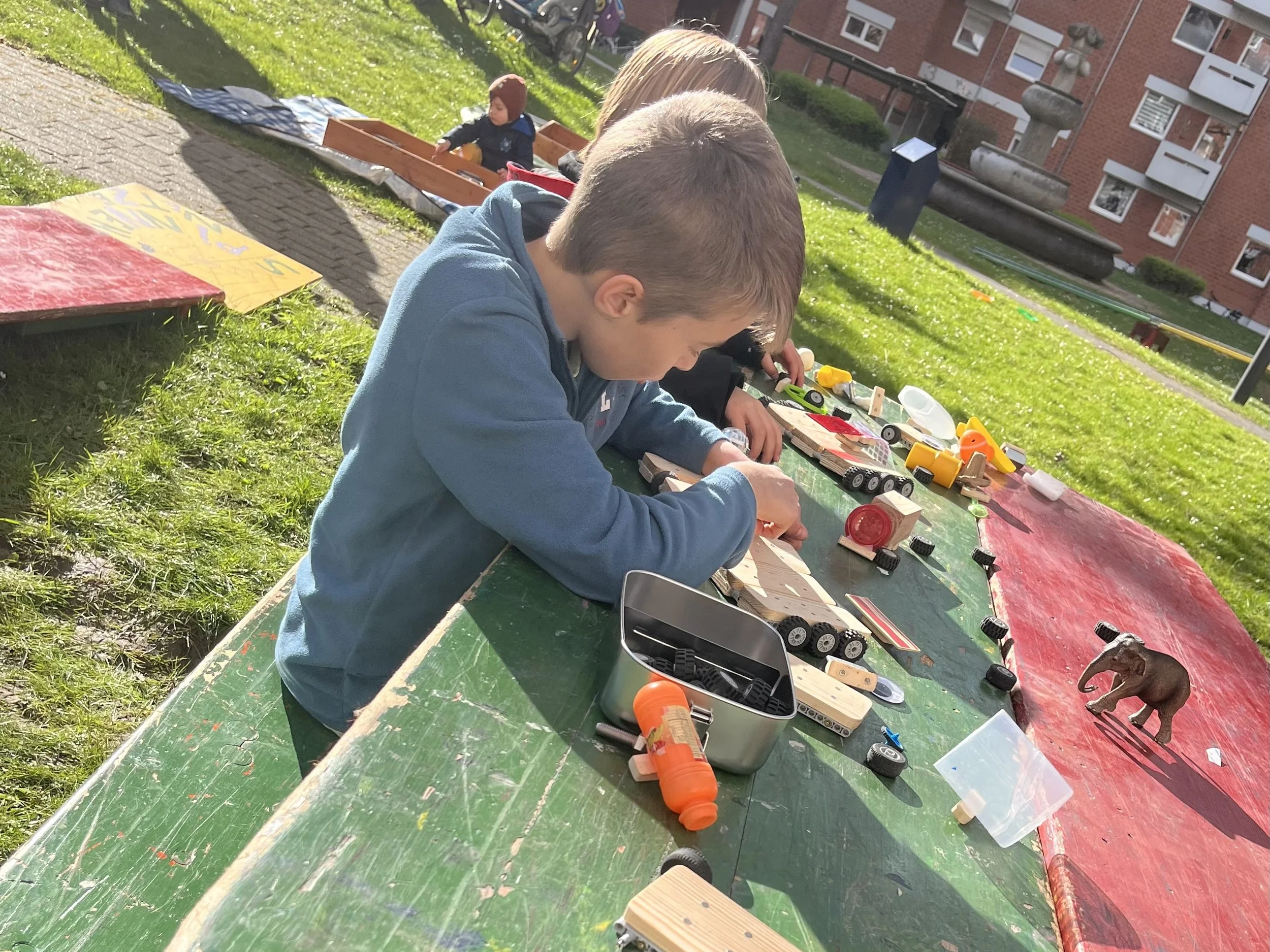
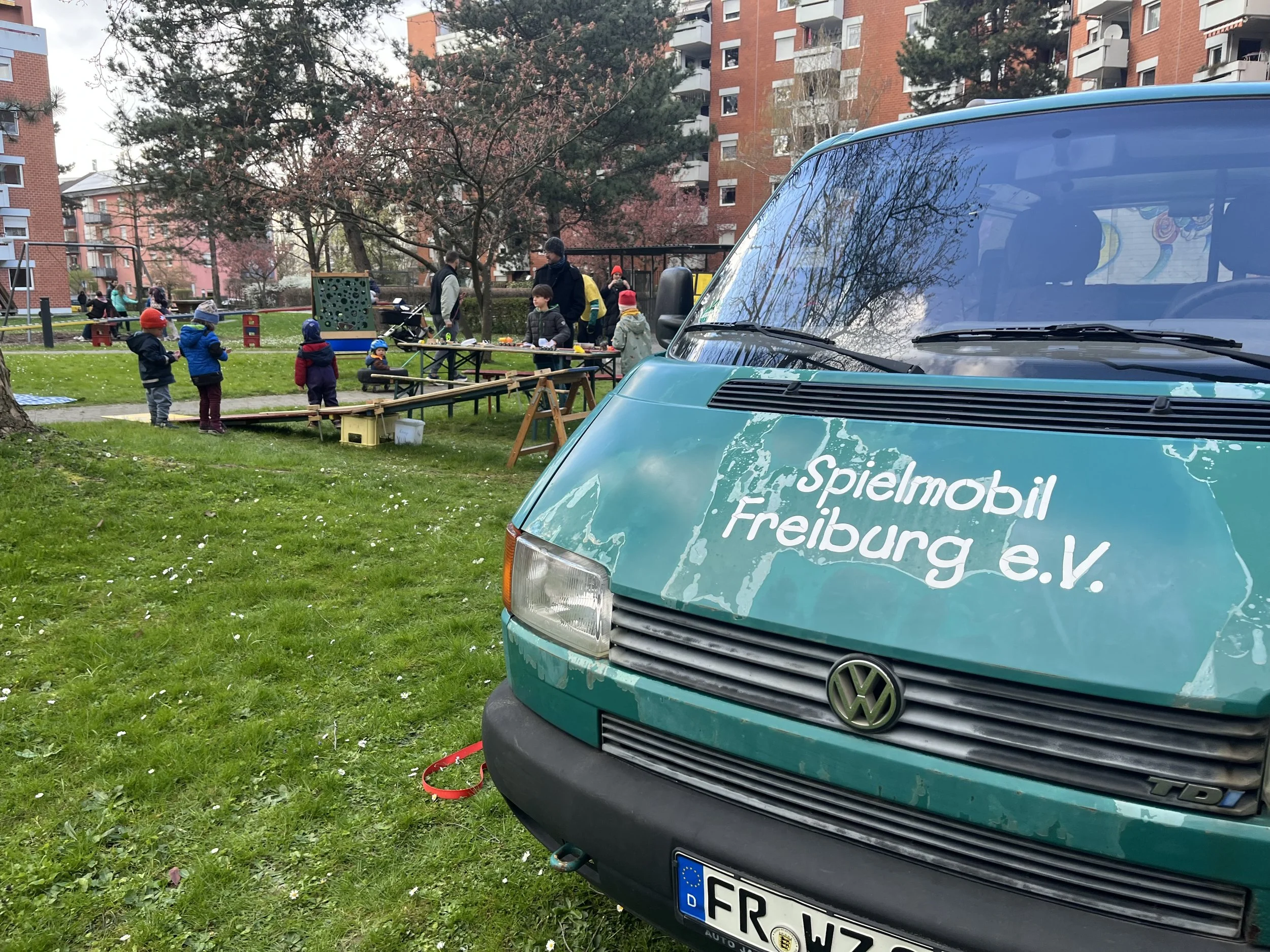
And I really appreciated the collaborative aspect of the activity. I think because I didn’t promote making the fastest car, timing the track or even making lanes that helped to tone down the competition and allow for other types of interaction. People could enjoy the experiments that they tried and because things purposely didn’t (and couldn’t) work perfectly it took a bit of the pressure off. When the cars fell apart or fell off the track there was less disappointment and more laughter. I think in all tinkering activities this type of interaction helps create more possibilities for real learning.
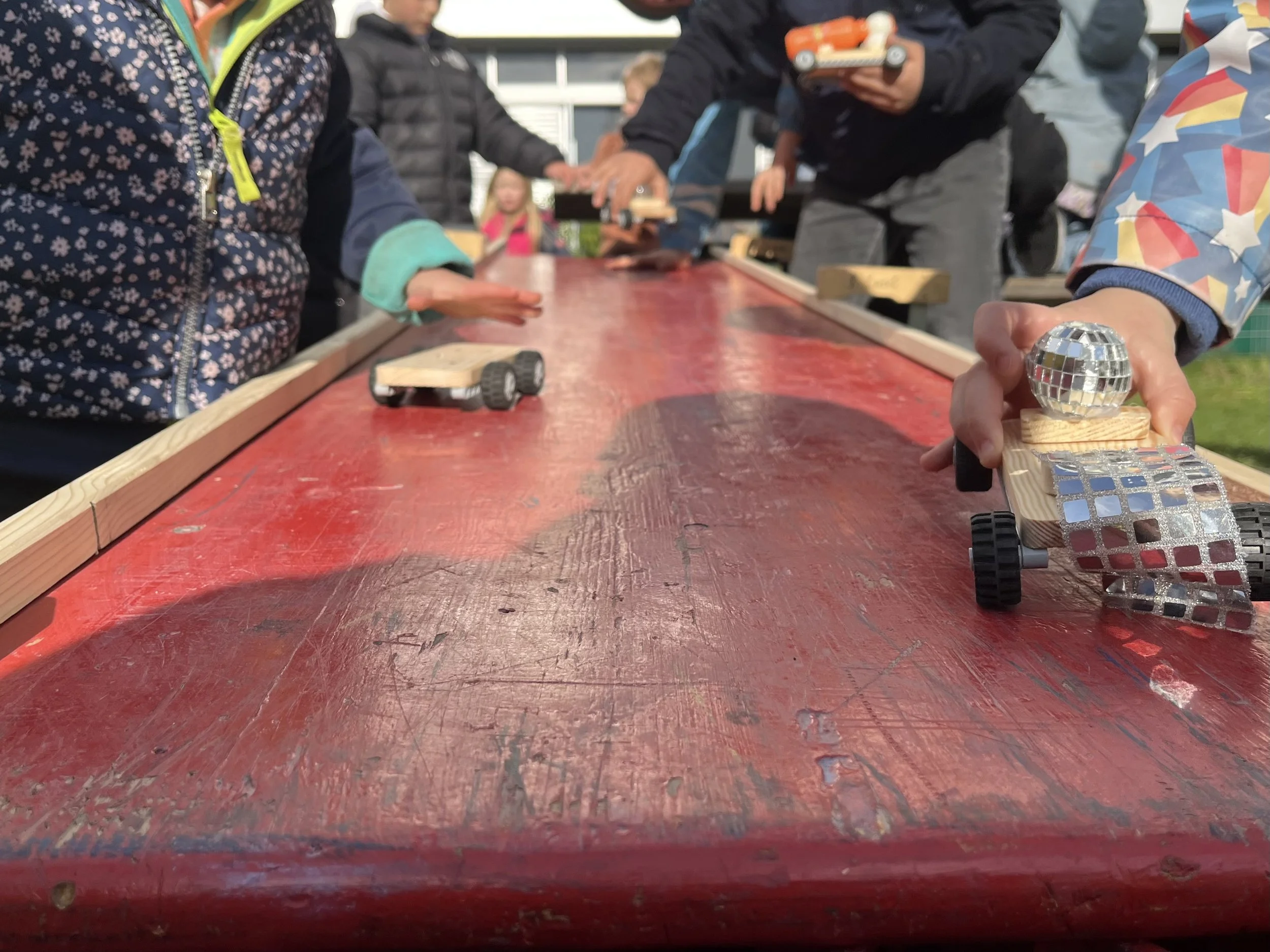
There’s a couple more elements that I would like to test but I think we’re getting pretty close on an open-ended cars and ramps set that can work across a variety of settings. I’d like to test out alternative wheels made of everyday materials and some more “exciting” ramp layouts but its encouraging to see the signs of tinkering in action. Stay tuned for more updates about how to create the parts for this project and how the design of the gallery in Dubai evolves in the coming months.