Cars and Ramps All Over the World
Last week I had the chance to test out a new version of a cars and ramps tinkering materials set with Spielmobil in Freiburg as part of a collaborative prototyping process with the team at OliOli Children’s Museum in Dubai.
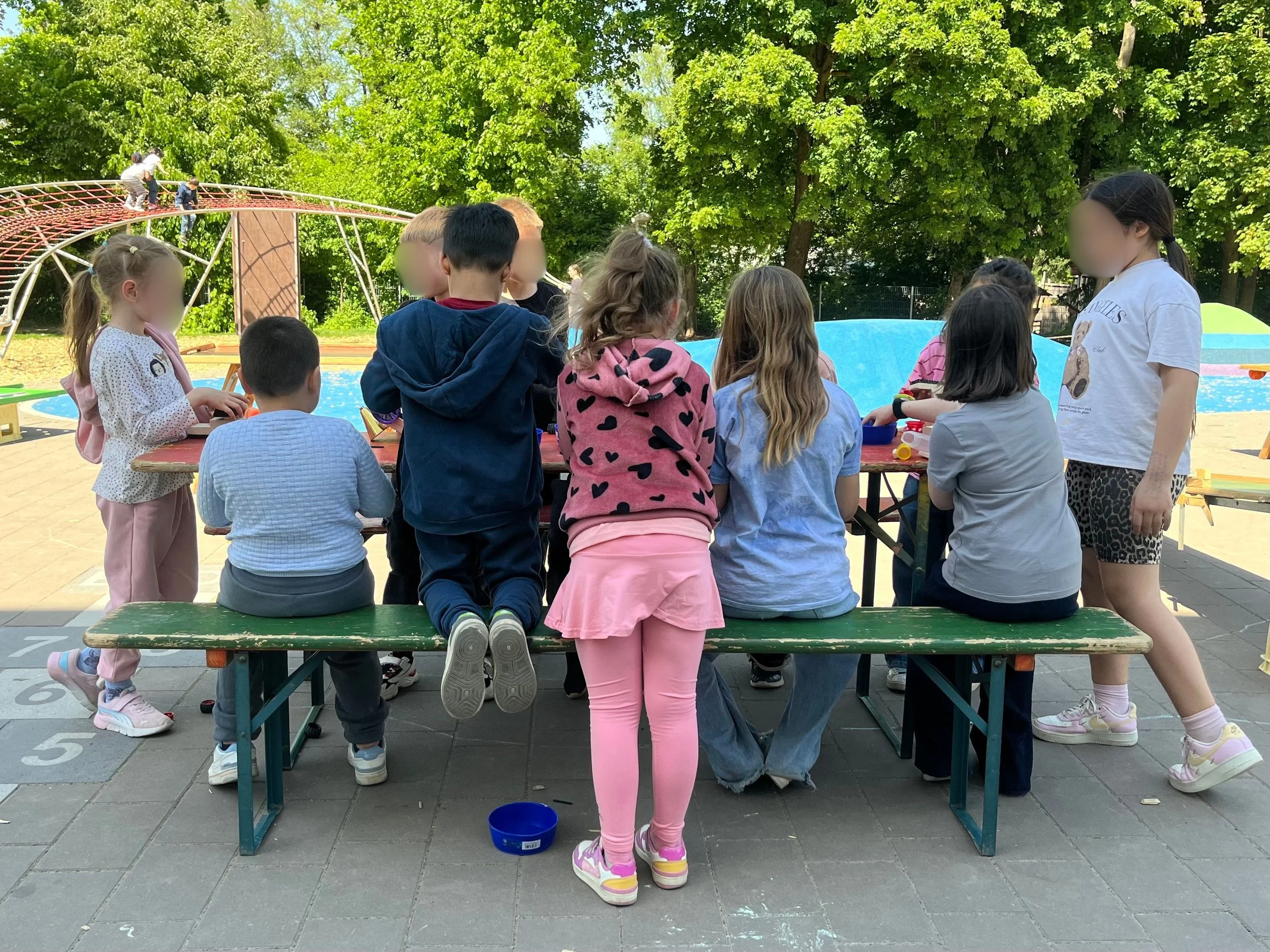
It’s been really interesting to be trying out similar elements in both locations. I’ve been trying to find the balance with what can work with the existing ramps in the museum while centering our shared learning goals of having the experience be easy to get started, possible to get materials feedback and open for participants to create unique and unexpected designs.
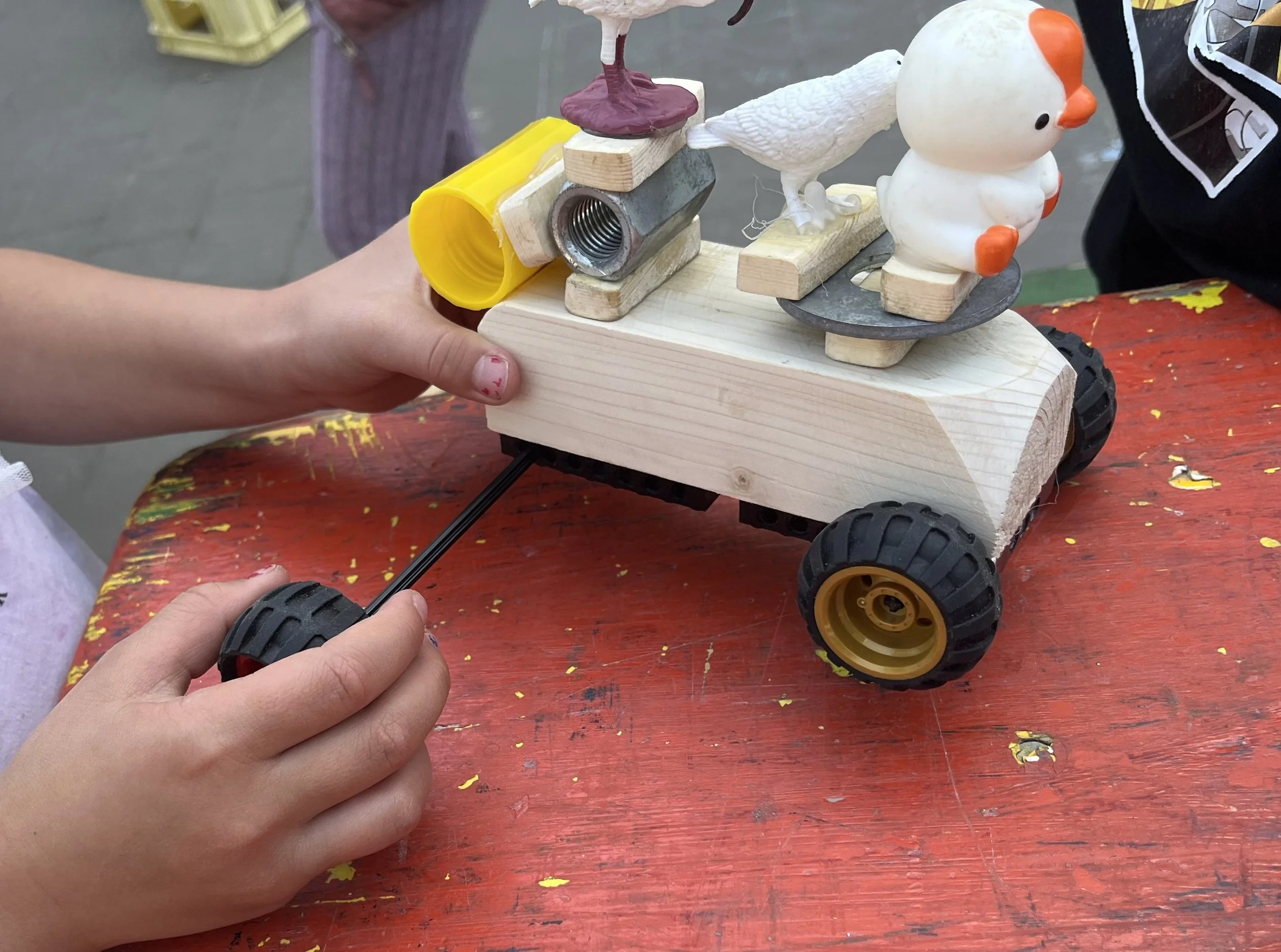
Our new version of the car building blocks used a connected axle with a LEGO technic frame piece which helps to keep the cars straight when they are rolling down the steep ramps at the museum. As well the tires for the new version were gummier so that they had more grip on the road surface. We also used a few different shaped blocks to add variety to the designs while keeping the magnetic attachment points so that people could customize their models. .
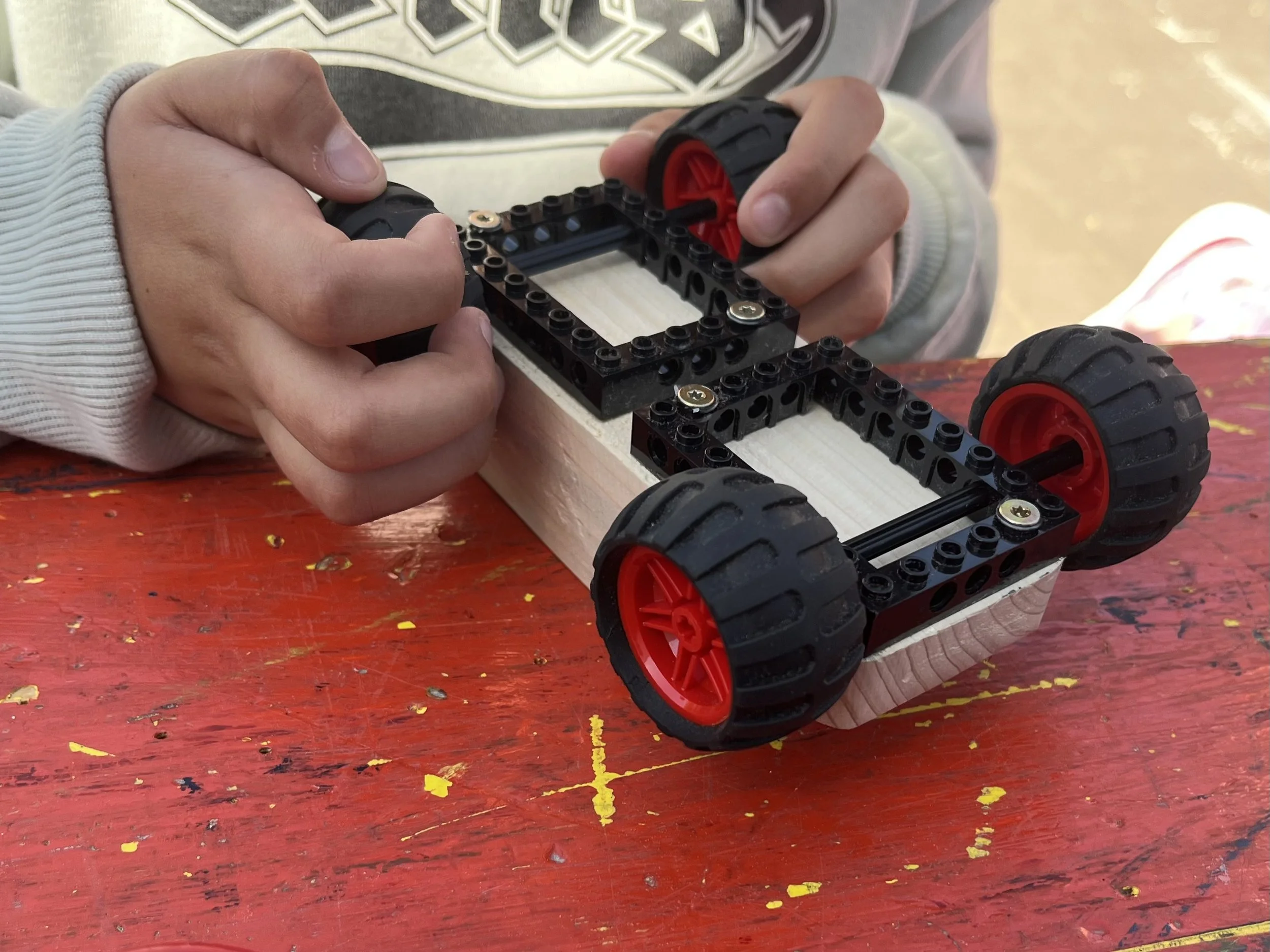
At Spielmobil, the workshop set up made use of a much shallower ramp, making it challenging to get the cars to roll fast enough. We had to make sure to widen out the wheels to the very edges of the axles. As well, small imperfections in the way that I constructed the cars made a big difference for how well the wheels rotated.
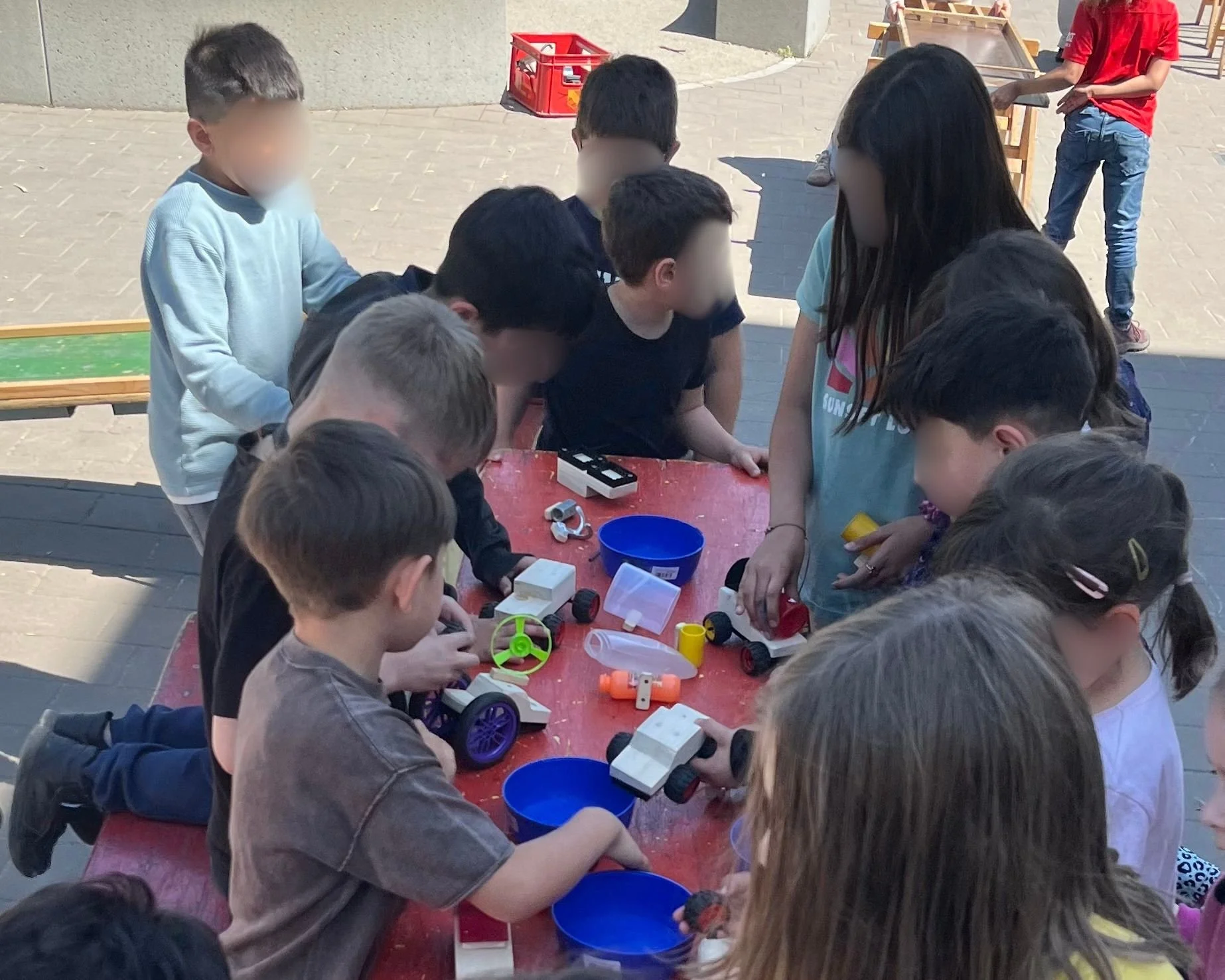
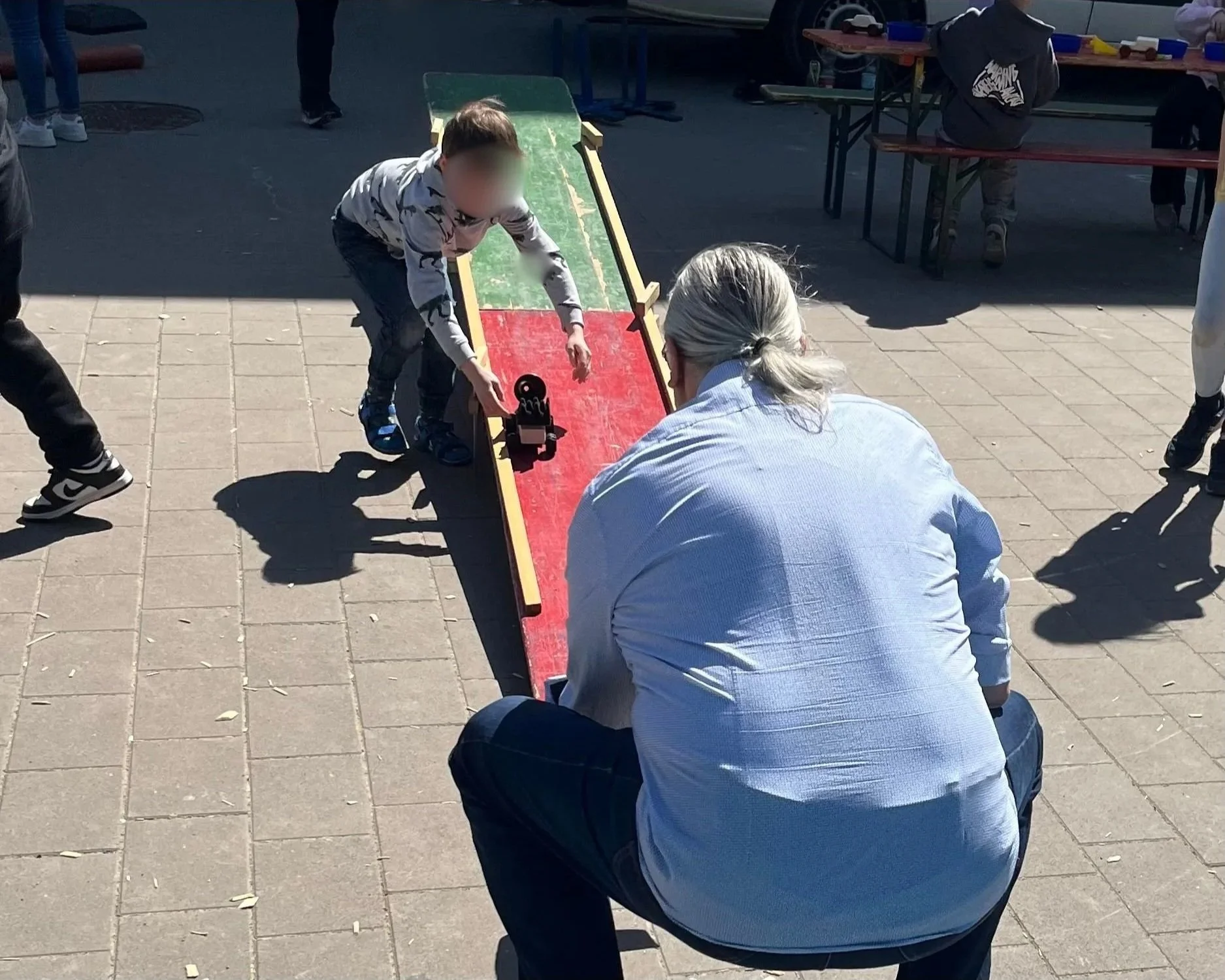
The open workshop started with a large group of kids coming from the end of the school day so right away the table was full. One of our goals for the project was that participants could get started with minimal instruction. For these materials, the initial steps felt intuitive and pretty soon there were lots of tests going on around the space.
I feel that there’s a little less openness to this set of materials vs previous iterations, but that didn’t stop the participants from trying lots of crazy experiments. They linked cars together, stacked them on top of each other and taped on extra decorations. One thing that I’m learning from this prototyping process is that kids will always find the way to go beyond the standard use so it’s a trick to figure out how to support that impulse and not overengineer everything.
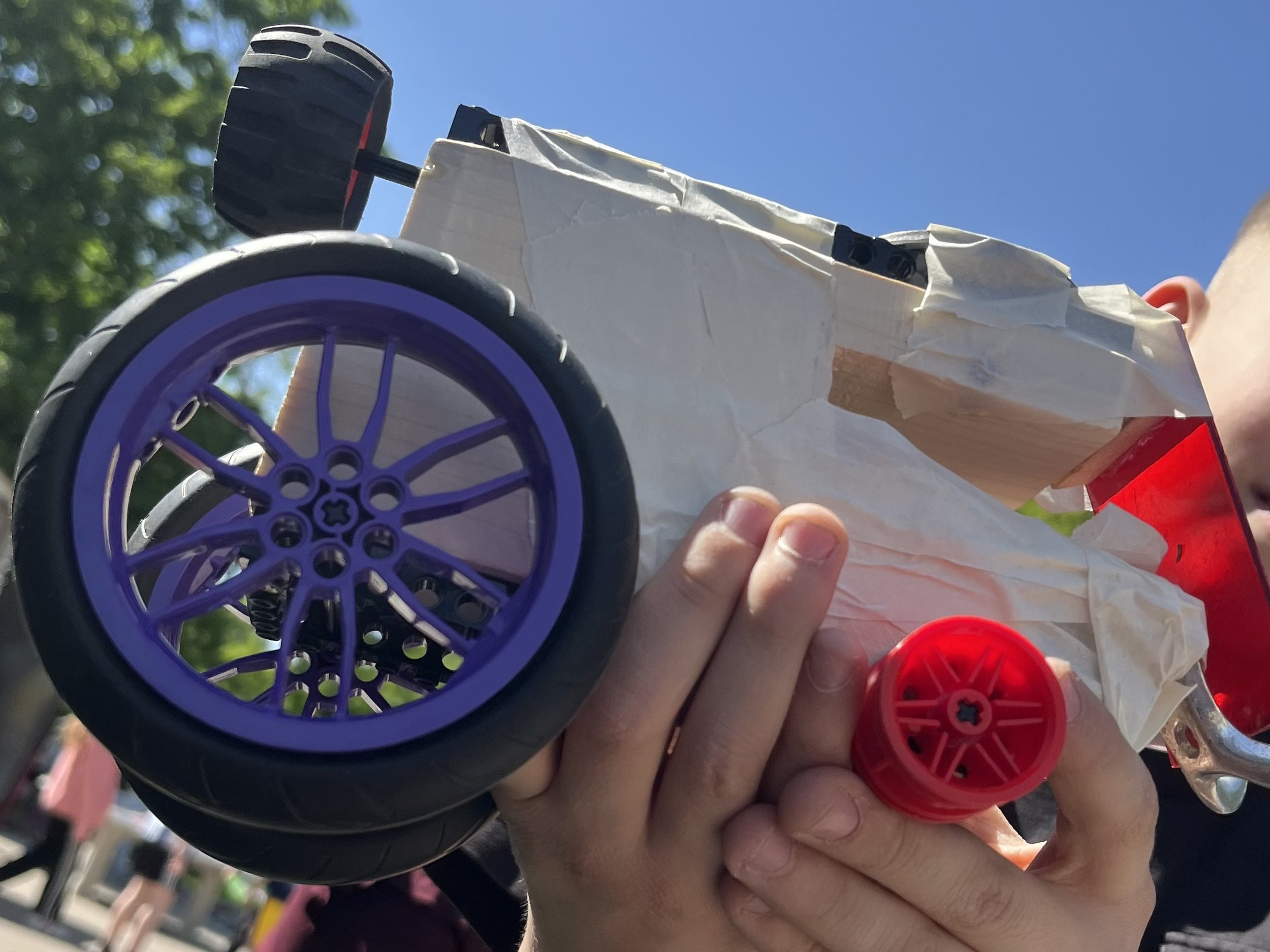
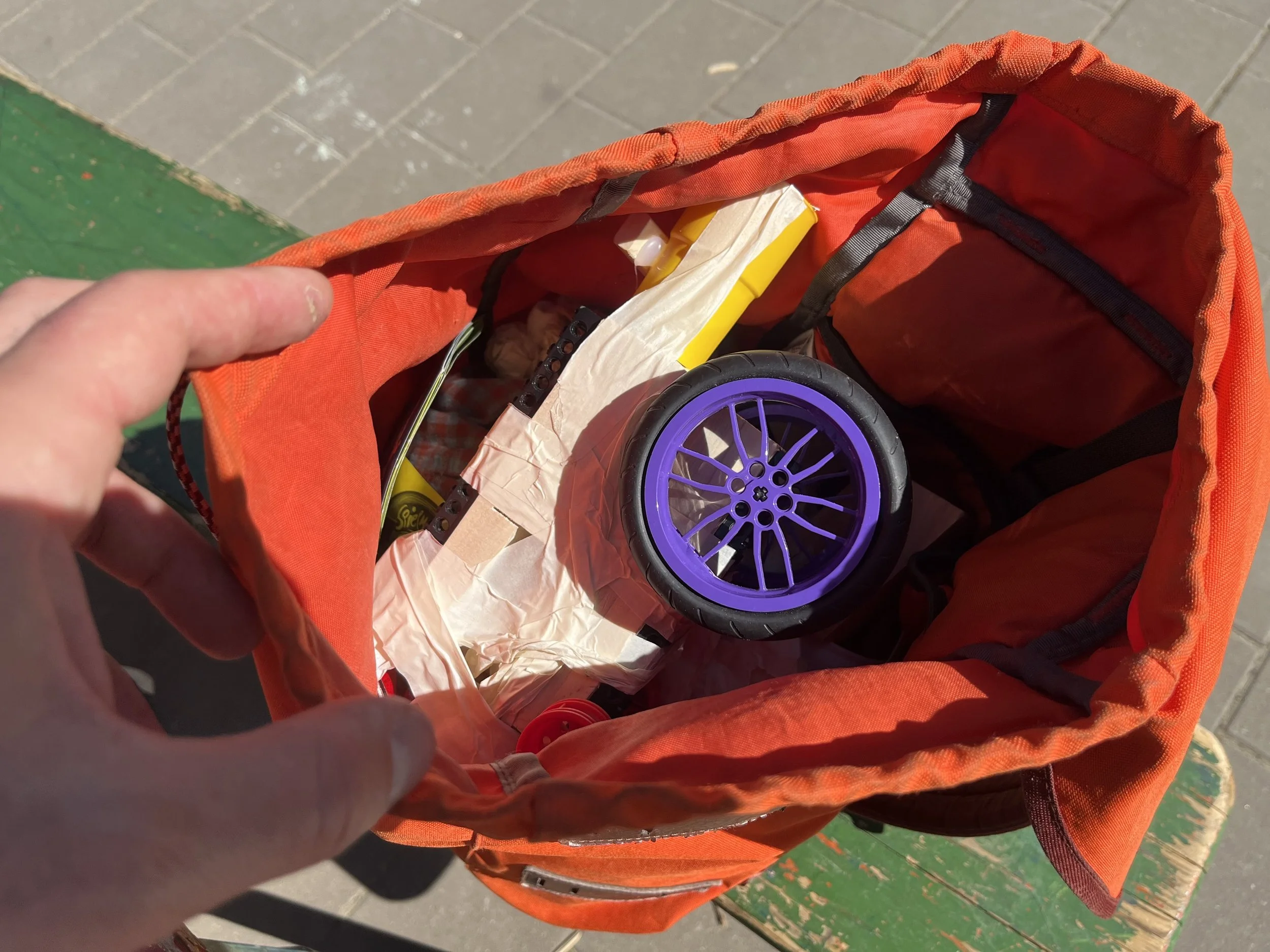
One of the other things that we wanted to work on with this activity design was making the car models more personally expressive and meaningful. For this workshop, one of the best signs that we’re making progress was that some of the kids really cared about their models and wanted me to save them. One of the participants event surreptitiously stuffed their car into my backpack so it wouldn’t be taken apart. In this pop-up spielmobil exhibit I didn’t have a display shelf or way to “keep” the cars that kids made but I can imagine ways to do that at OliOli to honor the ideas and experiments that the kids try.
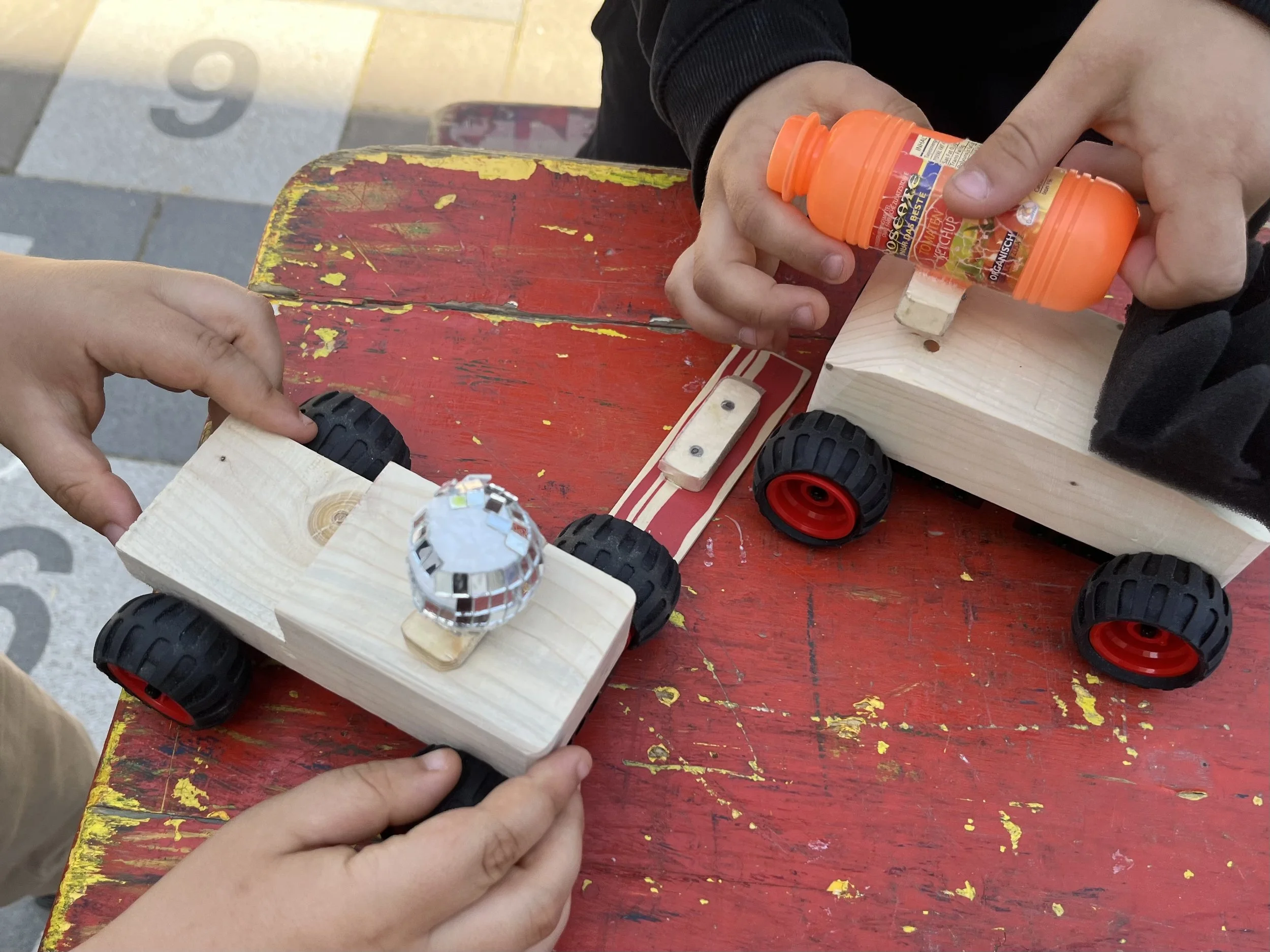
It’s been a really fun process to test things out locally while getting feedback from the team in Dubai. One of the meta goals of this project is figuring out the best way to do shared prototyping at a distance and we’ve been developing good practices of sharing materials lists, working on similar timelines and offering each other feedback and new ideas. I’m looking forward to the next round of designs and iterations.